How Advocacy Drives Breakthroughs in Cancer Policy and Research

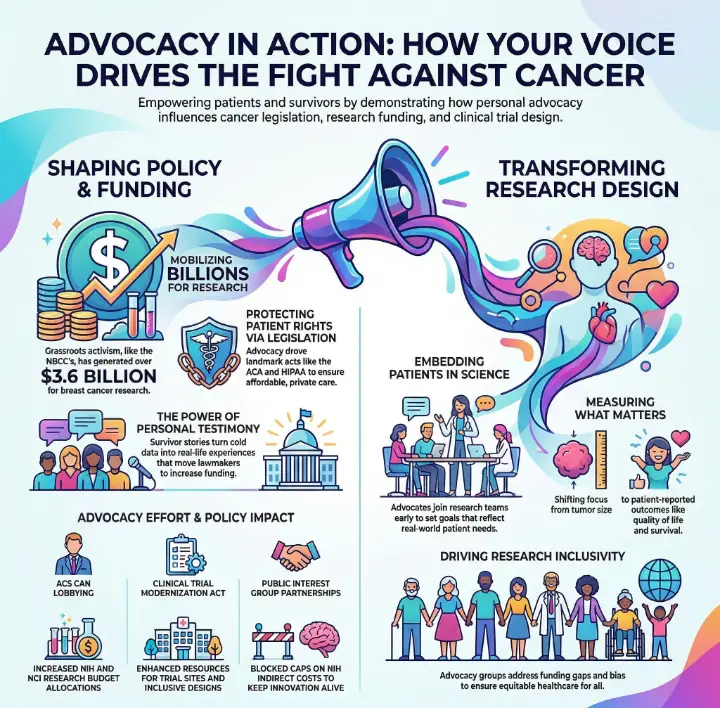
Advocacy can spark real change in cancer policy and research. When you speak up, share your story, or join a movement, you help set new priorities for scientists and lawmakers. Survivors and patient advocates have shaped where money goes and what research matters most.
Impact on Funding | |
|---|---|
ACS CAN lobbying for increased NIH and NCI budgets | Increased research funding allocations |
Support for Clinical Trial Modernization Act | Enhanced resources for trial sites |
Promotion of policies reducing patient costs | More funding for patient-navigation services and inclusive trial designs |
You do not need a medical degree to make a difference. Your voice can drive Advocacy in Action: Influencing Policy in the Fight Against Cancer, just like others who have changed lives with their stories.
Key Takeaways
Your voice matters. Sharing your cancer journey can inspire change and influence funding for research.
Joining advocacy groups amplifies your impact. Collaborate with others to push for policies that improve cancer care.
Advocacy shapes research priorities. Your input helps ensure studies focus on what patients truly need.
Grassroots movements can lead to significant policy changes. Small actions can grow into powerful campaigns for better cancer care.
You have access to resources and training. Use these tools to become an effective advocate and drive meaningful change.
Advocacy’s Impact on Cancer Policy and Research

Shaping Policy Through Advocacy
You can see how advocacy shapes cancer policy every day. When you join forces with others, you help push lawmakers to make decisions that matter for patients and families. Advocacy in Action: Influencing Policy in the Fight Against Cancer means you work with groups, share your story, and help set the agenda for research and funding.
Advocacy groups often team up with policymakers. They offer technical help and use their relationships to make sure cancer research funding stays strong. You help bring patient voices into the room, making sure lawmakers hear what matters most. Many groups, like the Public Interest Group on Cancer Research, focus on wellness and public engagement. Members include patients, families, and researchers. This partnership boosts advocacy efforts and makes sure everyone’s voice counts.
Here’s a look at some big policy changes that happened because of advocacy:
Policy Change | Description |
|---|---|
NIH Indirect Cost Reimbursement | Legislation blocked caps on NIH indirect costs, keeping innovation alive. |
Multi-Year Grant Structure | Lawmakers limited multi-year grants, responding to worries about fewer grants for research. |
Rejection of NIH Budget Cuts | Advocacy efforts stopped budget cuts, keeping funds for new treatments and discoveries. |
You help drive these changes by raising awareness and working with others. Advocacy in Action: Influencing Policy in the Fight Against Cancer shows up in laws like the National Cancer Act of 1971, the Affordable Care Act, HIPAA, and the Family and Medical Leave Act. These laws protect patients, improve access to care, and support research.
Legislative Act | Description |
|---|---|
National Cancer Act of 1971 | Gave NCI power to lead national cancer research and funded new centers and programs. |
Affordable Care Act (ACA) of 2010 | Made health insurance more affordable and expanded Medicaid. |
HIPAA of 1996 | Protected patient health information and rights. |
Family and Medical Leave Act of 1993 | Provided job-protected leave for family and medical reasons. |
You help shape these policies by joining campaigns, signing petitions, and sharing your story. Advocacy in Action: Influencing Policy in the Fight Against Cancer means you can make a difference, even if you’re not a scientist or doctor.
Centering Patient Needs in Research
You play a key role in making sure research focuses on what patients need. Advocacy groups bring forward questions that matter most to patients, like wanting more treatment options or better quality of life. You help researchers design trials that include more people and reflect real-world concerns.
Patient advocates join research teams early. You help set goals and make sure trials measure things that matter, like how you feel during treatment, not just how big the tumor is. You can suggest adding trial arms so more patients can join, making research more inclusive.
Here are some ways advocates shape research:
You help create educational programs so advocates understand cancer biology and research.
You serve on review panels and funding bodies, making sure research proposals focus on patient-centered outcomes.
You join scientific meetings, connecting researchers to patient needs and experiences.
Advocates like Jan Tomlinson and Rob Lowe show how you can get involved in clinical trial design. Jan shares her experience with the I-SPY 2 trial, pushing for patient education and trial options. Rob works with industry partners to raise awareness about self-advocacy and clinical trials. Groups like the AACR Patient Advocate Forum bring patients and researchers together to design trials that work for real people.
When you center patient needs, research outcomes improve. Studies show that using patient-reported outcomes helps detect symptoms earlier and manage them better. This leads to improved quality of life and even longer survival. You help make research more meaningful by focusing on what matters most to patients.
Patient advocacy groups shift research priorities by embedding patient voices throughout the research process.
You help researchers focus on less invasive testing and better tools for predicting outcomes.
Your involvement leads to more support and education initiatives, keeping advocates engaged and informed.
You help track progress by setting clear goals, using metrics like life years gained, deaths averted, and extra survival years. Advocacy in Action: Influencing Policy in the Fight Against Cancer means you help measure success and keep pushing for better outcomes.
“Funding agencies in the U.S. increasingly require patient involvement in grants, showing how advocacy shapes research funding and priorities.”
You help break down barriers like stigma, traditional beliefs, and communication gaps. You empower yourself and others to speak up, making sure research and policy reflect real needs.
By centering patient needs, you help create research that leads to better care, more options, and improved outcomes for everyone.
The Power of Personal Stories

Survivor Testimonies and Funding
Your story matters. When you share your cancer journey, you help others understand what it really feels like to face this disease. Lawmakers and decision-makers often remember these stories long after meetings end. Your words can turn numbers into real-life experiences that move people to act.
Survivor testimonies show the true impact of cancer on families and communities.
You help others see the financial and emotional struggles that come with treatment.
Personal stories highlight gaps in care and the need for more support.
Lawmakers have increased funding for cancer research after hearing from survivors.
Your voice can lead to more money for pediatric cancer research and better programs for quality of life.
When you speak up, you help make cancer research a priority. Your story can inspire change and drive new funding.
Lived Experience in Research Design
You know what matters most in your care. When you share your experiences, you help researchers design studies that fit real needs. Your feedback can shape how treatments are given and what questions get asked.
Patients often care about quality of life and how treatments affect daily routines.
Some people prefer taking medicine at home, while others feel safer in a clinic.
Your input helps researchers understand what matters, like side effects or mental health.
Real-world stories guide scientists to create studies that work for everyone, no matter their background.
Your lived experience also makes research more acceptable and easier to join. For example, when patients learn more about clinical trials through simple books or resources, they feel more confident and willing to take part. This shows that education and clear information can help more people join studies and improve care for everyone.
Advocacy in Action: Influencing Policy in the Fight Against Cancer often starts with your story. When you share what you’ve been through, you help shape better care and stronger research for the future.
Advocacy in Action: Influencing Policy in the Fight Against Cancer
Grassroots Movements and Policy Change
You can see real change when people come together and raise their voices. Grassroots movements often start with just a few people who want to make things better for cancer patients. These movements grow as more join in, share stories, and push for new laws or funding.
Livestrong shows how grassroots advocacy can shape cancer care. They focus on survivorship, insurance protections, and digital innovation. Their work at events like One Voice Against Cancer Grassroots Lobby Day helps lawmakers see why funding for cancer research matters. You help drive systemic changes by joining these efforts.
The American Cancer Society Cancer Action Network (ACS CAN) mobilizes volunteers across the country. Their advocacy has led to big wins, like removing co-pays for colorectal cancer screenings and expanding biomarker testing coverage. ACS CAN also works to increase access to care and reduce tobacco-related cancer risks. You help make these changes possible by joining their campaigns.
In Korea, the Shouting Café initiative led by the Korean Alliance of Patient Organizations (KAPO) gave patients a platform to share their experiences. This movement caught national attention and helped pass the Patient Safety Act. KAPO’s leaders now help shape health insurance policy, showing how patient voices can lead to new laws.
Grassroots campaigns also boost research funding. Here are some examples:
NBCC’s activism generated over $3.6 billion for breast cancer research.
ACS CAN’s efforts led to increased funding and access to new therapies.
Volunteers helped reject cuts to the National Cancer Institute’s budget, securing more money for research.
The National Breast Cancer Coalition (NBCC) delivered over 2.6 million signatures to Congress. This campaign led to the National Action Plan on Breast Cancer. You can see how Advocacy in Action: Influencing Policy in the Fight Against Cancer starts with people like you.
Social media makes grassroots movements stronger. Campaigns like Pink October use hashtags and viral posts to reach more people. You can share your story, tag lawmakers, and encourage others to join. These tactics help amplify advocacy messages and push for policy change.
When you join a grassroots movement, you help turn ideas into action. Your voice can lead to new laws, more funding, and better care for everyone.
Partnering with Advocacy Organizations
You don’t have to do it alone. Advocacy organizations give you tools, support, and connections to make your efforts stronger. When you partner with these groups, you help shape research and policy from the inside.
Advocates often join research teams. Your perspective helps researchers focus on what matters most to patients. You can help develop research questions, identify patient-centered goals, and translate technical language into plain words. This partnership improves the chances of getting funding and makes research more meaningful.
Here’s how you can build strong partnerships:
Assemble a diverse group of advocates.
Develop a mission that combines patient perspectives with institutional goals.
Advocacy organizations also focus on diversity, equity, and inclusion. They work to reduce health disparities and ensure equal opportunities for prevention, early detection, and treatment. You can help by joining collective statements or signing joint letters on key issues.
Key Focus Areas | Description |
|---|---|
Importance of DEI | Ensures equitable health care outcomes for all patients. |
Challenges | Addresses bias, lack of mentorship, and funding gaps. |
Collaborative Efforts | Brings together stakeholders to improve representation and transform cancer care. |
You help make policy initiatives more inclusive by sharing your story and supporting diverse voices. Advocacy in Action: Influencing Policy in the Fight Against Cancer means working together to create lasting change.
Advocacy organizations measure their impact by involving patients in designing and evaluating interventions. They bring in healthcare professionals and local groups to find what works best. You can act as an ambassador, encouraging others to join screening programs and research studies.
Tools and Resources for Advocates
You have access to many tools and resources that make advocacy easier. Organizations offer educational materials, support groups, and connections to help you get started.
You can find cancer-specific resource kits like 'Bag It Bags' that cover diagnosis, testing, treatment options, and support groups.
General resource bags are available in English and Spanish for other cancer types.
Leading cancer organizations partner to provide reliable information.
Free animated videos, quick guides, and checklists help you understand legal and practical issues after a cancer diagnosis.
Information is tailored for patients, caregivers, and healthcare professionals.
State-specific laws and helpful resources support your advocacy efforts.
You can connect with advocacy groups focused on specific cancer types.
National organizations have local chapters for community-based support.
These groups help patients, families, and friends through education and peer support.
Advocacy organizations also provide training programs to help you become an effective advocate. You can choose from online courses, in-person workshops, or blended options.
Name of program | Cancer type | Organization | Mode | Website link |
|---|---|---|---|---|
e-Training for Patients, Advocates and the Community | All cancers | Cancer Information and Support Network | Online | |
Research Advocacy Training Programs | All cancers | Research Advocacy Network | Online | |
AAADV Workshop Advocacy Education | All cancers | AACR, ASCO, Susan G. Komen, Duke University, FDA | Online and in-person | |
Project LEAD | Breast cancer | National Breast Cancer Coalition | In-person | |
RATS | Colorectal cancer | Fight Colorectal Cancer | In-person |
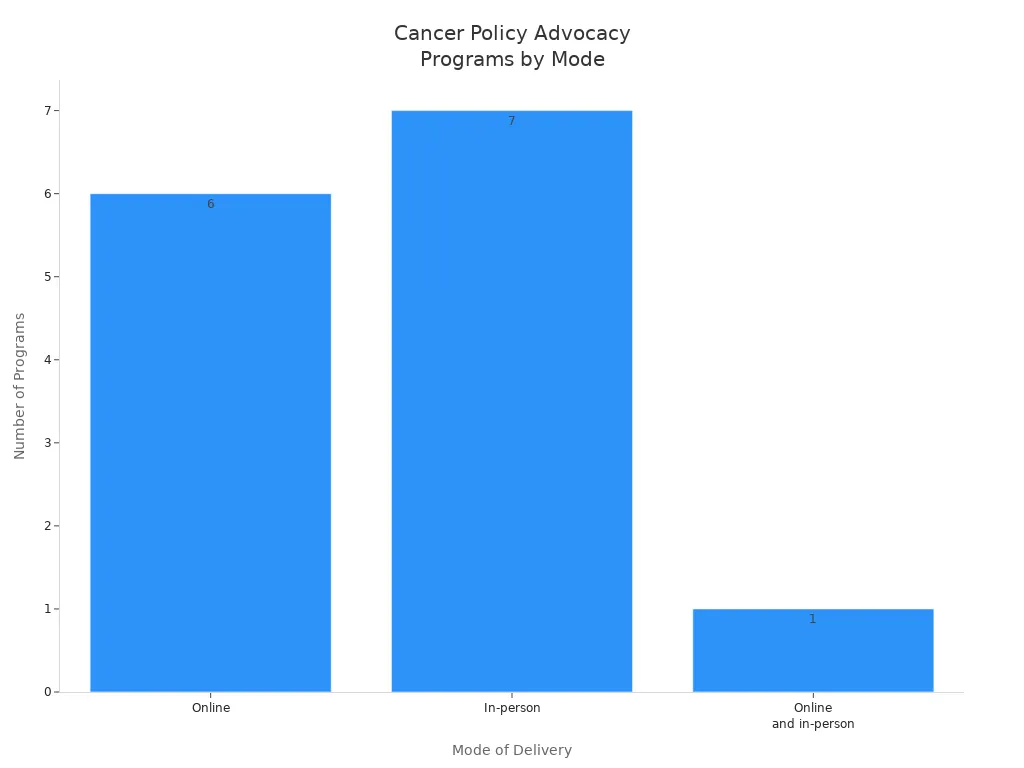
Online platforms and digital toolkits make it easier for you to take action. Research shows these tools boost your confidence, help you manage your illness, and improve communication with your care team. You can use digital resources to learn, connect, and share your story.
Advocacy organizations provide educational resources about cancer, treatment options, clinical trials, psychosocial support, and financial help.
Support groups address diverse needs and offer timely care and education.
Community connections through virtual and in-person events let you share experiences and gain peer support.
Groups fund studies, contribute patient perspectives to clinical trial design, and raise awareness to increase trial participation.
Public policy advocacy includes lobbying legislatures and regulatory bodies to improve access to care and promote health equity.
Social media campaigns help you amplify your message. You can use hashtags, tag legislators, and share your story to reach more people. These campaigns raise awareness, encourage donations, and mobilize action for policy change.
You have the power to make a difference. Advocacy in Action: Influencing Policy in the Fight Against Cancer starts with you. Use the tools, join the groups, and share your story to drive change.
You have the power to spark real change in cancer policy and research. When you join forces with others, you help shape laws and improve care. Here’s how people like you have made a difference:
Groups in Louisiana passed every cancer care law they pushed for by meeting with lawmakers and bringing in doctors.
Patient advocates, like those in ACT UP, changed health policies and started new movements.
Survivors support each other and share stories, making their voices stronger together.
Your story matters. Start your advocacy journey today and help create a better future for everyone facing cancer.
FAQ
What is cancer advocacy?
You speak up for yourself or others to improve cancer care, research, or policy. You can join groups, share your story, or support new laws. Advocacy helps make sure your needs matter.
How can I get involved in cancer advocacy?
You can:
Join local or national advocacy groups
Share your story with lawmakers
Sign petitions
Attend awareness events
Tip: Start small. Every action counts!
Do I need medical knowledge to be an advocate?
No, you do not. Your experience as a patient, survivor, or caregiver matters most. You can learn as you go. Many groups offer training and support.
Can advocacy really change cancer research?
Yes! Your voice helps set research priorities. When you share your needs, researchers listen. You help make studies more patient-friendly and push for better treatments.
This article is for educational purposes only and is not a substitute for professional medical advice. For more details, please see our Disclaimer. To understand how we create and review our content, please see our Editorial Policy.
See Also
Exploring Symptoms and Treatment Options for Duodenal Cancer
Exploring Various Cancer Types Associated with AIDS
Identifying Symptoms and Causes Related to Anal Cancer

© 2026 Banish Cancer. Banish Cancer is a registered non-profit organization providing evidence-based research, educational courses, and Fear Response AI support services. Reg. No: 305706884 | Address: Taikos pr. 43-603, Kaunas, Lithuania.