What Sets Complementary and Alternative Therapies Apart

You might wonder what sets complementary therapies apart from alternative therapies. Complementary therapies work with standard medical treatments to help you feel better, while alternative therapies replace conventional medicine completely. Knowing this difference helps you make smart choices about your health. Many people use these therapies around the world, especially for chronic illnesses.
In Jordan, the use of complementary and alternative therapies among cancer patients dropped from 49.4% in 2013 to 32.8% in 2022.
Daily use increased over time, but fewer people felt the benefits.
Talking with doctors about these therapies improved, which shows how important good communication is when considering Alternative Therapies: Complementary or Contradictory?.
Key Takeaways
Complementary therapies work alongside standard medical treatments to enhance well-being, while alternative therapies replace conventional care entirely.
Always consult your healthcare provider before starting any new therapy to ensure safety and effectiveness.
Combining complementary therapies with conventional medicine can lead to better health outcomes and improved quality of life.
Good communication with your healthcare team is crucial for making informed decisions about your therapy options.
Research each therapy thoroughly and consider both personal experiences and scientific evidence when choosing the right approach for your health.
Defining Complementary and Alternative Therapies
Complementary Therapies Explained
You often hear about complementary therapies when people talk about ways to feel better alongside regular medical care. These therapies work together with treatments from your doctor. You might use massage to relax your muscles after surgery. Acupuncture can help you manage pain during cancer treatment. Tai chi helps you improve balance and reduce stress. Many people choose these therapies because they want to boost their well-being and comfort. Insurance providers sometimes cover complementary therapies if they are considered medically necessary. Here is a table showing some examples:
Category | Examples of Therapies |
|---|---|
Medically Necessary | Acupuncture, Biofeedback, Chelation therapy, Chiropractic services, Electrical stimulation |
Experimental | Acoustic therapy for anxiety/depression, Active release technique, Acupressure, Aromatherapy, Art therapy |
You should always talk with your doctor before starting any new therapy. This helps you avoid problems and get the best results.
Alternative Therapies Explained
Alternative therapies replace standard medical treatments. People use these therapies instead of going to the doctor or taking medicine. Some choose mind-body therapy, which focuses on the connection between thoughts and health. Chiropractic manipulation helps with back pain and movement problems. Massage and movement therapy are also popular choices. The table below shows how common these therapies are:
Alternative Therapy | Prevalence (%) |
|---|---|
Mind-body therapy | 12.3 |
Chiropractic or osteopathic manipulation | 9.1 |
Massage | 8.8 |
Movement therapy | 6.5 |
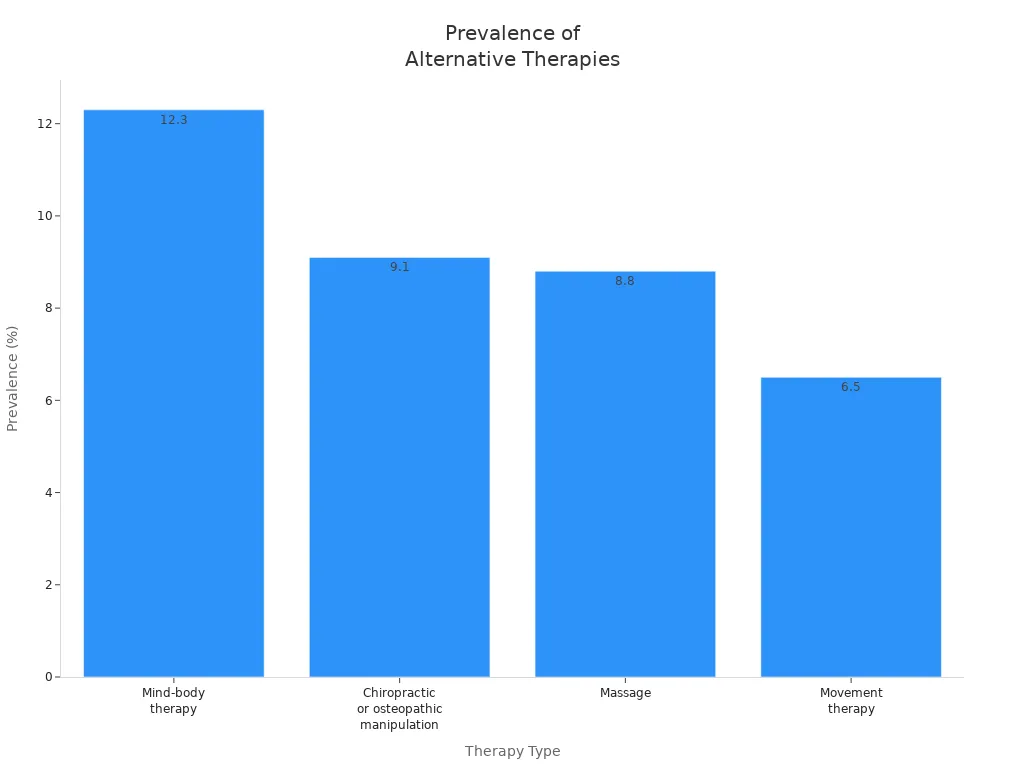
You might wonder if these therapies are safe or effective. Some people find relief, but others may not see results. Insurance companies often do not cover alternative therapies because they are considered experimental or investigational. You should think carefully before choosing an alternative therapy instead of conventional care. This is a key point in the discussion of Alternative Therapies: Complementary or Contradictory?.
Holistic Philosophy in CAM
Complementary and alternative medicine (CAM) uses a holistic philosophy. This means you treat the whole person, not just the symptoms. You look at physical, mental, and emotional health together. Here are some important ideas about the holistic approach:
CAM treats the whole person—body, mind, and emotions.
Conventional medicine focuses on specific symptoms and uses standard treatments.
Integrative health combines both approaches to improve quality of life and meet individual needs.
You may notice that CAM tries to help you feel better in every part of your life. This philosophy encourages you to take charge of your health and make choices that fit your needs. When you understand the difference between complementary and alternative therapies, you can decide what works best for you.
Application in Health Care

Complementary Therapies with Conventional Medicine
You can use complementary therapies to support your regular medical treatments. These therapies often help you feel more comfortable and improve your quality of life. Many hospitals and clinics now include complementary therapies in their care plans. Nurses play a key role in guiding you through these options. They help you make informed choices, review new research, and explain the benefits and risks.
Nurses guide you in making smart decisions about complementary therapies.
They check new studies to see which therapies work best.
Nurses teach you about possible benefits and risks.
Complementary and alternative medicine is growing in modern health care. Therapies like acupuncture, massage, and tai chi have shown positive results for many diseases. When you combine these therapies with conventional medicine, you may see better health outcomes. This teamwork can create a stronger effect and help you recover faster.
Alternative Therapies as Standalone Approaches
Some people choose alternative therapies instead of standard medical care. You might use these therapies if you want a different approach or if you have not found relief with regular treatments. Studies show that patients who use integrative medicine often report better symptoms and overall health than those who rely only on conventional medicine. For example, cancer patients who received integrative care felt less distress and became more involved in their treatment. Another study found that patients using alternative therapies had better appetite, less fatigue, and improved emotional health. These results suggest that alternative therapies can make a difference, especially when you use them with conventional care.
Impact on Patient Well-being
Complementary and alternative therapies help you cope with chronic conditions. You may find relief from pain, stress, or fatigue. These therapies focus on your whole well-being, not just your symptoms. When you understand the difference between complementary and alternative therapies, you can decide which approach fits your needs. The question of Alternative Therapies: Complementary or Contradictory? often comes up when you look for ways to improve your health. You should talk with your health care provider before starting any new therapy. This helps you stay safe and get the best results. Many people find that combining therapies leads to better health and a higher quality of life. The debate about Alternative Therapies: Complementary or Contradictory? continues as more people explore these options.
Alternative Therapies: Complementary or Contradictory?
Key Differences in Practice
You may wonder how complementary and alternative therapies differ in real life. Complementary therapies work with your regular medical care. You might use acupuncture or massage to help with pain while still seeing your doctor. Alternative therapies replace standard treatments. You might choose herbal remedies instead of prescribed medicine.
Here is a simple table to help you see the differences:
Approach | How You Use It | Example |
|---|---|---|
Complementary | Alongside regular medical treatment | Yoga with medication |
Alternative | Instead of regular medical treatment | Herbal tea for illness |
Healthcare providers look at your needs before making recommendations. They often ask about all the therapies you use. They avoid using the term "alternative therapy" at first. This helps you feel comfortable sharing your choices. Providers do not dismiss any therapy as a placebo. They make notes and research each therapy before giving advice.
Overlap and Misconceptions
You may notice that complementary and alternative therapies sometimes overlap. Both focus on treating your whole self, not just your symptoms. Practitioners believe that healing connects to the idea of wholeness. Many doctors and CAM providers agree that working together helps you most. CAM often uses a gentle approach. Conventional medicine acts quickly, especially in emergencies.
Many people have some common misunderstandings about these therapies:
People often think natural therapies are always safe. This is not true. Some can cause side effects or interact with your medicine.
Some believe that you cannot study CAM with science. In fact, many therapies can be tested and measured.
Others say CAM effects are too small to measure. Science can often find and measure these effects.
You should always ask questions and learn about any therapy before you try it.
Choosing the Right Approach
Choosing between complementary and alternative therapies depends on your needs and preferences. You may want to use a therapy because you trust it or have heard good stories from others. Sometimes, your choices matter more than research evidence. Doctors and nurses want to respect your wishes. They also want to make safe, evidence-based decisions.
Here are some tips to help you choose:
Tell your doctor about all therapies you use.
Ask about the risks and benefits of each option.
Think about what feels right for you and your health.
Use both personal stories and scientific facts to guide your choice.
You may find that combining therapies works best. The question of Alternative Therapies: Complementary or Contradictory? often comes up when you look for new ways to feel better. You can make the best choice when you understand your options and talk openly with your healthcare team.
You now know that complementary therapies work with your regular medical care, while alternative therapies replace it. Understanding this difference helps you make smart choices for your health. You can feel empowered when you choose therapies that match your beliefs and needs.
Benefit | Description |
|---|---|
Cost-Effectiveness | Some therapies, like St. John's wort, may cost less and have fewer side effects. |
Patient Empowerment | CAM therapies can support your values and improve your well-being. |
Communication Issues | Good communication with your doctor helps you get the best care. |
To stay safe, follow these steps:
Talk with your healthcare provider before starting any therapy.
Research each therapy and its effects.
Choose qualified practitioners.
Watch for changes in your health.
Be careful with supplements.
Stay informed about new research.
You can take charge of your health by learning, asking questions, and working with your care team.
#BanishCancer
FAQ
What is the main difference between complementary and alternative therapies?
You use complementary therapies with your doctor’s treatment. You use alternative therapies instead of standard medical care.
Tip: Always talk to your doctor before making changes to your health plan.
Are complementary therapies safe for everyone?
You may find some therapies safe, but others can cause side effects.
Ask your doctor about risks.
Check if the therapy fits your health needs.
Can insurance cover these therapies?
You might get coverage for some complementary therapies, like acupuncture or chiropractic care. Insurance rarely covers alternative therapies.
Therapy Type | Insurance Coverage |
|---|---|
Complementary | Sometimes |
Alternative | Rarely |
How do I choose the right therapy for me?
You should think about your health goals. Ask your doctor for advice.
Note: Research each therapy and look for qualified practitioners.
Do natural therapies always work better?
You may hear that natural therapies work best, but results vary.
:thinking: Some people feel better, while others do not see changes. Always check facts before you try something new.
See Also
Recognizing Symptoms And Treatments Of Conjunctival Melanoma
Identifying Symptoms And Treatment Options For Duodenal Cancer
An In-Depth Overview Of Various Cancer Types Available
Key Characteristics And Insights Into Keratoacanthoma Explained
Essential Features And Insights On Cholangiocarcinoma Explained

© 2026 Banish Cancer. Banish Cancer is a registered non-profit organization providing evidence-based research, educational courses, and Fear Response AI support services. Reg. No: 305706884 | Address: Taikos pr. 43-603, Kaunas, Lithuania.