How to Manage Your Job While Recovering from Cancer

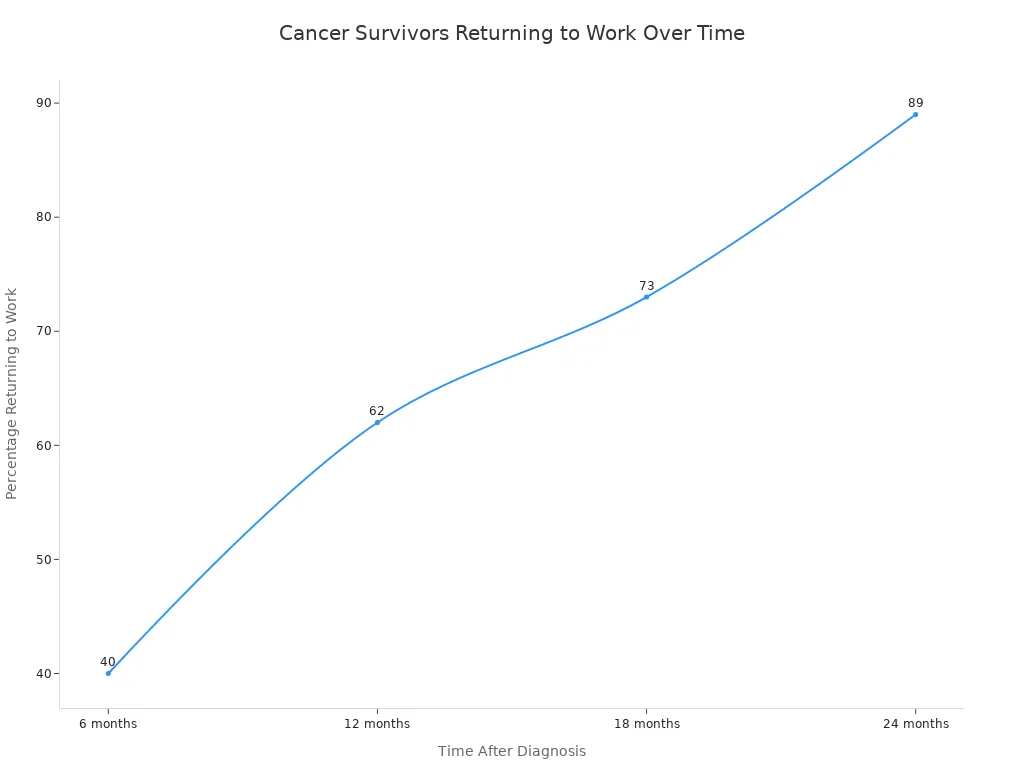
You might feel overwhelmed trying to manage your job while recovering from cancer. Many people share your worries, like fatigue, memory issues, or anxiety at work. Take a look at this table showing how cancer survivors return to work over time:
Time After Diagnosis | Range (%) | |
|---|---|---|
6 months | 40% | 24 - 72% |
12 months | 62% | 50 - 81% |
18 months | 73% | 64 - 82% |
24 months | 89% | 84 - 94% |
You face challenges like physical limitations, chemo brain, and negative attitudes. Here are some common concerns:
Physical limitations
Cognitive problems
Mental health challenges
Interpersonal issues
Negative attitudes
Need for reasonable accommodations
Lack of knowledge and resources
Sensitivity to your needs
Navigating confidentiality preferences
Managing workplace dynamics
Balancing Employment and Cancer Recovery takes courage. Remember, you can ask for help and focus on your needs.
Key Takeaways
Assess your work capacity based on your health and treatment. Understand how fatigue and cognitive changes may affect your job performance.
Communicate your needs with your employer. Share only what is necessary to get the support you need while maintaining your privacy.
Explore flexible work arrangements. Adjust your hours or tasks to better fit your recovery needs and maintain productivity.
Know your rights under the ADA and FMLA. These laws protect you and ensure you can take necessary time off without losing your job.
Don’t hesitate to ask for help. Support from your workplace can make a significant difference in your recovery journey.
Assessing Your Work Capacity
Health and Treatment Considerations
Your health and treatment plan play a big role in how much you can work right now. Cancer treatments can cause fatigue, memory problems, and trouble focusing. You might notice that tasks take more effort or that you forget details more often. Up to 75% of people in treatment experience these changes, and about 25% still feel them after treatment ends. Fatigue and emotional stress can make things even harder.
Here’s a table to help you see what doctors look at when they assess your work ability:
Medical Factor | Description |
|---|---|
How you feel about your own ability to work is a strong predictor of returning to work. | |
Fatigue | Tiredness can affect your work, especially early in recovery. |
Mental and cognitive function | Memory and thinking skills matter for job performance. |
Physical condition | Your overall strength and health impact your work capacity. |
Cancer stage | The stage of your cancer affects your ability to work. |
Comorbidities | Other health problems can influence your recovery and work. |
Patient expectations | What you expect from yourself can shape your recovery. |
Cognitive representations of illness | How you think about your illness affects your confidence at work. |
Job Demands and Flexibility
Think about what your job requires. Some jobs need a lot of physical effort, while others need more mental focus. If your job is flexible, you might find it easier to adjust your hours or workload. Many survivors say that memory problems, slow thinking, and trouble paying attention make work harder. Fatigue and stress can add to these challenges. You may need to talk with your employer about changes that help you do your job better.
Making the Right Choice
Deciding whether to keep working or take a break is personal. Here are some things to consider:
Criteria | Description |
|---|---|
Type of work | Some jobs are easier to manage during recovery than others. |
Stage of cancer or severity | More advanced cancer may mean you need more rest. |
Type of treatment | Some treatments have stronger side effects than others. |
Side effects & symptoms | If you feel very tired or sick, you may need time off. |
Tip: Listen to your body and talk with your care team. Balancing Employment and Cancer Recovery means making choices that put your health first.
Communicating at Work

Talking about your cancer recovery at work can feel tricky. You might wonder what to say, how much to share, or how to keep your privacy. Good communication helps you get the support you need and makes Balancing Employment and Cancer Recovery easier.
What and How to Share
You decide what to tell your boss, HR, and coworkers. You do not have to share every detail. Think about what helps you do your job and what makes you comfortable. Here are some tips:
Meet privately with your manager or HR to talk about your needs.
Share only what is needed for your job or for getting help.
Ask HR about paperwork for FMLA or disability if you need time off.
Let your team know if you need changes, like flexible hours or help with certain tasks.
Here is a table with common topics and why they matter:
Topic | Details |
|---|---|
Work capacity | Let HR know if you need adjustments or time off. |
Legal protections | You have rights under laws like ADA and FMLA. |
Privacy | You choose how much to share about your diagnosis and treatment. |
Setting Boundaries and Privacy
You control your story. Some people want to keep things private, while others feel okay sharing more. Here are ways to set boundaries:
Decide what you want to share before talking to anyone.
Tell your boss or HR in a private meeting.
Choose how to tell coworkers—by email, in person, or through a trusted friend.
Remind others that your medical information is private.
Tip: Employers must keep your health details confidential. You can share with coworkers if you want, but you do not have to.
Advocating for Your Needs
You know your body best. Speak up for what helps you work well. Here are some ways to ask for support:
Request flexible hours or remote work if you feel tired.
Ask for changes to your workspace, like a more comfortable chair.
Let your boss know if you need to take breaks or adjust your workload.
Accommodation Type | Description |
|---|---|
Change work hours for appointments or rest. | |
Remote Work and Modified Duties | Work from home or swap tasks to lower stress. |
Physical and Environmental Adjustments | Get better equipment or change your workspace for comfort. |
Remember, Balancing Employment and Cancer Recovery means speaking up for yourself and knowing you deserve support.
Know Your Rights
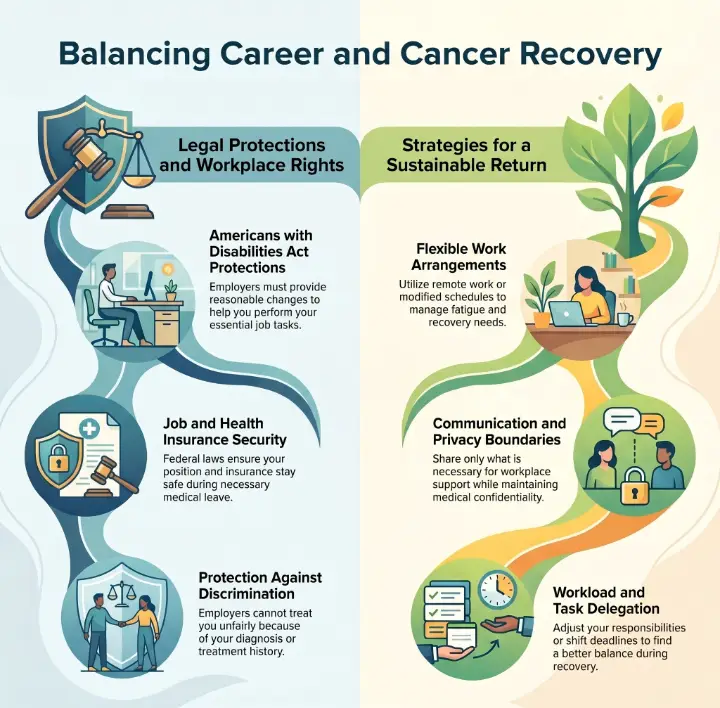
You might feel nervous about asking for help at work, but you have strong legal protections. These laws make sure you can focus on your health without worrying about your job. Let’s break down what you need to know.
ADA, FMLA, and State Laws
The Americans with Disabilities Act (ADA) and the Family and Medical Leave Act (FMLA) protect you if you have cancer. Here’s a quick look at what the ADA covers:
Protection Type | Description |
|---|---|
Discrimination Protection | Your boss can’t treat you unfairly because of your cancer, past cancer, or even if they think you have cancer. |
Definition of Disability | Cancer counts as a disability if it makes daily life harder. |
Reasonable Accommodations | Your employer must help you do your job with changes that make sense. |
Employment Scope | These rules apply to most workplaces with 15 or more workers. |
Termination Protections | You can’t lose your job just because of your cancer if you can still do your main tasks. |
The FMLA gives you more support:
You can take up to 12 weeks off (unpaid) for cancer treatment or recovery.
Your job and health insurance stay safe while you’re away.
You can use this leave for your own care or to help a family member.
You get to return to your job or a similar one.
Your boss can’t punish you for using this leave.
Some states have extra laws that give you even more rights. Ask your HR team or a social worker for details.
Requesting Accommodations
You don’t need fancy words to ask for help. Just let your boss or HR know you need changes because of your health. Here’s how you can do it:
Figure out what’s hard for you at work (like your schedule or workspace).
Gather info about your job and your treatment.
Learn about your rights under the law.
Make a plan for what you need.
You can ask for help yourself, or someone else can ask for you. Your employer must listen and try to help.
Medical Leave and Disability Options
You might wonder if you can take time off or get disability benefits. Here’s what you need:
You must have worked for your employer for at least 12 months.
You need to have worked 1,250 hours in the past year.
Your workplace must have at least 50 employees within 75 miles.
If you qualify, you can:
Take up to 12 weeks of unpaid, protected leave.
Keep your health insurance during your leave.
Return to your job when you’re ready.
Stay safe from punishment for using your rights.
Tip: You don’t have to feel guilty for using these benefits. These laws exist to help you heal and keep your job.
Balancing Employment and Cancer Recovery

Finding the right balance between your job and your health can feel tough. You might worry about keeping up at work or wonder how to ask for help. The good news is, you have options. Let’s look at some ways you can make Balancing Employment and Cancer Recovery work for you.
Flexible Work Arrangements
You don’t have to stick to your old routine. Many people find that changing how, when, or where they work makes a big difference. Here are some flexible work arrangements that can help:
Modified work schedules let you start later, finish earlier, or take longer breaks.
Remote work options allow you to work from home when you need extra rest.
Ergonomic workspace adjustments, like a better chair or desk, can make you more comfortable.
Additional breaks throughout the day give you time to recharge.
Tip: Talk with your manager about what works best for you. Many employers want to help you succeed.
When you use flexible work options, you can save energy for the things that matter most. This approach helps you stay productive while focusing on your recovery.
Delegating and Adjusting Workload
You don’t have to do everything yourself. Delegating tasks can lower your stress and help you heal. For example, Mike, who recovered from brain tumor surgery, asked coworkers and contractors to handle some of his projects. He also took on fewer jobs so he could focus on his health.
Here’s how you can adjust your workload:
Ask teammates to cover certain tasks or meetings.
Take on fewer projects or responsibilities for a while.
Let your boss know if you need to shift deadlines or priorities.
This strategy helps you find a better balance between work and recovery. You can focus on what matters most—your health—while still getting things done.
Coordinating Work with Treatment
You can plan your work around your treatment schedule. Many people find that careful planning helps them manage symptoms and stay on track at work. Research shows that employees often schedule treatments late in the day or before weekends, so they have time to rest.
Here are some ideas to help you coordinate:
Schedule treatments on Fridays to use the weekend for recovery.
Plan doctor’s appointments around your work hours.
Talk openly with your employer about your treatment needs.
Explore flexible work options, like remote work or adjusted hours.
Plan doctor’s appointments around your work schedule. Making appointments later in the day or close to the weekend can give you the right time to rest and recover.
Some people choose to have chemotherapy in the afternoon before a day off, or on Tuesdays so they can rest over the weekend. Find a routine that fits your life and helps you feel your best.
Accepting Help and Support
You don’t have to go through this alone. Support from your workplace can make a big difference. Employers can help by offering flexible schedules, remote work, and counseling services. They can also educate managers and staff about how to support employees with cancer.
Here’s what support might look like:
Access to counseling services for emotional support.
Leadership and coworkers who understand your needs.
Policies that make it easier to adjust your work schedule.
Studies show that when workplaces offer strong support, more people return to work sooner and feel better about their jobs. In one program, 73% more employees returned to work at 18 months, and they came back 16.5 weeks earlier than those without extra support.
Remember: Balancing Employment and Cancer Recovery is not just about working hard. It’s about asking for help, taking care of yourself, and knowing you deserve support.
You can do this. Speak up for your needs, accept help, and put your health first. Balancing Employment and Cancer Recovery means making choices that work for you.
When Work Isn’t Possible
Sometimes, working during cancer recovery just isn’t possible. You might feel too tired, sick, or overwhelmed. It’s okay to step back and focus on your health. Many people face this decision. Here are some signs that show you might need to take a break:
Indicator Type | Description |
|---|---|
Physical Problems | Fatigue, pain, or trouble thinking can make work very hard. |
Psychological Issues | Anxiety or depression can lower your motivation and energy. |
Social Problems | Feeling alone or lacking support can make returning to work tough. |
Strong side effects from treatment may force you to pause your job. |
Disability and Leave Options
You have several ways to protect your job or get time off if you can’t work. Here are some options:
Protection/Leave Option | Details |
|---|---|
Americans with Disabilities Act (ADA) | Your employer must offer reasonable changes to help you work or give you time off if needed. |
You can take up to 12 weeks of unpaid leave for treatment or recovery, and your job stays safe. |
Other options include:
Leave under state family and medical leave or temporary disability laws
Paid sick leave if your employer offers it
Paid leave for federal contractors
Tip: Talk to your HR department about which options fit your situation best.
Financial and Insurance Resources
If you can’t work, you might worry about money. You have help available. Here are some resources:
Social Security Disability Insurance (SSDI) if you have worked and paid into Social Security
Financial help from nonprofit groups like the Cancer Financial Assistance Coalition
Unpaid, job-protected leave through FMLA
You can also ask your hospital social worker for more ideas. They often know about local programs that can help with bills or insurance.
Planning for Extended Absence
If you need to be away from work for a long time, planning helps. Here’s what you can do:
Tell your employer as soon as possible.
Ask about keeping your health insurance during your leave.
Set up automatic bill payments if you can.
Stay in touch with your workplace, even if you’re not working.
Remember: Your health comes first. Taking time off now can help you heal and return to work when you’re ready.
You have many ways to manage your job while recovering from cancer. Try these strategies:
Plan your treatments around your work schedule.
Adjust your hours or tasks when you need to.
Use flexible work options and ask for support.
Here are some resources that can help:
Employer support policies
Counseling services
Return-to-work programs
Study Focus | Key Findings |
|---|---|
Employed survivors | Reported higher quality of life and less depression or anxiety. |
Remember, your health comes first. You can find hope and strength in every step you take.
FAQ
Can I work part-time while recovering from cancer?
Yes, you can. Many people choose part-time work to match their energy levels. Talk with your employer about your needs. You might find that a reduced schedule helps you balance work and recovery.
Do I have to tell my coworkers about my diagnosis?
No, you do not. You control what you share. If you want privacy, let your manager or HR know. You can decide who learns about your health and how much they know.
What if I feel too tired to work some days?
It’s normal to have low-energy days. Let your boss know when you need a break or a day off. Flexible work options or extra rest can help you recover faster.
Where can I find support if I feel overwhelmed?
You have options!
Ask your HR about counseling or employee assistance programs.
Reach out to cancer support groups.
Remember: You are not alone. Support is available when you need it. 💙
This article is for educational purposes only and is not a substitute for professional medical advice. For more details, please see our Disclaimer. To understand how we create and review our content, please see our Editorial Policy.
See Also
Recognizing Symptoms and Treatments for Duodenal Cancer
Key Symptoms and Treatment Options for Conjunctival Melanoma
Essential Information on Symptoms of Adrenocortical Carcinoma
Cervical Cancer: Identifying Symptoms and Understanding Risks

© 2026 Banish Cancer. Banish Cancer is a registered non-profit organization providing evidence-based research, educational courses, and Fear Response AI support services. Reg. No: 305706884 | Address: Taikos pr. 43-603, Kaunas, Lithuania.