Cancer and Vitamin B6: Why This Vitamin Matters?

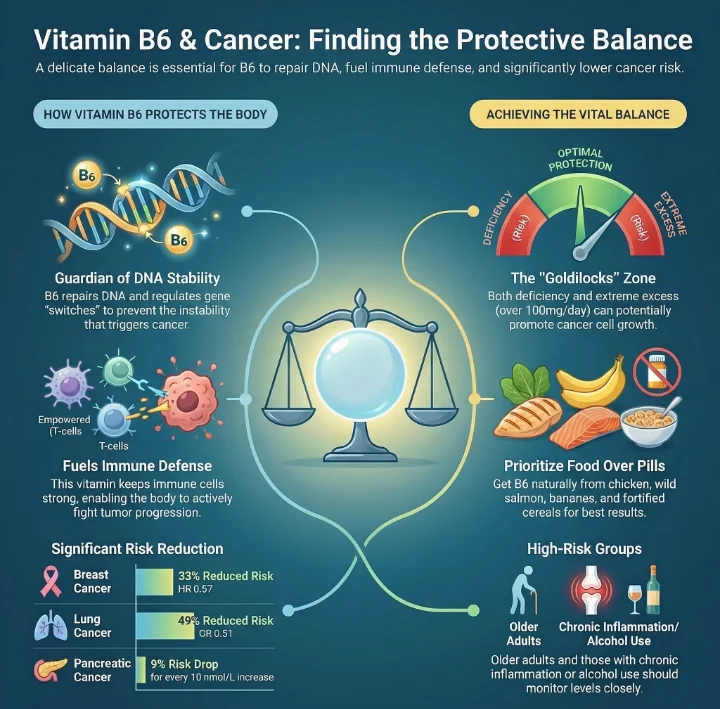
You need vitamin B6 for healthy DNA repair, methylation, and immune function. When you lack enough vitamin B6 or get too much, your cancer risk may change. Researchers link cancer and vitamin B6 levels to several types of cancer, including lung, colorectal, pancreatic, and breast cancer. Many people worldwide do not get enough vitamin B6, especially older adults and women.
In the UK, up to 65% of elderly people have a deficiency.
In the US, 14%-49% of women and 15%-23% of men fall below the recommended intake.
Key Takeaways
Vitamin B6 is essential for DNA repair and immune function, impacting cancer risk.
Both deficiency and excess of vitamin B6 can increase cancer risk; balance is key.
Eating foods rich in vitamin B6, like chicken and bananas, may lower cancer risk.
Older adults and pregnant women should monitor their vitamin B6 levels closely.
Consult your healthcare provider before taking vitamin B6 supplements to avoid side effects.
Cancer and Vitamin B6: Core Functions
DNA Synthesis and Methylation
You need vitamin B6 to keep your DNA healthy. This vitamin helps your cells repair DNA and make new DNA. It also supports methylation, which is a process that controls how your genes work. When methylation works well, your body can turn genes on or off at the right time. If you do not get enough vitamin B6, your DNA may become unstable. Too much vitamin B6 can also cause problems.
Vitamin B6 can affect cell cycle, inflammation, angiogenesis, oxidative stress, and chromosomal stability.
Vitamin B6 may influence colorectal carcinogenesis through its role in DNA synthesis and methylation, both of which are potentially involved in colorectal carcinogenesis. In addition, animal models have demonstrated that supplemental vitamin B6 suppressed cell proliferation and reduced the number of tumors in the colon.
Vitamin B6 (also known as pyridoxine) is a coenzyme involved in over 100 reactions in amino acid, glucose, lipid, and DNA metabolism. Existing evidence supports the hypothesis that vitamin B6 deficiency might favor cancer development and progression. In fact, vitamin B6-along with other nutrients such as folate, vitamin B12, and methionine-participates in the one-carbon metabolism pathway that contributes to carcinogenesis-related events such as DNA synthesis, methylation, and repair.
Immune Support and Cell Metabolism
Vitamin B6 helps your immune system fight cancer. It keeps your immune cells strong and active. You need vitamin B6 for many reactions in your body, including those that help your cells use energy and grow. If you lack vitamin B6, your immune system may not work well. Too much vitamin B6 can also change how your immune cells behave.
Evidence Type | Description |
|---|---|
Enzymatic Pathways | Vitamin B6 is involved in critical enzymatic pathways that are significant for cancer metabolism. |
Tumor Protection | Higher levels of vitamin B6 or PLP are associated with reduced risk of various tumor types. |
Immune Modulation | Vitamin B6 influences immune responses, enhancing anti-tumor immunity and affecting immune cell functions. |
Vitamin B6 modifies the bone marrow niche in acute myeloid leukemia (AML), creating a proinflammatory environment that supports cancer progression.
In pancreatic ductal adenocarcinoma (PDAC), cancer cells deplete vitamin B6, which impairs natural killer (NK) cell functions.
Vitamin B6 activates MR1-restricted T cells, enhancing anti-tumor immunity across various cancer types.
You see that Cancer and Vitamin B6 are closely linked. This vitamin regulates crucial metabolic processes to meet the demands of cancer cells. Pyridoxal phosphate (PLP), the active form of vitamin B6, can control the enzymatic network essential for leukemia maintenance. Vitamin B6 also influences the immune microenvironment in cancer by controlling and modulating the behavior of immune cells. Both deficiency and excess of vitamin B6 can change these functions and may impact your cancer risk.
What Science Shows About Vitamin B6 and Cancer
Protective Effects and Lower Risk
You can find many studies that show vitamin B6 may help lower your risk of cancer. Vitamin B6 supports over 100 reactions in your body, including DNA repair and cell growth. When you have enough vitamin B6, your cells can fix damage and stay healthy. Some research shows that higher vitamin B6 intake links to a lower risk of breast, lung, and colorectal cancers.
You may notice that vitamin B6 helps protect your cells from changes that can lead to cancer. For example, women who eat more vitamin B6 have a lower risk of breast cancer. Older men with higher blood levels of vitamin B6 have a lower risk of lung cancer. People who eat more vitamin B6 may also have fewer cases of colorectal adenocarcinoma.
Here is a table that shows some findings from studies:
Study Type | Population | Findings | Hazard Ratio (HR) / Odds Ratio (OR) | Confidence Interval (CI) | P-value |
|---|---|---|---|---|---|
Prospective Study | 27,853 women aged 45+ | Decreased risk of breast cancer with vitamin B6 intake | HR 0.67 | 0.50-0.91 | 0.01 |
Case-Control Study | 600 older men | Lower risk of lung cancer with higher vitamin B6 levels | OR 0.51 | 0.23-0.93 | 0.02 |
Nested Case-Control | 37,916 women aged 45+ | Decreased risk of colorectal adenocarcinoma with vitamin B6 | RR 0.69 | 0.41-1.15 | N/A |
Randomized Trial | 1470 women | No effect on colorectal cancer risk with B vitamins | N/A | N/A | N/A |
You can see that most studies show a lower risk, but not all results are the same. Some trials do not find a strong effect.
Risks of Deficiency and Excess
You need to keep your vitamin B6 levels balanced. If you do not get enough vitamin B6, your cells may not repair DNA well. This can lead to more changes in your cells and increase your cancer risk. When you have too much vitamin B6, your body may also face problems. High levels of vitamin B6 or its active form, PLP, can suppress tumor growth, but too much may also help cancer cells grow in some cases.
You should know that both low and high levels of vitamin B6 can change how your body works. Deficiency can make it easier for cancer to develop and progress. Excess vitamin B6 may also affect your cells in ways that are not always good.
Clinical trials show mixed results. Some studies support the idea that vitamin B6 lowers cancer risk, but others do not find strong evidence. Vitamin B6 may act as a marker for other healthy nutrients in your diet.
Evidence for Specific Cancers
You can find links between vitamin B6 and certain cancers. Studies show that higher vitamin B6 levels may lower your risk of colon, ovarian, and pancreatic cancers.
High vitamin B6 levels link to a reduced risk of colon cancer, especially in women who drink alcohol. Alcohol can lower vitamin B6 in your body.
A meta-analysis found that higher blood levels of vitamin B6 lower pancreatic cancer risk. For every 10 nmol/L increase in PLP, risk drops by 9%.
A long-term study with over 63,000 people showed that more vitamin B6 intake means less risk of pancreatic cancer.
Here is a table that shows results from different types of studies:
Study Type | Findings |
|---|---|
Case-Control Studies | Most show a modest, significant lower risk (RR = 0.67, 95%CI: 0.60-0.75) for high vs low intake. |
Cohort Studies | Meta-analysis found no strong effect (RR = 0.90, 95%CI: 0.75-1.07) with mixed results. |
You may notice that not all studies agree. Some show strong links, while others do not. Many factors can change the results, such as alcohol use and when vitamin B6 levels are measured.
📝 Note: Current research on Cancer and Vitamin B6 shows mixed results. Studies do not always agree. Some factors, like alcohol use and timing of vitamin B6 tests, can change outcomes. Scientists need more research to understand how vitamin B6 affects cancer risk.
Mechanisms: How Vitamin B6 Affects Cancer

Pathways for Cancer Prevention
Vitamin B6 helps your body protect itself from cancer in several ways. You need this vitamin for DNA repair, which keeps your genetic material stable. It also supports methylation, a process that controls how your genes turn on and off. When these processes work well, your cells stay healthy and less likely to become cancerous.
Vitamin B6 also affects how quickly your cells grow and divide. If your cells grow too fast, tumors can form. This vitamin helps slow down cell growth and keeps it under control. It also lowers oxidative stress, which means it reduces damage from harmful molecules in your body. Less damage means a lower chance for cancer to start.
Here is a table that shows how vitamin B6 works in your body to prevent cancer:
Biological Pathway | Effect of Vitamin B6 |
|---|---|
Colon Tumorigenesis | Suppressed incidence and number of colon tumors |
Cell Proliferation | Reduced cell proliferation and expressions of c-myc and c-fos proteins |
Oxidative Stress | Lowered levels of 8-hydroxyguanosine (8-OHdG) and 4-hydroxy-2-nonenal (4-HNE) |
Angiogenesis | Exhibited antiangiogenic effects in ex vivo models |
When Vitamin B6 May Promote Cancer
You might think more vitamin B6 always helps, but that is not always true. Both low and high levels can change how your body handles cancer risk. If you do not get enough, your cells cannot repair DNA or control growth, which raises your risk. Too much vitamin B6 can also cause problems. High levels may help some cancer cells grow or change how your immune system works.
You can see that vitamin B6 has a dual role in cancer:
It takes part in metabolic processes that can influence cancer development.
It plays a role in immune interactions that may affect tumor growth.
It regulates oncogenic pathways, which can protect against or promote cancer, depending on how much vitamin B6 you have.
Cancer and Vitamin B6 are closely linked through these pathways. Keeping your vitamin B6 levels balanced helps your body fight cancer and stay healthy.
Practical Steps for Vitamin B6 Intake

Recommended Amounts
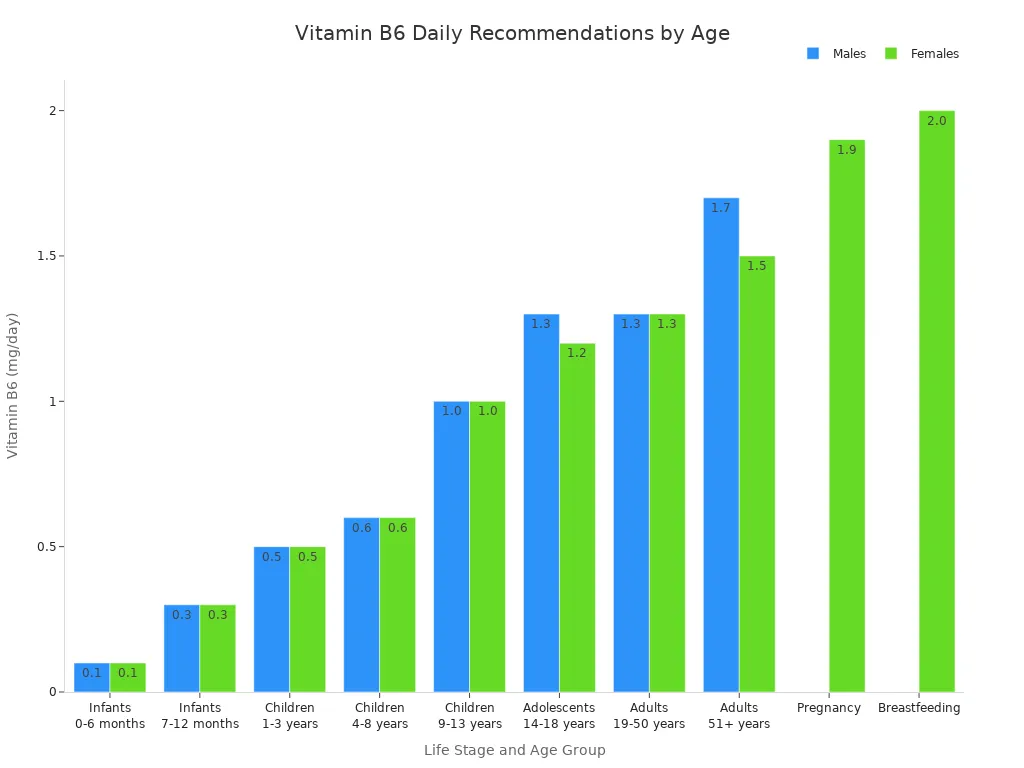
You need the right amount of vitamin B6 each day to keep your body healthy. The amount you need depends on your age and life stage. Check the table below to see how much vitamin B6 you should get:
Life Stage | Age | Males (mg/day) | Females (mg/day) |
|---|---|---|---|
Infants | 0-6 months | 0.1 (AI) | 0.1 (AI) |
Infants | 7-12 months | 0.3 (AI) | 0.3 (AI) |
Children | 1-3 years | 0.5 | 0.5 |
Children | 4-8 years | 0.6 | 0.6 |
Children | 9-13 years | 1.0 | 1.0 |
Adolescents | 14-18 years | 1.3 | 1.2 |
Adults | 19-50 years | 1.3 | 1.3 |
Adults | 51 years and older | 1.7 | 1.5 |
Pregnancy | all ages | - | 1.9 |
Breastfeeding | all ages | - | 2.0 |
You should also know the safe upper limits. Adults should not take more than 100 mg per day. Children and teens have lower limits.
Food Sources
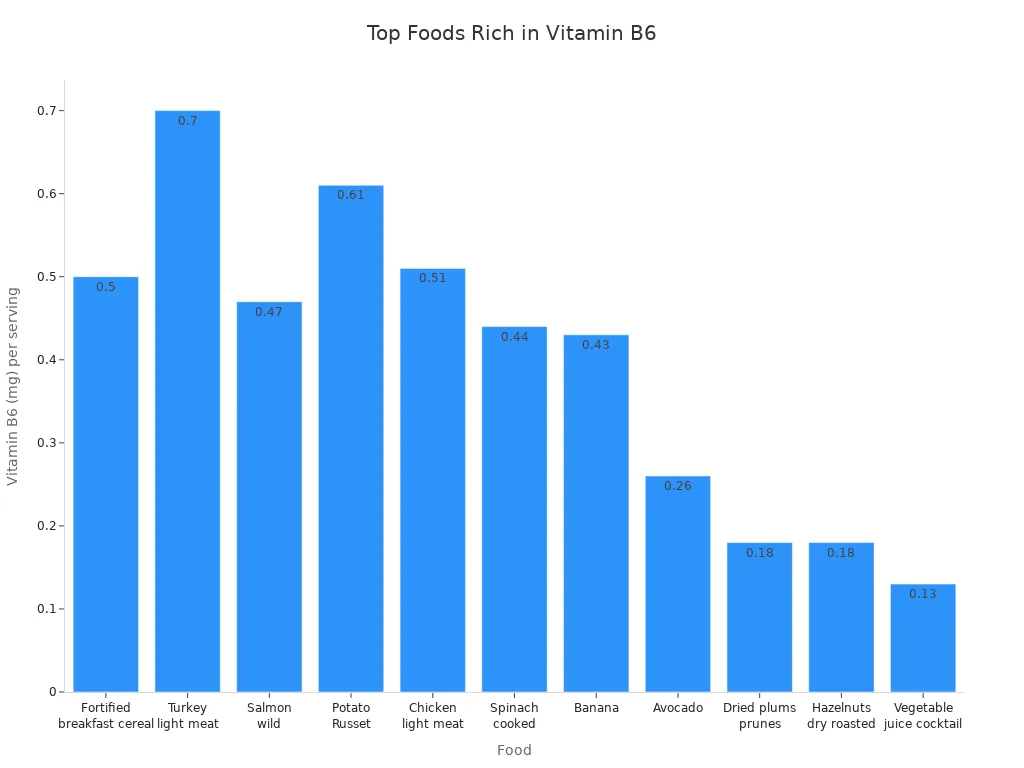
You can get vitamin B6 from many foods. Eating a variety of foods helps you meet your needs. Here are some top sources:
Food | Serving | Vitamin B6 (mg) |
|---|---|---|
Fortified breakfast cereal | 1 cup | 0.5-2.5 |
Turkey, light meat (cooked) | 3 ounces | 0.70-0.81 |
Salmon, wild (cooked) | 3 ounces | 0.47-0.80 |
Potato, Russet, with skin (baked) | 1 medium | 0.61 |
Chicken, light meat without skin (cooked) | 3 ounces | 0.51 |
Spinach (cooked) | 1 cup | 0.44 |
Banana | 1 medium | 0.43 |
Avocado | ½ medium | 0.26 |
🥗 Tip: Try to eat a mix of lean meats, fish, whole grains, potatoes, bananas, and leafy greens to boost your vitamin B6.
Supplementation Tips
Most people get enough vitamin B6 from food. You may need supplements if you have certain health problems or take specific medicines. Always talk to your healthcare provider before starting a supplement.
Ask your doctor if you have kidney disease, celiac disease, Crohn’s disease, or rheumatoid arthritis.
Avoid high doses of vitamin B6. Too much can cause nerve problems, numbness, or trouble walking.
Some medicines, like those for Parkinson’s disease or chemotherapy, may interact with vitamin B6.
Pregnant or breastfeeding women should not take large amounts of B6 supplements.
Watch for signs of deficiency, such as tiredness, skin problems, confusion, or numbness in your hands and feet.
⚠️ Note: If you think you need a supplement, check with your healthcare provider first. They can help you find the right dose and avoid side effects.
Who Should Monitor Vitamin B6
At-Risk Groups
You may need to pay close attention to your vitamin B6 levels if you belong to certain groups. Some people have a higher chance of deficiency because of age, health conditions, or lifestyle. Older adults often have lower vitamin B6 levels. Women, especially during pregnancy or breastfeeding, may need more vitamin B6. People with kidney disease, celiac disease, Crohn’s disease, or rheumatoid arthritis can struggle to absorb or use vitamin B6.
You may also face risk if you take medications that interfere with vitamin B6 metabolism. These include some treatments for epilepsy, tuberculosis, and Parkinson’s disease. If you follow a strict vegetarian or vegan diet, you might not get enough vitamin B6 from food. Alcohol use can lower vitamin B6 in your body, making it harder for your cells to stay healthy.
📝 Tip: If you belong to any of these groups, ask your healthcare provider about checking your vitamin B6 status.
Here is a table that shows who should monitor vitamin B6:
Group | Reason for Monitoring |
|---|---|
Older adults | Higher risk of deficiency |
Pregnant/Breastfeeding women | Increased need for vitamin B6 |
People with chronic diseases | Impaired absorption or metabolism |
Medication users | Drug interactions |
Vegetarians/Vegans | Limited dietary sources |
Heavy alcohol users | Reduced vitamin B6 levels |
People with Cancer Risk Factors
You should monitor your vitamin B6 if you have risk factors for cancer. Vitamin B6 supports over 100 metabolic reactions in your body. Low levels can lead to genomic instability and increase your cancer risk. If you ignore your vitamin B6 status, you may promote cancer development and progression.
Epidemiological studies show that impaired vitamin B6 status links to a higher risk of lung cancer. Inflammation can change how your body uses vitamin B6, making it important to check your levels if you have chronic inflammation or a family history of cancer. A study found that high levels of a marker for impaired vitamin B6 status were associated with greater lung cancer risk.
⚠️ Note: If you have a family history of cancer, chronic inflammation, or other risk factors, monitoring your vitamin B6 can help you protect your health.
You can take steps to keep your vitamin B6 levels balanced. Eat a variety of foods, watch for signs of deficiency, and talk to your healthcare provider if you have concerns. Staying aware of your vitamin B6 status may help you lower your cancer risk.
You need vitamin B6 to help your body repair DNA, control genes, and support your immune system. Getting the right amount matters—too little or too much can change your cancer risk. Studies show that eating foods rich in vitamin B6 may lower your risk for some cancers, but supplements do not always help and can cause nerve problems if overused. Always choose food first and talk to your doctor before taking supplements. Stay updated as science learns more about vitamin B6 and cancer.
FAQ
Can vitamin B6 supplements lower your cancer risk?
You may not lower your cancer risk by taking vitamin B6 supplements. Most studies show that food sources work best. Supplements can help if you have a deficiency, but you should ask your doctor before using them.
What signs show you have a vitamin B6 deficiency?
You may notice tiredness, skin rashes, confusion, or numbness in your hands and feet. If you see these signs, talk to your healthcare provider.
Which foods give you the most vitamin B6?
You get vitamin B6 from chicken, salmon, potatoes, bananas, and fortified cereals. Try to eat a mix of these foods every day.
🥗 Tip: Eating a variety of foods helps you meet your vitamin B6 needs.
Can too much vitamin B6 cause health problems?
Yes, high doses of vitamin B6 can cause nerve damage, numbness, or trouble walking. You should not take more than 100 mg per day unless your doctor tells you to.
Who needs to monitor vitamin B6 levels closely?
Older adults, pregnant women, people with chronic diseases, and those who use certain medicines need to watch their vitamin B6 levels. If you belong to these groups, ask your doctor about testing.
This article is for educational purposes only and is not a substitute for professional medical advice. For more details, please see our Disclaimer. To understand how we create and review our content, please see our Editorial Policy.
See Also
Recognizing Duodenal Cancer: Symptoms And Treatment Options
A Simple Guide To Extrahepatic Bile Duct Cancer
Cholangiocarcinoma: Key Features And Important Insights

© 2026 Banish Cancer. Banish Cancer is a registered non-profit organization providing evidence-based research, educational courses, and Fear Response AI support services. Reg. No: 305706884 | Address: Taikos pr. 43-603, Kaunas, Lithuania.