Corporate Responsibility in Oncology — Profit and Progress

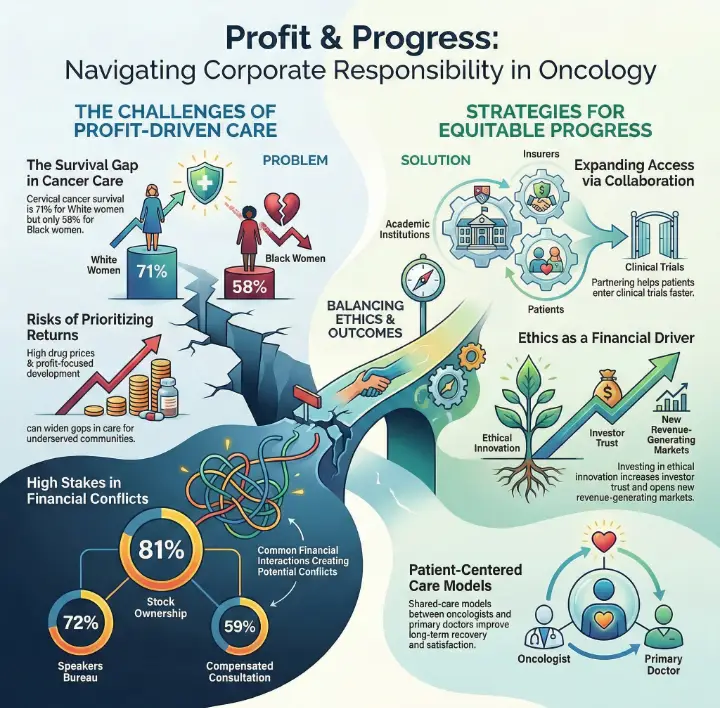
Corporate Responsibility in Oncology Profit and Progress shapes how companies prioritize patient outcomes alongside financial goals. Healthcare professionals, industry leaders, and patients each face high ethical and practical stakes.
"Our commitment to improving patient outcomes is central to how we operate, and forms the foundation of our approach to corporate responsibility at Guardant."
Ethical considerations influence every decision.
Transparency, fairness, and interpretability guide the use of new technologies in cancer care.
"Improving efficiency and investing in innovation should be considered in tandem, with the common thread being a focus on improving outcomes for patients."
Readers can reflect on how corporate choices affect access, quality, and survival.
Key Takeaways
Corporate responsibility in oncology means balancing profit with patient well-being. Companies should prioritize improving patient outcomes alongside financial goals.
Investing in research and innovative treatments can lead to better patient outcomes and increased trust from investors. Companies that focus on ethics often see financial benefits.
Access to cancer treatments is crucial. Companies can improve access by collaborating with healthcare providers and supporting clinical trials, ensuring more patients receive necessary care.
Addressing health disparities is essential. Companies must work to lower drug prices and support outreach programs to help underserved communities access quality cancer care.
Ethical principles like transparency and accountability guide corporate responsibility. Companies should ensure fair decision-making processes to maintain patient trust.
Corporate Responsibility in Oncology: Profit and Progress
Defining Corporate Responsibility
Corporate Responsibility in Oncology Profit and Progress describes how companies in cancer care balance financial success with patient well-being. This concept means that organizations must not only seek profit but also improve patient outcomes. Many companies use different models to achieve this balance. The table below shows common models in oncology care:
Model of Care | Description | Key Elements |
|---|---|---|
Survivorship Care Plans | Focus on helping cancer survivors move from treatment to recovery. | Multimodal resources, dedicated clinics, shared-care model |
Shared-Care Model | Oncologists and primary care providers work together. | Risk-stratified approach, co-responsibility |
Transition Clinics | Support patients as they return to their primary care doctors. | Health promotion through follow-up appointments |
These models show that Corporate Responsibility in Oncology Profit and Progress involves more than just business goals. It includes supporting patients during and after treatment.
Key Stakeholders and Principles
Many groups shape corporate responsibility in oncology. The most influential stakeholders include:
Patients
Clinicians
Healthcare Administrators
Quality Officers
Each group plays a role in making sure that care is fair and effective. Ethical principles guide their actions. Some of the most important principles are:
Principle | Description |
|---|---|
Relevance | Decisions should be based on reasons that fair-minded people can agree are relevant. |
Publicity | Decisions and their reasons should be open to everyone. |
Revision | There should be ways to revisit and improve decisions. |
Empowerment | All voices should be heard, and power differences should be reduced. |
Enforcement | Rules should exist to make sure these principles are followed. |
Other key values include transparency, accountability, inclusiveness, equity, and sustainability. Leading organizations also focus on protecting human rights and promoting well-being. Corporate Responsibility in Oncology Profit and Progress depends on these principles to ensure that both profit and patient progress remain priorities.
Financial Impact and Patient Access

Positive Effects on Profits
Companies that embrace Corporate Responsibility in Oncology Profit and Progress often see positive financial results. They invest in research and development. These investments lead to new cancer therapies. When companies launch innovative treatments, they can reach new markets. This growth increases revenue. Investors also show more trust in companies that focus on ethical practices. They believe these companies will succeed in the long term. Strong corporate responsibility can attract partnerships with hospitals and research centers. These partnerships help companies share costs and risks.
Improving Access to Cancer Treatments
Access to cancer treatments remains a major concern. Many patients struggle to receive the care they need. Companies use several strategies to improve access. They work with academic institutions to support clinical trials. They address bureaucratic hurdles that slow drug approvals. They also form partnerships with healthcare providers and insurers. These collaborations help patients join clinical trials and receive new therapies faster. Companies support investigator-initiated trials to test new drug combinations. The table below shows some effective strategies:
Strategy | Description |
|---|---|
Academic Involvement | Enhancing academic participation in clinical trials to foster innovative treatment paradigms. |
Bureaucratic Hurdles | Addressing the cumbersome drug registration processes that hinder new drug approvals. |
Collaboration | Promoting partnerships between academia, healthcare providers, and insurers to support clinical trials and improve access. |
Innovative Trials | Increasing support for investigator-initiated trials to explore new treatment options and drug combinations. |
These efforts help more patients benefit from the latest advances in cancer care.
Risks of Profit-Driven Care
A focus on profit can create risks for patients. Some companies may set high prices for new treatments. High costs can limit access for those without strong insurance. In some cases, companies may prioritize drugs that offer higher returns instead of those that address urgent patient needs. This approach can widen gaps in care. Patients in low-income areas may face even more barriers. Companies must balance financial goals with patient well-being. They should ensure that Corporate Responsibility in Oncology Profit and Progress does not come at the expense of access or equity.
Patient Outcomes and Quality of Care
Enhancing Survival and Quality of Life
Corporate responsibility initiatives in oncology can directly influence how long patients live and how well they feel during and after treatment. Companies that invest in research, patient support programs, and innovative therapies help raise survival rates. They also improve the quality of life for people facing cancer. When organizations focus on patient-centered care, they create systems that support both physical and emotional needs. For example, survivorship care plans and shared-care models help patients transition from active treatment to recovery. These approaches reduce anxiety and improve long-term health.
Note: Patient-centered programs often include counseling, nutrition support, and pain management. These services help patients manage side effects and maintain daily activities.
When companies align their goals with patient well-being, they build trust with both patients and healthcare providers. This trust encourages more people to seek care early, which can lead to better outcomes.
Addressing Gaps and Inequities
Despite progress, many gaps remain in cancer care. Disparities in health care quality affect not only ethnic minorities but also people of different genders, ages, and income levels. These inequities can lead to worse clinical outcomes for many groups. For instance, the five-year survival rate for cervical cancer is 71% for White women in the United States, but only 58% for Black women. Over 90% of cervical cancer deaths occur in low- and middle-income countries. These statistics show that access to screening, prevention, and advanced treatments is not equal everywhere.
Many patients in low-income regions cannot reach radiotherapy centers.
Some communities lack basic cancer screening and prevention services.
Older adults and people with lower incomes often face barriers to new treatments.
Companies that practice Corporate Responsibility in Oncology Profit and Progress must address these gaps. They can do this by supporting outreach programs, lowering drug prices, and working with local health systems. By focusing on equity, organizations help more people benefit from advances in cancer care.
Real-World Examples
Several real-world examples show how corporate responsibility can improve or limit patient outcomes:
Cancer Care Ontario (CCO) improved cancer treatment in Ontario by integrating services and holding networks accountable for results. CCO tied funding to performance, which helped reduce wait times and improve care quality.
The National Cancer Control Programme (NCCP) in Ireland gained control over cancer service budgets. This control allowed the NCCP to set standards and improve how care was delivered.
The Nova Scotia Health Authority's cancer program took over from a less empowered group. With budgetary control, the program managed cancer services more effectively.
In Western Australia, clinicians highlighted the importance of collaboration among service providers. They worked together to define and deliver safe, quality care.
"They’re able to tie funding to performance and when performance doesn’t meet standards…they’ve got that stick…to use with the regional cancer programme."
These examples show that when organizations take responsibility for both funding and performance, patient outcomes improve. However, gaps still exist in many regions, especially where resources are limited. Companies and health systems must continue to work together to close these gaps and ensure that all patients receive high-quality care.
Challenges and Ethical Dilemmas
Conflicts of Interest
Corporations in oncology often face conflicts of interest. These conflicts can arise when financial incentives influence decisions about patient care. For example, stock ownership and speaking honoraria are common types of interactions between companies and healthcare professionals. The table below shows how often these interactions occur:
Respondents (%) | |
|---|---|
Payment for meals | 20 |
Speakers bureau (slides provided) | 72 |
Speaking honoraria (slides not provided) | 50 |
Compensated consultation | 59 |
Uncompensated consultation | 22 |
Stock ownership | 81 |
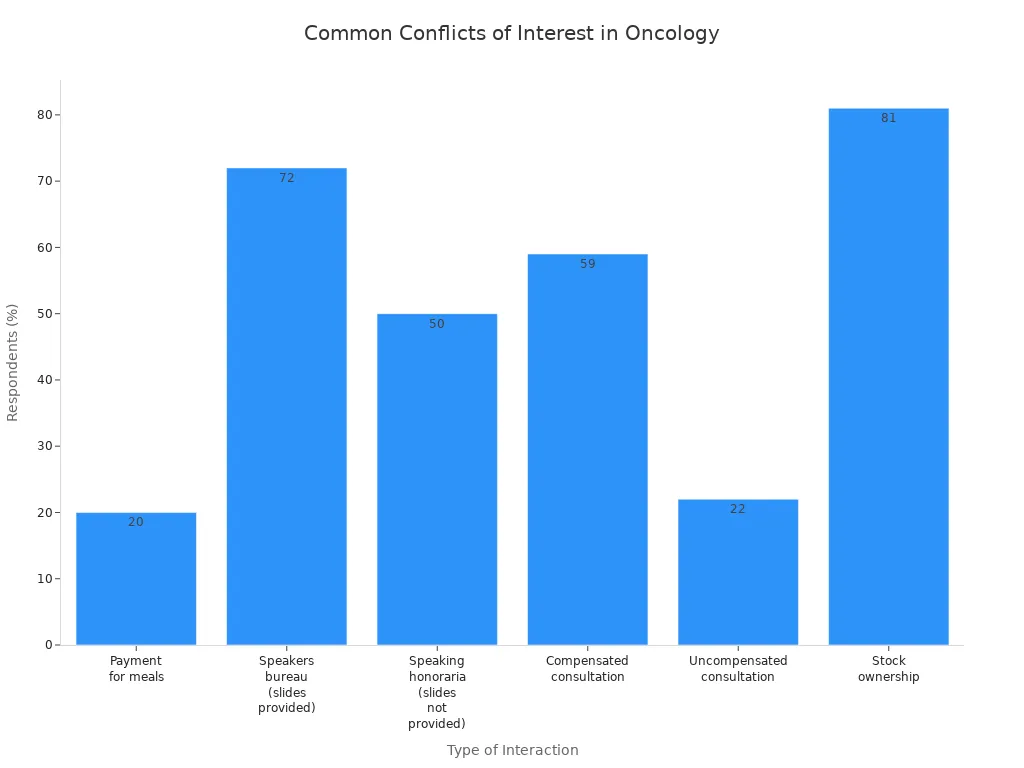
To manage these conflicts, companies use strategies like public disclosure, peer review, and auditing. Presenting alternative views and restricting presenters also help reduce bias. These actions protect patient trust and ensure that care decisions remain fair.
Limitations of CSR Initiatives
Corporate social responsibility (CSR) programs aim to improve patient outcomes, but they have limits. Some initiatives focus more on public image than real change. Others lack resources or long-term support. Ethical principles such as beneficence, autonomy, and empathy guide these efforts. When companies follow these principles, they build trust and improve patient experiences. The table below explains how these values affect patient trust and outcomes:
Ethical Principle | Description | Impact on Patient Trust and Outcomes |
|---|---|---|
Beneficence | Duty to alleviate suffering and avoid harm | Enhances trust by prioritizing patient well-being |
Autonomy | Right to make voluntary medical decisions | Fosters trust through respect for patient choices |
Empathy | Understanding patient feelings and perspectives | Builds trust and improves communication |
However, not all CSR programs address the root causes of inequity or access. Companies must commit to ongoing improvement to make a lasting impact.
Policy and Regulatory Pressures
Policy and regulatory pressures shape how companies act in oncology. Rising cancer care costs, estimated at $157 billion in the U.S. for 2020, strain national budgets. Advocacy groups push for better access and fair pricing. Health technology assessments (HTAs) influence which treatments receive funding. Austerity measures can limit drug access and create inequities. The table below highlights key factors:
Factor Influencing Corporate Responsibility | Description |
|---|---|
Cost of Cancer Care | High expenditures challenge budgets. |
Advocacy for Access | Patients and groups demand fair pricing. |
Health Technology Assessments (HTAs) | Affect reimbursement and access. |
Austerity Measures | Lead to inequities in drug access. |
Focus of Debate | Often on drugs, less on other technologies. |
Companies must respond to both direct and indirect pressures. They need to balance financial goals with the responsibility to provide effective, equitable care.
Strategies for Sustainable Balance
Corporate responsibility shapes both profits and patient outcomes in oncology. Stakeholders can foster ethical, sustainable cancer care by following clear recommendations:
Recommendation | Description |
|---|---|
Stakeholders, especially survivors, should help set up and use PROs. | |
Leaders must coordinate, educate, and integrate digital tools in clinics. |
“When more than one profession provides care, patient satisfaction rises. Teams improve knowledge, reduce distress, and support medical management. Working together helps patients.”
Ongoing dialogue and teamwork remain vital for progress.
FAQ
What does corporate responsibility mean in oncology?
Corporate responsibility in oncology means that companies must balance making money with helping patients. They should create treatments that improve lives and make sure people can access care.
How do companies improve patient access to cancer treatments?
Companies work with hospitals, doctors, and insurance groups. They support clinical trials and lower barriers for patients. These actions help more people receive new therapies.
Why do high drug prices matter for patients?
High drug prices can stop patients from getting the treatments they need. Some people cannot afford medicine. This can lead to worse health outcomes.
How can companies address gaps in cancer care?
Companies can support outreach programs, lower drug costs, and partner with local clinics. These steps help more people get quality cancer care, especially in underserved areas.
This article is for educational purposes only and is not a substitute for professional medical advice. For more details, please see our Disclaimer. To understand how we create and review our content, please see our Editorial Policy.
See Also
Exploring Large Cell Lung Cancer and Its Categories
Key Characteristics of Glioblastoma: A Detailed Overview
Large Cell Lung Cancer with Rhabdoid Features Explained
Choriocarcinoma: Definition, Treatment Options, and Insights

© 2026 Banish Cancer. Banish Cancer is a registered non-profit organization providing evidence-based research, educational courses, and Fear Response AI support services. Reg. No: 305706884 | Address: Taikos pr. 43-603, Kaunas, Lithuania.