Why Equitable Access to Treatment Matters in Modern Healthcare

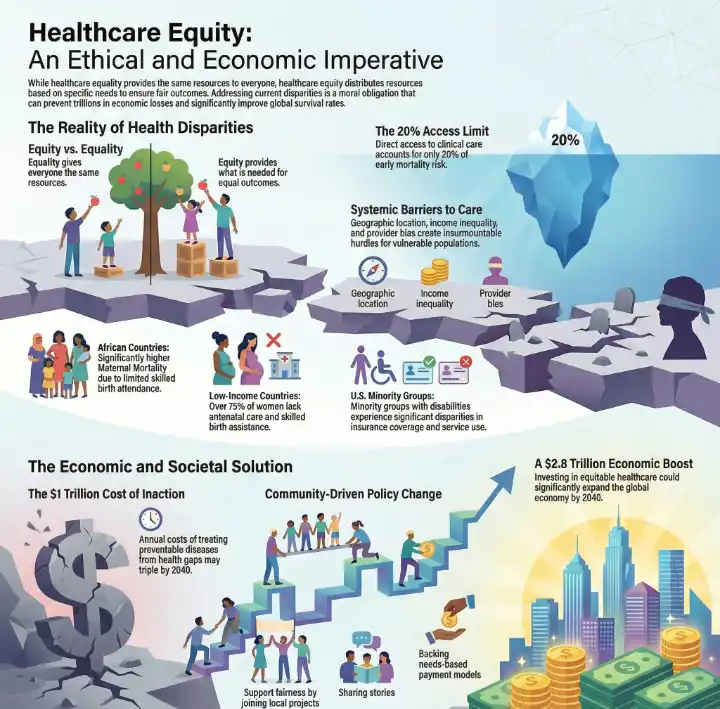
You deserve fair access to healthcare because it respects your dignity and helps reduce health disparities. Equitable Access to Treatment: An Ethical Imperative means you get care based on your needs, not just equal treatment for all. People from low-income backgrounds, minorities, and those living in certain regions often face worse health outcomes. The table below shows how maternal mortality and cancer survival rates differ across populations:
Population/Region | Healthcare Disparity Indicator | Key Statistics/Findings |
|---|---|---|
African countries vs Western countries | Maternal mortality rates | Significantly higher maternal mortality in African countries due to limited healthcare access; poorer populations have lower skilled birth attendance coverage |
Low socioeconomic status populations | Access to healthcare | Consistently poorer access linked to social disadvantages and financial constraints |
High-income countries (HICs) vs Low- and middle-income countries (LMICs) | Cancer survival rates | HICs have advanced screening and treatment leading to better survival; LMICs face limited access to timely and quality cancer care |
United States (within HIC) | Health disparities by race/ethnicity and disability | Minority groups with disabilities experience disparities in health service use and insurance coverage compared to white individuals, linked to income inequality |
Low-income countries | Maternal healthcare utilization | Over 75% of women may lack antenatal care and skilled birth assistance, contributing to nearly all pregnancy-related mortalities globally |
When you understand the difference between equity and equality, you see why equity helps everyone achieve better health.
Key Takeaways
Equitable access means getting healthcare based on your needs, not just the same care for everyone.
Fair treatment respects your dignity and helps reduce health differences among groups.
Barriers like location, income, and bias can stop people from getting the care they need.
Supporting health equity improves community health, saves money, and strengthens society.
You can help by joining local health efforts, sharing your story, and backing fair policies.
Equitable Access to Treatment: An Ethical Imperative

Defining Equity in Healthcare
You may wonder what equity in healthcare means. Leading health organizations have clear definitions that help you understand this important concept. The table below shows how different groups describe health equity:
Organization | Definition |
|---|---|
Robert Wood Johnson Foundation | Health equity means that everyone has a fair and just opportunity to be as healthy as possible, requiring the removal of obstacles such as poverty and discrimination. |
Healthy People 2030 | Health equity is the attainment of the highest level of health for all people, requiring ongoing societal efforts to address avoidable inequalities and eliminate health disparities. |
Centers for Disease Control and Prevention | Health equity is the state in which everyone has a fair and just opportunity to attain their highest level of health, necessitating efforts to address injustices and eliminate preventable health disparities. |
World Health Organization | Health equity is the absence of unfair, avoidable differences among groups, achieved when everyone can attain their full potential for health and well-being, influenced by social determinants and structural factors. |
You see that each definition focuses on fairness and removing barriers. Equitable Access to Treatment: An Ethical Imperative means you get the care you need, no matter your background or where you live. This approach helps everyone reach their best possible health.
Equity vs. Equality
You might think equity and equality are the same, but they are not. Equality gives everyone the same resources or opportunities. Equity recognizes that you and others have different needs and circumstances. Health systems use examples to show this difference:
"Equality is giving everyone a pen to fill out a paper job application; equity is posting that application on a website that is compatible with assistive technology such as a screen reader or refreshable Braille display for people with visual disabilities."
"Equality means each individual or group of people is given the same resources or opportunities. Equity recognizes that each person has different circumstances and allocates the exact resources and opportunities needed to reach an equal outcome."
"Though health equality and health equity both strive to achieve better outcomes and access to health care services, they are not the same. Equality refers to equal access for everyone, while equity aims to adjust resources for disadvantaged groups to truly create an even playing field."
Many people believe that access to care equals equity, but this is a common misconception. Having health insurance or a clinic nearby does not guarantee that you will get the care you need. Studies show that access accounts for only about 20% of the risk of dying early. Treating everyone the same does not solve deeper problems. You need solutions that fit your unique situation.
Why Equity Matters
Equitable Access to Treatment: An Ethical Imperative stands on strong moral and ethical foundations. You deserve fair treatment because it respects your dignity and supports justice. Many ethical theories support this idea:
Prioritarianism says you should help those with greater needs first.
Value-based insurance design gives you care based on your clinical needs, not just a standard plan for everyone.
Medicaid Disproportionate Share Hospital payments send more resources to hospitals that serve the most vulnerable people.
You can see that Equitable Access to Treatment: An Ethical Imperative is not just about fairness. It is also a moral obligation. Here are some main reasons:
Some groups, like African Americans, Native Americans, and wounded veterans, have special rights to a decent minimum of care because of past injustices or sacrifices.
You have a right to preventive health services to protect you from harm and to ensure equal protection under the law.
Good health services help you stay productive and active in your community.
These reasons support your legal right to some forms of health care.
When the state enforces these rights, everyone benefits from a public good, and you know your contributions matter.
Equitable Access to Treatment: An Ethical Imperative helps you and your community live healthier, more just lives. It makes sure no one gets left behind, and everyone has a fair chance to reach their full potential.
Impact on Health and Society
Reducing Health Disparities
You can see how fair access to healthcare changes lives. When you get care that fits your needs, you have a better chance to stay healthy. Many groups, like the Agency for Healthcare Research and Quality, work to remove barriers in healthcare. They use special training and tools to help doctors and nurses understand your background and needs. These tools include health equity toolkits and lessons that teach providers how to care for people from all walks of life.
When you receive care based on your needs, you trust your doctor more. This trust helps you follow treatment plans and feel safe in the healthcare system. Studies show that when hospitals use evidence-based practices, people from marginalized groups get better care. This approach lowers the gap in health outcomes between different groups. You can see fewer cases of preventable illness and death when everyone gets the right care at the right time.
Societal and Economic Benefits
You help your community grow stronger when you have good health. Equitable access to care means more people can work, go to school, and support their families. This leads to a better economy and a happier society. Here are some ways that fair healthcare helps everyone:
More people can join the workforce and stay productive, which helps the economy grow.
When you address health gaps, you lower the costs that come from treating preventable diseases. Right now, these costs can reach $320 billion and may rise to over $1 trillion by 2040 if nothing changes.
Investing in fair healthcare can boost the economy. Experts say it could add up to $2.8 trillion to the economy by 2040.
When you support Equitable Access to Treatment: An Ethical Imperative, you help build a society where everyone can reach their potential. You also help save money for families, businesses, and the government.
Universal Access and Human Rights
You have a right to health care, just like you have a right to education and safety. Universal access means everyone can get the care they need, no matter where they live or how much money they have. This idea is part of international law and is supported by many countries around the world.
Societal Benefit | Explanation |
|---|---|
Physical Accessibility | You can reach health services easily, with hours and locations that fit your life. |
Financial Affordability | You can afford care without worrying about losing your savings or going into debt. |
Acceptability | You feel comfortable seeking care because services respect your culture, language, and beliefs. |
Reduction of Health Disparities | Universal access helps close the gap between rich and poor, making health care fair for everyone. |
Improved Health Crisis Response | When everyone has coverage, your community can respond better to emergencies like pandemics or natural disasters. |
Universal access to healthcare also helps reduce racial and ethnic health gaps. Programs like CHIP and Medicare in the United States have made it easier for children and older adults to get care. Countries like Germany and France show that long-term care for vulnerable groups works best when everyone has coverage. When you have access to mental health care, you can get help sooner and feel better faster.
International law says that health care is a human right. Every country should make laws and policies to give you access to quality care. The right to health connects to other rights, like food, housing, and education. When you support universal health coverage, you help make sure everyone gets a fair chance at a healthy life.
Barriers to Equitable Access

Geographic and Resource Gaps
You may live in a city with many hospitals, or you may live in a rural area where doctors are hard to find. People in rural places often struggle to get care because there are not enough primary-care physicians. For example, in North Carolina, people in rural communities face both income gaps and a shortage of healthcare providers. This creates a cycle where you might not get the care you need. Transportation can also be a big problem. Millions of people cannot reach a doctor because they lack reliable ways to travel. If you live far from a clinic, you may delay or skip important visits. Economic barriers like lack of insurance, high out-of-pocket costs, and poverty make it even harder to get care. Sometimes, even when clinics exist, they do not have enough medicine or supplies.
Tip: Adding more community health worker sites in rural areas can help more people get care, instead of just moving existing sites.
Social Determinants and Bias
Your income, education, and race can shape your healthcare experience. If you have a low income, you may struggle to find a clinic that accepts your insurance. If you have less education, you may find it hard to understand medical instructions. Discrimination based on race can make you feel unwelcome or unsafe at the doctor’s office. These factors can lower your trust in healthcare providers and make you less likely to seek care. The table below shows how different factors affect your access:
Factor | Impact on Healthcare Access |
|---|---|
Income | Hard to find clinics that accept your insurance |
Education | Low health literacy makes it tough to use healthcare services |
Race | Discrimination can reduce trust and stop you from seeking care |
Structural | Policies and inequality limit transportation and clinic options |
Insurance Type | Medicaid patients often get lower-quality care than those with private insurance |
Bias among healthcare providers can also affect your care. If a doctor holds hidden biases, you may not get the best treatment. This can lead to worse health outcomes, especially for people from minority groups.
Access to Innovation
You may hear about new treatments or medicines, but not everyone can get them. People in low- and middle-income countries often face shortages of essential medicines. Out-of-pocket costs for tests and treatments can be too high for many families. In some places, almost half of clinics run out of important medicines, while this rarely happens in wealthier countries. Systemic bias in healthcare can also block access to new technology. Algorithms and data may not include people from all backgrounds, which can lead to mistakes and delays in care. You deserve access to the latest treatments, but these barriers can keep you from getting the care you need.
Ethical Frameworks and Solutions
Principles of Justice and Fairness
You want healthcare policies that treat everyone fairly. The idea of fairness means that health policies must protect the most vulnerable people in society. These policies should not only help the majority but also make sure they do not leave out those who already face hardships. The principles of justice as fairness, inspired by thinkers like John Rawls, say you should have a fair chance at good health, no matter your background. This means giving priority to people who are worst off and making sure that rules for sharing resources are open and fair.
Ethical principles in healthcare include:
Reducing and preventing systematic disadvantage.
Ensuring everyone has enough health to live a decent life.
The principles of distributive justice guide how resources are shared, especially during tough times. Teams that decide who gets care should learn about unconscious bias and review decisions to make sure everyone gets a fair chance.
Health Capability Approach
You have unique needs when it comes to health. The health capability approach looks at what you need to reach your best health. It recognizes that some people need more support to achieve the same health outcomes as others. This approach combines your ability to be healthy with your power to make healthy choices. It also looks at what helps or blocks you from reaching your health goals. When you improve your health capability, you can help yourself and others live better lives.
The health capability approach:
Connects health outcomes with your ability to make choices.
Focuses on removing barriers that stop you from being healthy.
Encourages support for those who need extra help.
Policy and Community Action
You can see real change when policies and communities work together. Recent healthcare reforms have improved access by supporting primary care, using better health technology, and tracking health disparities. New payment models aim to match resources with patient needs. Federal rules now require regular checks on healthcare fairness.
Community-based programs also make a big difference. For example, states like Idaho and Arizona use special indexes to measure and improve health in neighborhoods. In South Carolina, groups work with local communities to fight cancer disparities. Advocacy groups raise awareness, collect data, and push for policies that help everyone get the care they need.
Ways you can support equity:
Join community health projects.
Support policies that focus on fairness.
Share your experiences to help shape better healthcare for all.
You see that Equitable Access to Treatment: An Ethical Imperative is both a moral duty and a practical need. Many people do not get the care they need, especially for mental health. Policies and community action can help close these gaps.
You can support fairness by learning about health disparities and sharing your story.
Experts suggest collecting data by age, sex, and race to improve care for everyone.
Challenge | What You Can Do |
|---|---|
Technological disparities | Ask for digital health support |
Mental health gaps | Speak up for better access |
How will you help shape the future of healthcare equity?
FAQ
What does equitable access to treatment mean?
You get care based on your needs, not just the same care as everyone else. This means you receive support that fits your situation, so you have a fair chance at good health.
Why is equity in healthcare important?
You help reduce health gaps when you support equity. Fair access lets everyone stay healthy and active. Equity also respects your dignity and helps build a stronger community.
How can you support equitable access in your community?
You can join local health programs, share your experiences, and speak up for fair policies. Your voice helps leaders understand what your community needs.
Does equitable access cost more?
You may think it costs more, but fair access often saves money. Preventing illness and treating problems early lowers long-term costs for you and your community.
This article is for educational purposes only and is not a substitute for professional medical advice. For more details, please see our Disclaimer. To understand how we create and review our content, please see our Editorial Policy.
See Also
Recognizing Signs And Treatment Options For Conjunctival Melanoma
A Comprehensive Guide To Symptoms And Care For Choroid Plexus Carcinoma
Key Symptoms And Effective Treatments For Duodenal Cancer Explained
An Overview Of Insulinoma And Its Medical Importance Today
Identifying Causes And Symptoms Of Esophageal Cancer You Should Know

© 2026 Banish Cancer. Banish Cancer is a registered non-profit organization providing evidence-based research, educational courses, and Fear Response AI support services. Reg. No: 305706884 | Address: Taikos pr. 43-603, Kaunas, Lithuania.