Top Hobbies to Try After Cancer Recovery

Facts Verified: February 2026
You have shown incredible strength on your path to healing. Self-care matters now more than ever. Exploring New Hobbies: Rediscovery After Cancer Recovery brings hope and joy back into your life.
Creating, drawing and colouring can be relaxing and meditative. Many cancer patients enjoy knitting or crocheting during chemotherapy to pass the time. These activities also offer brain health benefits and help to maintain or improve memory and cognitive function.
Mindfulness techniques, such as deep breathing and guided visualization, encourage you to focus on the present moment without judgment.
This helps break cycles of negative thinking and promotes emotional balance.
Key Takeaways
Exploring new hobbies can boost your self-esteem and help you express yourself. Choose activities that you enjoy to stay motivated.
Start small with manageable steps. Even short sessions of 15-20 minutes can bring joy and help you feel more in control of your recovery.
Connecting with others through group activities can reduce feelings of isolation. Join clubs or classes to share experiences and build friendships.
Exploring New Hobbies: Rediscovery After Cancer Recovery
Why Try New Hobbies?
Exploring New Hobbies: Rediscovery After Cancer Recovery gives you a chance to heal and grow. You may feel a sense of loss or grief for your old routines. Many survivors want to return to past activities but realize life feels different now. You might face challenges like fatigue, pain, or changes in memory. These feelings are normal. Trying new hobbies helps you move forward and discover new parts of yourself.
You do not have to do everything at once. Exploring New Hobbies: Rediscovery After Cancer Recovery lets you start small. You can pick activities that match your interests and energy. Even short sessions can bring joy and help you feel more in control.
Tip: Ask for support from friends or family if you feel unsure. You are not alone on this journey.
Benefits for Well-Being
Exploring New Hobbies: Rediscovery After Cancer Recovery supports your body and mind. When you try new activities, you boost your self-esteem and find new ways to express yourself. Many survivors notice less anxiety and depression when they stay active. Hobbies help you feel strong and resilient.
You can adapt hobbies to fit your needs. Here are some ways to make activities work for you:
Strategy | Description |
|---|---|
Pick hobbies you enjoy, like painting or yoga, to stay motivated. | |
Start with manageable steps | Begin with short sessions (15-20 minutes) and add more time as you feel better. |
Be flexible and patient | Change activities if you feel tired. Try gentler hobbies when you need to rest. |
You can join group activities to meet others and feel less alone. Every step you take brings you closer to feeling confident and happy again.
Creative Arts & Expression

Creative hobbies help you process emotions and discover new ways to express yourself. You can use art, music, or crafts to find peace and joy. Exploring New Hobbies: Rediscovery After Cancer Recovery gives you a chance to try activities that fit your interests and energy. You do not need to be an expert. You only need a willingness to explore and create.
Painting and Drawing
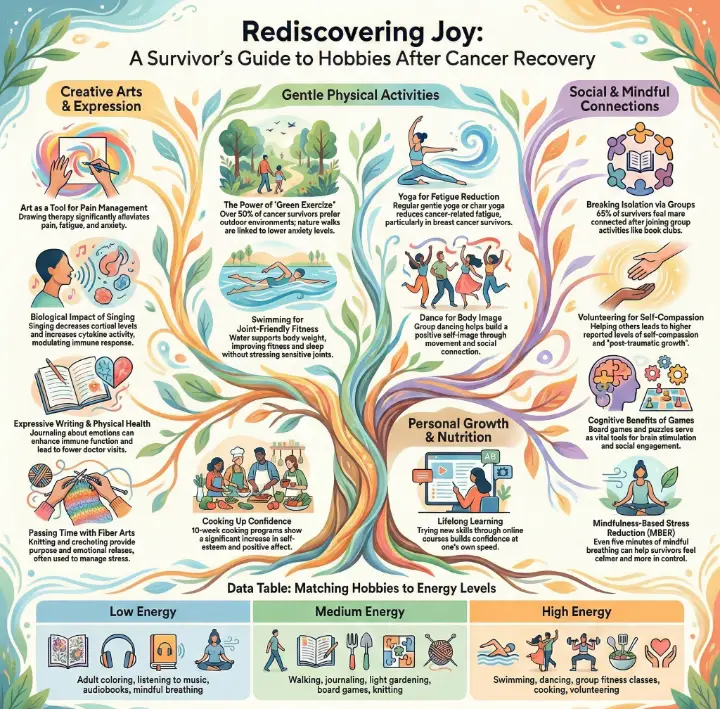
Painting and drawing let you express feelings without words. You can use colors and shapes to show your mood. Many people find these activities relaxing and healing. You might feel less pain and anxiety when you focus on creating art.
Study Title | Findings |
|---|---|
Intervention and application of drawing therapy in cancer patients: a scoping review | Drawing therapy significantly alleviated symptoms such as pain, fatigue, and anxiety, improving overall quality of life for cancer patients. |
Intervention and application of drawing therapy in cancer patients: a scoping review | Drawing therapy is a low-cost CAM that enhances physical, psychological, and social dimensions in cancer patients, positively impacting their quality of life. |
Intervention and application of drawing therapy in cancer patients: a scoping review | The positive effects on mental health are linked to projection theory, allowing individuals to express negative emotions through art, leading to emotional release. |
Tip: Start with simple supplies like paper, pencils, or watercolors. Try drawing for ten minutes each day. You can join online art classes or watch free tutorials to learn new techniques.
Writing and Journaling
Writing and journaling help you explore your thoughts and feelings. You can write about your experiences, hopes, or worries. Many survivors use journals to track their progress and celebrate small victories.
Expressive writing helps individuals explore their feelings, leading to improved emotional and psychological well-being.
Writing about emotions can enhance physical health outcomes and reduce stress, anxiety, and depression among cancer patients.
A study found that expressive writing significantly improved the quality of life for individuals with early-stage breast cancer.
Research indicates that expressive writing can lead to increased immune function in patients with HIV, resulting in fewer doctor visits.
Journaling provides a safe space for cancer survivors to express intense emotions, which is clinically proven to offer therapeutic benefits.
Try keeping a gratitude journal. Write three things you feel thankful for each day. You can also write letters to yourself or loved ones. Exploring New Hobbies: Rediscovery After Cancer Recovery can begin with just a few sentences.
Music and Singing
Music and singing lift your spirits and help you relax. You can listen to your favorite songs or sing along. Many people find comfort in music during tough times. Singing can even help your body heal.
Evidence Type | Findings | Implications |
|---|---|---|
Singing Effects | Decrease in cortisol and increase in cytokine activity | Suggests singing can improve mood and modulate immune response |
Psychological Benefits | Reductions in anxiety and improvements in mood | Indicates potential for music interventions in cancer care |
Biological Markers | Modulation of stress hormones and immune function | Supports the physiological basis for psychological benefits of music and singing |
You do not need to perform for others. Sing in the shower or hum while you walk. You can join a virtual choir or music group if you want to connect with others.
Knitting, Crocheting, and Origami
Knitting, crocheting, and origami help you focus and relax. You use your hands to create something beautiful. Many survivors say these hobbies give them a sense of purpose and joy.
Engaging in knitting during cancer treatment provided a sense of purpose and emotional release, as described by individuals who found joy in gifting their creations.
Some individuals experienced emotional struggles while knitting, indicating that the process can reflect their mental state, which can be both healing and challenging.
The act of creating something tangible, like a sweater, during difficult times can serve as a therapeutic outlet, even if the finished product carries emotional weight.
Start with easy patterns or simple shapes. You can find free instructions online or join a local craft group. Exploring New Hobbies: Rediscovery After Cancer Recovery can begin with just a ball of yarn or a piece of paper.
Creative arts and expression offer gentle ways to heal and grow. You can choose activities that match your mood and energy. Every small step helps you rediscover joy and confidence.
Physical Activities
Physical activity can help you rebuild strength, boost your mood, and support your recovery. You do not need to run marathons or lift heavy weights. Low-impact exercises fit many recovery stages and can make a big difference in how you feel each day. Always listen to your body and start slow. If you have any health concerns, talk to your doctor before you begin.
Tip: A pre-exercise checkup with your doctor is important, especially if you had surgery or other health issues. Ask questions about what activities are safe for you and what you should avoid.
Walking and Nature Walks
Walking is one of the best ways to get moving after cancer recovery. You can walk at your own pace and choose how far you want to go. Many survivors find peace and happiness in nature. Fresh air and green spaces can lift your spirits and help you feel more connected to the world.
Findings | Details |
|---|---|
Outdoor Environment Preference | More than half of cancer survivors prefer outdoor environments, with walking as a top choice. |
Motivation and Confidence | Outdoor activities boost motivation and confidence to stay active. |
Correlation with Happiness | More time spent outdoors links to greater happiness and quality of life. |
Nature's Impact on Anxiety | Green spaces lower anxiety more than indoor exercise alone. |
Nature walks can also help you grow after tough times. Some studies show that walking in nature may help you heal emotionally and find new strength.
Note: Start with short walks. Even ten minutes outside can make a difference. Bring a friend or family member if you want company.
Gentle Yoga and Stretching
Gentle yoga and stretching help your body stay flexible and strong. You do not need to be an expert. Simple movements and mindful breathing can help you relax and manage stress. Chair yoga is a great option if you have limited mobility.
Gentle yoga stretches and strengthens your body in a safe way.
This practice supports your mental well-being and helps you manage stress.
Mindful breathing during yoga can boost your immune system and help you feel calm.
Yoga may reduce cancer-related fatigue, especially for women with breast cancer.
Yoga does not make fatigue worse, so it is a safe choice for most people.
The more yoga classes you attend, the more you may notice your fatigue going down.
Tip: Try a beginner yoga video or join a gentle class. Always move at your own pace and stop if you feel pain.
Swimming
Swimming is a gentle, full-body exercise that feels good and supports your recovery. The water supports your weight, so you can move without putting stress on your joints. Many survivors find swimming helps them sleep better and feel happier.
Swimming keeps you active and improves your fitness.
It can help you manage pain and reduce stress.
Regular swimming boosts your mood and helps you sleep.
Many breast cancer survivors notice a better quality of life when they swim.
Note: If you are new to swimming, start with short sessions. Use a kickboard or float if you need extra support. Always check with your doctor before swimming, especially if you have had recent surgery.
Dancing
Dancing brings joy, movement, and connection. You can dance alone in your living room or join a group class. Music and movement help you express your feelings and reconnect with your body.
Benefit | Description |
|---|---|
Emotional Expression | Dancing helps you share emotions and understand yourself better. |
Body Awareness | You learn to appreciate your body and build a positive self-image. |
Mood Improvement | Dancing lifts your mood and lowers anxiety and depression. |
Social Support | Group dancing creates friendships and reduces feelings of isolation. |
Stress Reduction | Dancing combines gentle exercise with social support, helping you relax and feel better. |
Dancing helps you focus on the present and forget worries about the past or future.
It is a powerful act of self-care and healing.
Group dance classes build confidence and a sense of community.
Tip: Put on your favorite song and move however you like. Join a dance class in person or online if you want to meet others and share the joy.
Why Choose Physical Activities?
Physical activities offer many benefits for cancer survivors:
Improve your quality of life and energy levels
Help you cope with treatment side effects
Lower your risk of new cancers
Relieve stress and boost your mood
Strengthen muscles, bones, and your immune system
Help you sleep better and reduce fatigue
Decrease depression and anxiety
Start slow and increase your activity as you feel stronger. Aim for regular movement each week, even if it is just a few minutes at a time. You are building strength, confidence, and hope with every step, stretch, or dance move.
Social and Group Hobbies
Connecting with others can lift your spirit and help you heal. You may feel isolated after cancer treatment, but joining group activities brings support and friendship. Many survivors find hope and strength in shared experiences. You can choose in-person or virtual options to fit your comfort and energy.
Book Clubs
Book clubs offer a welcoming space to share stories and ideas. You can join a local group or connect online. Reading together helps you feel less alone and sparks new conversations. Over half of cancer survivors report feeling isolated, but 68% feel more connected when they join groups with others who understand their journey.
Tip: Try a virtual book club if you prefer to stay home. Pick books that inspire you or help you relax.
Volunteering
Helping others gives you purpose and joy. Volunteering lets you share your experience and support your community. Many survivors say volunteering increases self-compassion and brings meaning to life.
Benefit | Description |
|---|---|
Enhanced Self-Compassion | Volunteers report higher self-compassion and psychological well-being. |
Supporting others provides a sense of accomplishment and posttraumatic growth. | |
Emotional Processing | Volunteering helps you share emotions and process your cancer experience. |
You can volunteer in person or online. Every act of kindness makes a difference.
Group Classes
Group classes help you learn new skills and meet friends. You can try art therapy, mindfulness, or fitness programs. These classes offer emotional support and help you regain strength.
Program Name | Description | Target Audience |
|---|---|---|
Healing through Art Therapy | Reflection and personal growth through art | Survivors, caregivers, bereaved |
Livestrong at the YMCA | 12-week fitness program for strength and quality of life | Cancer survivors post-diagnosis |
Triumph Fitness | Regain strength and confidence after treatment | Adult survivors recently completed treatment |
Many classes meet online, so you can join from home.
Board Games and Puzzles
Board games and puzzles keep your mind sharp and bring laughter. These activities help with cognitive rehabilitation and social engagement. Up to 75% of survivors face cognitive concerns, so games and puzzles are important for recovery.
Board games and puzzles stimulate your brain.
Playing with others builds friendships and boosts emotional well-being.
You can join game nights in person or play online with friends.
Remember, every connection helps you heal. Choose activities that make you smile and bring you closer to others.
Mindfulness and Relaxation
You can find peace and healing through mindfulness and relaxation. These hobbies help you calm your mind, lower stress, and support your emotional recovery. When you focus on the present, you give yourself space to heal and grow stronger.
Meditation and Breathing
Meditation and mindful breathing give you tools to manage stress and anxiety. You do not need special equipment or a quiet room. You can practice anywhere, even for just a few minutes. Many cancer survivors notice big changes when they add these habits to their day.
Mindfulness-based stress reduction (MBSR) programs help lower stress and anxiety.
Most studies show positive changes in mood and health for people who meditate.
Practicing mindful breathing for three months can lower stress and improve mindfulness.
Even five minutes of mindful breathing can help you feel calmer and more in control.
Try sitting quietly and focusing on your breath. Notice how your body feels with each inhale and exhale.
Tai Chi or Qigong
Tai Chi and Qigong use gentle movements and deep breathing. These practices help your body and mind work together. You can join a class or follow a video at home.
Benefit | Description |
|---|---|
Physical Ability | Improves muscle strength, balance, and movement. |
Fatigue Reduction | Helps lower cancer-related fatigue. |
Emotional Well-being | Reduces depression and anxiety, bringing relaxation. |
Quality of Life | |
Spiritual Well-being | Fosters inner peace and spiritual health. |
Listening to Music
Music can lift your mood and help you relax. You might listen to your favorite songs, calming sounds, or music therapy sessions. Many survivors use music to ease pain, lower anxiety, and feel more comfortable.
Study Title | Findings |
|---|---|
Effects of music therapy on subjective sensations and heart rate variability in treated cancer survivors | Fatigue reduced and relaxation increased significantly after music therapy. It decreases anxiety and increases comfort and relaxation in chemotherapy patients. |
Effect of Music on Anxiety and Fatigue in Cancer Patients Undergoing Chemotherapy | Listening to music during chemotherapy reduces fatigue and anxiety, improving well-being and control. |
Effects of music-based interventions on cancer-related pain, fatigue, and distress | Music interventions can be more beneficial than standard care alone in reducing pain, fatigue, and distress. |
Effect of music therapy on anxiety and depression in breast cancer patients | Music therapy can effectively improve symptoms of anxiety and depression, influencing physiological responses. |
Choose music that makes you feel good. Let the sounds wash over you and bring you comfort.
Mindfulness and relaxation hobbies help you find calm and strength. You can start small and build these habits into your daily life. Each moment of peace supports your healing journey.
Personal Growth
Exploring new hobbies helps you grow and discover fresh strengths. You can build healthy habits, boost creativity, and learn new skills. Personal growth activities give you a sense of achievement and hope for the future.
Cooking and Baking
Cooking and baking offer more than tasty meals. You gain confidence as you learn new recipes and try different flavors. Many survivors find joy in preparing food for themselves or loved ones. Baking classes and cooking programs help you focus, improve coordination, and feel proud of your progress. Group cooking sessions also encourage positive feelings and better food choices.
Study | Findings | Impact on Self-Esteem | Impact on Healthy Habits |
|---|---|---|---|
Haley and McKay (2004) | Participation in baking classes | Improved self-esteem due to increased concentration, coordination, and confidence | N/A |
Herbert et al. (2014) | 10-week cooking program | Statistically significant increase in self-esteem scores (p < .001) | Positive changes in cooking skills and nutritional outcomes |
Barak-Nahum et al. (2016) | Group cooking intervention for cancer patients | Significant increases in positive affect and decreases in negative affect (p < .001) | Positive changes in intuitive eating habits and healthy food choices (p < .001) |
Tip: Try a simple recipe or join an online cooking class. Celebrate each new dish you create.
Reading
Reading opens doors to new worlds and ideas. You can choose stories that inspire you or books that teach new skills. Many survivors use reading to relax and escape stress. You might join a book club or read quietly at home. Reading helps you build focus and encourages lifelong learning.
Pick books that match your interests.
Set small goals, like reading a chapter each day.
Explore audiobooks if you prefer listening.
Learning New Skills
Learning something new brings excitement and hope. You can try painting, photography, or even a new language. Online courses and self-paced activities let you learn at your own speed. Many survivors enjoy exploring creative hobbies or practical skills. You build confidence with every step forward.
Explore free online classes or tutorials. Choose skills that spark your curiosity and help you grow.
Choosing the Right Hobby
Assessing Interests and Energy
You have a unique story and set of interests. Take a moment to think about what brings you joy. Maybe you loved painting as a child or found peace in nature. Experts say that hobbies help you heal and cope with stress. Choose activities that match your energy level and physical abilities. If you feel tired, try adult coloring books or listening to music. When you feel strong, explore swimming, cycling, or gardening. Mindfulness matters. Focus on what feels right for you.
Tip: Write down a list of hobbies that excite you. Notice which ones make you smile or feel curious.
Adapting Activities
You can shape hobbies to fit your needs. If you enjoy music, play guitar or record songs at home. If you love animals, volunteer at a shelter or foster kittens. Cooking healthy meals, fishing, and photography offer creative outlets. Set small goals, like baking a new recipe or walking in the park. You do not need to follow strict rules. Adjust activities so you feel comfortable and safe.
Hobby | How to Adapt |
|---|---|
Painting | Use larger brushes or sit |
Gardening | Try container plants |
Swimming | Start with short sessions |
Writing | Keep a simple journal |
Being Flexible and Patient
Your recovery journey takes time. Some days you feel energetic, other days you need rest. Stay flexible and patient with yourself. Try new hobbies without pressure. If something does not feel right, switch to another activity. Celebrate small wins, like finishing a puzzle or cooking a meal. You are reclaiming your life, one step at a time.
Remember: Every effort counts. You are building strength and joy with each new experience.
You deserve kindness as you explore new hobbies. Try different activities and adjust when you need. Hobbies can spark joy, healing, and connection.
Celebrate every small step.
Reach out for support or resources if you feel stuck.
Remember, your journey matters. Every effort brings hope.
FAQ
What if I feel too tired to start a new hobby?
You can choose gentle activities like listening to music or coloring. Start small. Celebrate every effort.
Tip: Rest when you need. Progress happens one step at a time.
How do I find hobbies that fit my energy level?
You can try short sessions and adjust as you go. Notice what feels good.
Activity | Energy Level |
|---|---|
Coloring | Low |
Walking | Medium |
Dancing | High |
Can I join group activities if I feel nervous?
You can start with online groups or invite a friend. You build confidence with each try.
😊 Remember, you are not alone. Connection brings strength.
This article is for educational purposes only and is not a substitute for professional medical advice. For more details, please see our Disclaimer. To understand how we create and review our content, please see our Editorial Policy.
See Also
Exploring Cancer Types Associated With AIDS Infection
An In-Depth Overview of Various Cancer Categories
Identifying Symptoms Associated With Male Breast Cancer
Recognizing Symptoms and Treatment Options for Duodenal Cancer

© 2026 Banish Cancer. Banish Cancer is a registered non-profit organization providing evidence-based research, educational courses, and Fear Response AI support services. Reg. No: 305706884 | Address: Taikos pr. 43-603, Kaunas, Lithuania.