Understanding Tumor Grading and Its Impact on Cancer Prognosis

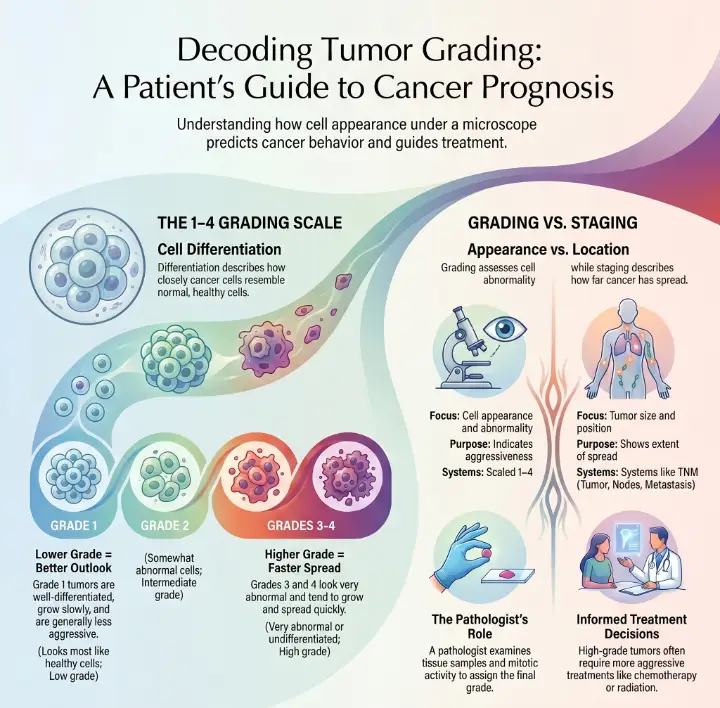
Tumor grading tells you how abnormal cancer cells look under a microscope. This information helps doctors predict how quickly cancer may grow or spread. Studies show that higher tumor grades mean a poorer prognosis and lower survival rates. You can feel more confident when you understand how grading influences your care. Grading Tumors: How Prognosis Is Determined from Diagnosis gives you a clearer picture of what to expect.
Key Takeaways
Tumor grading helps doctors predict how aggressive cancer may be. Higher grades indicate faster growth and poorer prognosis.
Understanding your tumor grade empowers you to make informed decisions about your treatment options. Ask your doctor about your grade.
Lower grade tumors (Grade 1) often mean a better outlook and may require less aggressive treatment compared to higher grades.
Grading and staging are different. Grading assesses cell appearance, while staging describes how far cancer has spread in the body.
Your care team is there to support you. Use your knowledge of tumor grading to engage in discussions about your treatment plan.
What Is Tumor Grading?
Tumor Grading Explained
Tumor grading is a way doctors describe how cancer cells look under a microscope. When you hear about tumor grade, you learn how much the cancer cells look like normal, healthy cells. If the cancer cells look almost like normal cells, the tumor has a lower grade. If the cells look very different, the tumor has a higher grade. Doctors use this information to understand how aggressive the cancer might be. Tumor grading helps you and your care team predict how fast the cancer could grow or spread. You can think of tumor grading as a tool that guides important decisions about your treatment and care.
Tumor grade shows how similar or different cancer cells are compared to healthy cells. This helps doctors know how quickly the tumor might grow and how it could behave in your body.
Grading Scale (Grades 1-4)
Doctors use a grading scale from 1 to 4 to describe tumor grades. Each grade tells you something about how the cancer cells look and act. Here is a simple table to help you understand the differences:
Tumor Grade | Description | Differentiation Level |
|---|---|---|
Grade 1 | Well differentiated, looks most like healthy cells | Low grade |
Grade 2 | Moderately differentiated, somewhat abnormal | Intermediate grade |
Grade 3 | Poorly differentiated, very abnormal appearance | High grade |
Grade 4 | Undifferentiated, most abnormal looking cells | High grade |
When you see a lower grade, it means the cells look more normal and the cancer is less aggressive. Higher grades mean the cells look more abnormal and the cancer may grow or spread faster.
Differentiation and Aggressiveness
Differentiation is a word doctors use to describe how much cancer cells look like normal cells. Well-differentiated cells look more like healthy cells and usually grow slowly. Poorly differentiated or undifferentiated cells look very different from normal cells. These cells often grow and spread quickly. If your tumor has a high grade, it means the cancer cells are less like normal cells and act more aggressively. Knowing the grade helps you and your doctor plan the best treatment for your situation.
Grade 3 and 4 tumors are high grade. These cells have many changes and grow fast.
Low-grade tumors (Grade 1) are less aggressive and often have a better outlook.
Understanding tumor grading gives you a clearer picture of what is happening in your body and what to expect next.
How Tumors Are Graded
The Grading Process
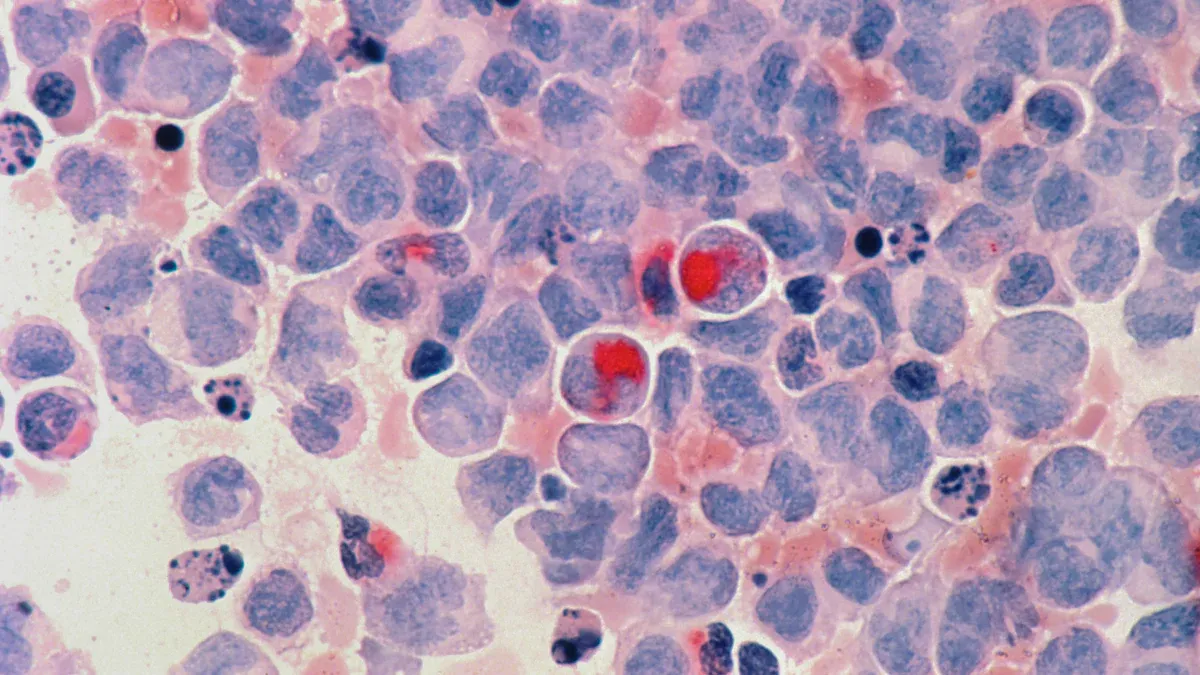
When your doctor wants to know the tumor grade, they send a sample of your tumor to a laboratory. A pathologist, who is a doctor trained to study cells, looks at the sample under a microscope. The pathologist checks how the cancer cells look and act compared to normal cells. This process helps your doctor decide how aggressive the cancer might be.
You may hear about different laboratory techniques used to grade tumors. Here is a simple table that shows the most common methods:
Technique | Description |
|---|---|
Ki-67 test | Checks how many cells are dividing. This shows how fast the tumor might grow. |
Pathology | The pathologist looks at the tumor tissue under a microscope to see how abnormal the cells appear. |
The pathologist uses these tests to find out if the cancer cells look more like normal cells or if they look very different. Tumor grade helps your doctor predict how quickly the cancer may grow or spread. Higher grade cancers are more likely to spread, while lower grade cancers usually grow more slowly.
What Pathologists Look For
When the pathologist examines your tumor, they focus on several key features:
Well-differentiated cells (these look more like normal cells)
Poorly differentiated cells (these look less like normal cells)
Undifferentiated cells (these do not look like normal cells at all)
The pathologist also checks:
How much the cancer cells resemble normal cells
How many cells are dividing (mitotic activity)
Tumor grade gives you and your doctor important clues about how the cancer might behave. Lower grade tumors usually mean a better outlook and slower growth. Higher grade tumors often act more aggressively and may spread faster.
Knowing how tumors are graded helps you understand your diagnosis and what to expect next.
Tumor Grading vs. Staging
Key Differences
You may hear both "grading" and "staging" when doctors talk about cancer. These terms sound similar, but they mean different things. Tumor grading tells you how abnormal the cancer cells look under a microscope. Staging describes how far the cancer has spread in your body. You can see the main differences in the table below:
Aspect | Tumor Grading | Cancer Staging |
|---|---|---|
Definition | Assesses the potential severity of the tumor | Describes the extent of cancer progression |
Factors Considered | Tumor cell appearance and differentiation | Tumor size, position, spread, number of tumors, etc. |
Purpose | Indicates aggressiveness of the tumor | Provides a comprehensive overview of cancer spread |
Systems Used | Not typically categorized into stages | Utilizes systems like TNM (Tumor, Nodes, Metastasis) |
Doctors use both grading and staging to build your treatment plan. Grading helps them understand how fast the cancer might grow. Staging shows where the cancer is and how much it has spread. You need both pieces of information to get a clear picture of your diagnosis.
Tumor grading and cancer staging work together. Grading shows how aggressive the cancer is. Staging shows how far it has traveled in your body.
Overview of Staging Systems
You will find several staging systems in cancer care. The most common is the TNM system. TNM stands for Tumor, Nodes, and Metastasis. This system looks at:
Tumor size
Lymph node involvement
Metastasis (spread to other parts of the body)
Doctors use TNM for many cancers, including breast, lung, prostate, and skin cancers. Some cancers, like brain tumors, rely more on grading than staging. Other systems, such as FIGO, help stage cervical and ovarian cancers. Colon cancer may use A-D stages or TNM.
The TNM system has helped doctors worldwide for over 75 years. It gives a clear structure for describing cancer. When doctors combine TNM staging with tumor grading, they can choose the best treatment for you. Early-stage cancers often allow for simpler treatments. Advanced stages may require more complex care. TNM staging and grading together help predict your outlook and guide your care team.
Grading Tumors: How Prognosis Is Determined from Diagnosis

Tumor Grade and Prognosis
When you receive a cancer diagnosis, you want to know what it means for your future. Grading Tumors: How Prognosis Is Determined from Diagnosis gives you important clues about how your cancer might behave. Tumor grade tells you how much the cancer cells differ from normal cells. This information helps your doctor predict how quickly the tumor may grow or spread.
Lower grade tumors usually grow slowly and act less aggressively. If your tumor is grade 1, the cells look more like healthy cells. You often have a better outlook and more treatment options. Higher grade tumors, such as grade 3 or 4, look very different from normal cells. These tumors tend to grow faster and spread more quickly. Your doctor uses Grading Tumors: How Prognosis Is Determined from Diagnosis to estimate your chances of recovery and to plan your care.
Tumor grade is not the only factor that affects your prognosis. Your doctor also considers the stage of the cancer, your age, and your overall health. Still, Grading Tumors: How Prognosis Is Determined from Diagnosis remains a key part of understanding your outlook.
You may wonder how doctors use this information in real life. Here are some examples:
In clear cell renal cell carcinoma, a higher tumor grade links to more gene mutations. This means the cancer may act more aggressively.
Prostate cancer with Grade Group 3 or 4 often shows more gene changes. Doctors may suggest treatments that target these changes.
Doctors use Grading Tumors: How Prognosis Is Determined from Diagnosis to help you understand what to expect. They explain that a lower grade means a better chance for a positive outcome. A higher grade may mean you need more aggressive treatment.
Impact on Treatment Decisions
Grading Tumors: How Prognosis Is Determined from Diagnosis also shapes your treatment plan. Your doctor looks at the tumor grade to decide which therapies will work best for you. If you have a low-grade tumor, you may not need aggressive treatment. For example, in breast cancer, patients with grade 1 tumors sometimes skip radiation after surgery because the risk of the cancer coming back is low. Patients with grade 3 tumors often receive radiation to lower the chance of recurrence.
In prostate cancer, Grading Tumors: How Prognosis Is Determined from Diagnosis helps your doctor decide if you can choose active surveillance. If your tumor is high grade (grade group 3, 4, or 5), active surveillance is usually not safe. You may need surgery or other treatments right away.
Doctors use a step-by-step process to assign a tumor grade:
They take a biopsy from your tumor.
A pathologist examines the sample under a microscope.
The pathologist checks how abnormal the cells look and how fast they are dividing.
Your doctor explains the results to you. They tell you that a higher grade means the cancer is more aggressive. You may need stronger treatments, such as chemotherapy or targeted therapy. Lower grade tumors often allow for less intense treatments.
Understanding Grading Tumors: How Prognosis Is Determined from Diagnosis helps you take part in decisions about your care. You can ask questions and share your preferences with your healthcare team. Nurse navigators and other professionals can help you understand your pathology report and treatment options.
Many people think that a benign tumor is always harmless. This is not true. Even benign tumors can cause symptoms and may need treatment. Some treatments for benign tumors can have serious side effects. It is important to talk with your doctor about all your options.
You can find more information about Grading Tumors: How Prognosis Is Determined from Diagnosis and cancer prognosis from trusted sources:
Tumor Grade: Learn about what tumor grade means and how it affects treatment.
Understanding Cancer Prognosis: Discover how doctors determine prognosis and what it means for you.
Grading Tumors: How Prognosis Is Determined from Diagnosis gives you the knowledge to make informed choices. When you understand your tumor grade, you can work with your doctor to choose the best path forward.
You now know that tumor grading helps you and your doctor understand how cancer may behave. This knowledge gives you power to make informed choices about your treatment. You can ask your healthcare team about your tumor grade to get answers that fit your needs.
Remember, you do not face this alone. Your care team wants to support you every step of the way.
FAQ
What is the difference between tumor grade and tumor stage?
Tumor grade shows how abnormal the cancer cells look. Tumor stage tells you how far the cancer has spread in your body. You need both to understand your diagnosis.
Can tumor grade change over time?
Yes. Your tumor grade can change if the cancer grows or comes back. Doctors may check the grade again if you need another biopsy.
Does a higher tumor grade always mean a worse outcome?
Not always. A higher grade means the cancer is more aggressive. Other factors, like your age and overall health, also affect your outlook.
How do I find out my tumor grade?
You can ask your doctor or nurse. They will explain your pathology report. You may also see the grade listed in your medical records.
This article is for educational purposes only and is not a substitute for professional medical advice. For more details, please see our Disclaimer. To understand how we create and review our content, please see our Editorial Policy.
See Also
Key Characteristics of Glioblastoma You Should Know
A Deep Dive Into Large-cell Lung Carcinoma Types
Exploring Astrocytoma: Types and Key Features Explained

© 2026 Banish Cancer. Banish Cancer is a registered non-profit organization providing evidence-based research, educational courses, and Fear Response AI support services. Reg. No: 305706884 | Address: Taikos pr. 43-603, Kaunas, Lithuania.