Holotropic Breathwork for Emotional Release and Self-Exploration

You might feel stuck with heavy emotions or want to know yourself better. Holotropic Breathwork for emotional release and self-exploration gives you a simple way to start that journey. You don’t need special skills or equipment. You only need your breath and a safe space.
Imagine letting go of stress and old feelings just by breathing deeply. This practice helps you explore your inner world and find more peace in your daily life.
Key Takeaways
Holotropic Breathwork uses deep, fast breathing to help you release emotions and explore your inner self. You only need a safe space and your breath to start.
This practice can lead to emotional healing by allowing you to access feelings you may not notice in daily life. Many people report feeling lighter and more peaceful after sessions.
Group sessions create a supportive environment. Sharing experiences with others can enhance your emotional release and make the process feel more natural.
To begin, find a quiet space, breathe deeply and quickly, and let music guide your emotions. Take time to reflect on your experience afterward for deeper understanding.
Regular practice of Holotropic Breathwork can improve your mood, increase self-awareness, and strengthen your relationships by fostering empathy and connection.
What is Holotropic Breathwork?

Origins
You might wonder where Holotropic Breathwork comes from. This practice started in the late 1960s. Stanislav Grof, a psychiatrist, created it after his work with LSD therapy ended. He wanted to help people reach deep states of mind without drugs. So, he used fast breathing and music to guide people into new experiences.
Holotropic Breathwork uses a controlled breathing technique to access altered states of consciousness. The goal is to help you move toward wholeness.
The word "holotropic" comes from Greek. It means "moving toward wholeness."
This method often happens in groups. You might find music, art, and even bodywork as part of the experience.
You do not need any special background to try it. You just need to be open to exploring your inner world.
Emotional Healing
Holotropic Breathwork for emotional release and self-exploration gives you a safe way to let go of old feelings. When you breathe deeply and quickly, your mind can enter a different state. This helps you reach emotions that you might not notice in daily life.
Many people say they feel lighter and more peaceful after a session.
Recent research shows that high‑ventilation breathwork can reduce stress, improve mood, and produce stronger emotional breakthroughs than meditation. Research from Stanford University also showed that certain breathing styles, like cyclic sighing, work even better than meditation for stress relief.
Researchers are studying high‑ventilation breathwork for trauma and emotional processing, but as of 2026 there is no active Johns Hopkins clinical trial specifically testing Holotropic Breathwork for PTSD. They hope to prove what many people already feel: that breathwork can heal deep wounds, even without talking about them.
Holotropic Breathwork for emotional release and self-exploration

Breathing Technique
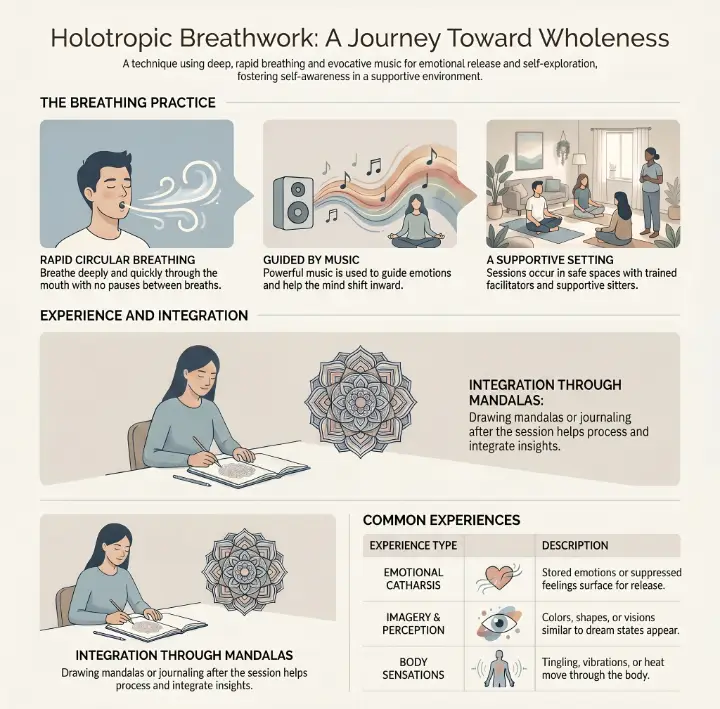
You start Holotropic Breathwork for emotional release and self-exploration by lying down, closing your eyes, and focusing on your breath. The breathing pattern is different from what you might do in yoga or meditation. You breathe deeply and quickly through your mouth, with no pauses between breaths. This steady, rhythmic breathing fills your body with energy and helps you let go of tension.
Here’s what you usually find in a session:
Accelerated breathing
Powerful, evocative music
A comfortable mat to lie on
Eyes closed to help you focus inward
A safe and calm setting
The music plays a big role. It guides your emotions and helps you move through different feelings. As you breathe faster, your mind starts to shift. You may notice tingling in your hands or a warm feeling in your chest. These sensations show that your body is releasing old stress and energy.
Tip: If you feel overwhelmed, you can always slow down your breath or ask for support from a facilitator.
Non-Ordinary States
Holotropic Breathwork for emotional release and self-exploration helps you enter a non-ordinary state of consciousness. This means your mind works differently than usual. You might see colors, shapes, or even vivid images like in a dream. Some people feel strong emotions or remember old memories. Others sense energy moving through their bodies.
Experience Type | Description |
|---|---|
Emotional Catharsis | Stored emotions, past traumas, or suppressed feelings surface for deep release. |
Vivid Imagery & Altered Perception | Colors, shapes, or detailed visions similar to dream states appear. |
Body Sensations & Energy Flow | Tingling, vibrations, or heat move through limbs as blockages dissolve. |
Profound Connection & Insights | Experiences of oneness, connection, or deep psychological breakthroughs. |
This special state lets you reach parts of your mind that you usually cannot access. When you breathe deeply and quickly, you bypass your everyday thoughts. Your unconscious mind opens up, and you can process emotions without having to talk about them. Many people find that this helps them heal from old pain or trauma. You may feel lighter, calmer, or more connected to yourself after a session.
Clinical research shows that Holotropic Breathwork for emotional release and self-exploration can help you discover new things about yourself. It can bring up feelings you did not know you had and help you let them go. This process supports emotional healing and personal growth.
Group Experience
In traditional Holotropic Breathwork, sessions are done in pairs: one person is the breather, and the other is the sitter who ensures physical safety, offers water or tissues, and provides grounded presence throughout the session.
You do not have to do Holotropic Breathwork for emotional release and self-exploration alone. Most sessions happen in groups, which creates a safe and supportive space. You will find trained facilitators who guide the session and help you feel comfortable. The group setting allows everyone to share their experiences if they want, but there is no pressure.
Group sessions create a sense of safety and acceptance.
You can share your feelings or just listen to others.
Facilitators watch over the group and offer help if needed.
Some people feel nervous at first, but the group energy often helps you relax. You realize that others are on the same journey. This shared experience can make emotional release feel easier and more natural. Studies show that group or individual sessions work well, as long as you feel supported and the session is guided by someone experienced.
Note: You can choose the setting that feels best for you. The most important thing is that you feel safe and cared for during your journey.
How to Try Holotropic Breathwork
Simple Steps
You can start Holotropic Breathwork for emotional release and self-exploration with just a few simple steps. Here’s a beginner-friendly guide to help you get started:
Preparation Stage
A full Holotropic Breathwork workshop typically lasts 2.5 to 3 hours, including breathing, music, and integration time.
Find a quiet, private space where you feel safe. Lay out a mat or blanket so you can lie down comfortably. Take a moment to think about what you want from your session. Maybe you want to let go of stress or explore your feelings.Breathwork Stage
Lie down, close your eyes, and begin breathing deeply and quickly through your mouth. Keep your breaths connected, with no pause between inhale and exhale. Let the music guide you. If strong emotions or sensations come up, allow yourself to feel them.Integration Stage
In Grof’s original method, participants draw a mandala immediately after the session as a way to integrate emotions, imagery, and insights from the breathwork.
When you feel ready, slow your breath and return to normal breathing. Open your eyes and take a few minutes to rest. You might want to write in a journal or talk with a friend about your experience.
Tip: Start with short sessions. Even one minute of focused breathwork can make a difference. Track your progress and notice how you feel after each session.
Safety Tips
2025 research shows that rapid circular breathing reduces CO₂ levels, which contributes to the altered states experienced during sessions.
Your safety matters most. Before you try Holotropic Breathwork, keep these tips in mind:
If you have heart problems, epilepsy, severe mental health issues, or if you are pregnant, talk to your doctor first.
Always practice with a trained facilitator, especially if you have a trauma history. Look for someone with experience and proper training—400+ hours of certification is a good sign.
Trust your body. If you feel dizzy or overwhelmed, slow down your breathing or take a break.
Choose a facilitator who shows emotional maturity and has completed several breathwork sessions themselves.
Group sessions, workshops, or one-on-one guidance can all be helpful. Pick what feels right for you.
Note: If you ever feel unsafe or unsure, it’s okay to stop. Your comfort and well-being come first.
Common challenges include feeling lightheaded or having trouble staying consistent. If you feel dizzy, slow your breath. If you struggle to keep up the practice, start small and build up over time. You can always adapt the technique to fit your needs.
Benefits and Outcomes
Emotional Release
You might notice big changes in how you feel after trying Holotropic Breathwork for emotional release and self-exploration. Many people say they let go of old pain, anger, or sadness. You can feel lighter and more at peace. This practice helps you face emotions you may have hidden for years. When you breathe deeply and let your mind wander, you give your body a chance to release stress and tension.
Here’s what participants often report:
Benefit Reported | Description |
|---|---|
Improved mood and emotional stability. | |
Increased Self-Awareness | Clearer understanding of thoughts and feelings. |
Reduction in Interpersonal Problems | Less reactivity and improved communication. |
Decreased Novelty Seeking | Greater calmness and reduced restlessness. |
Studies show that this kind of breathwork can lower anxiety, depression, and chronic stress. You might find yourself feeling more relaxed and open after just a few sessions.
Personal Growth
Holotropic Breathwork can help you grow as a person. You may start to see yourself in a new way. Many people feel happier and more satisfied with life. You might notice that you handle problems better and feel less lonely.
You can experience positive changes in how you see yourself and your life.
Many people feel more responsible and open to new ideas.
You may find more meaning in your daily life.
Some people say they feel more mature and ready to face challenges.
Research shows that regular breathwork can help you become more aware of your thoughts and feelings. This awareness can last for weeks, helping you stay calm and focused.
Relationship Intimacy
Breathwork does not just help you—it can also help your relationships. When you feel more relaxed and open, you connect better with others. You may notice deeper bonds with friends, family, or partners.
Breathwork can help you feel closer and more in tune with others.
You may become more empathetic and understanding.
Studies show that breathing together can lower stress and help people feel safer and more connected.
Couples who practice breathwork together often report more empathy and emotional closeness.
If you practice often, you may see long-term benefits. Some people find that they argue less and feel more harmony at home. Even after just a few sessions, you might notice a warmer, more caring atmosphere in your relationships.
You can use Holotropic Breathwork for emotional release and self-exploration to let go of old feelings and discover more about yourself. Experts say this practice helps you heal and grow, especially when you have support from a trained facilitator. Many people share stories of deep emotional release and new self-awareness. If you want to try it, join a safe group or work with a professional. You might find more peace, better moods, and a stronger sense of who you are.
FAQ
What should I bring to a Holotropic Breathwork session?
You only need comfortable clothes, a water bottle, and an open mind. Some people like to bring a journal to write about their experience afterward. You do not need any special equipment.
Can I do Holotropic Breathwork at home?
You can try simple breathwork at home, but for a full session, you should work with a trained facilitator. Safety matters most. If you want to go deeper, join a group or workshop.
How will I feel during and after a session?
You might feel tingling, warmth, or strong emotions. Some people cry or laugh. Afterward, you may feel lighter, calmer, or even tired. Everyone’s experience is unique.
Is Holotropic Breathwork safe for everyone?
Most people can try it, but you should talk to your doctor if you have heart issues, epilepsy, or mental health concerns. Pregnant people should avoid it. Always listen to your body and stop if you feel uncomfortable.
This article is for educational purposes only and is not a substitute for professional medical advice. For more details, please see our Disclaimer. To understand how we create and review our content, please see our Editorial Policy.
See Also
Join Us at Banish Cancer – A Place of Hope
A Comprehensive Guide to Blastoma and Its Varieties
Key Characteristics and Insights About Hemangioblastoma

© 2026 Banish Cancer. Banish Cancer is a registered non-profit organization providing evidence-based research, educational courses, and Fear Response AI support services. Reg. No: 305706884 | Address: Taikos pr. 43-603, Kaunas, Lithuania.