Why Benign Tumors Can Still Be Dangerous

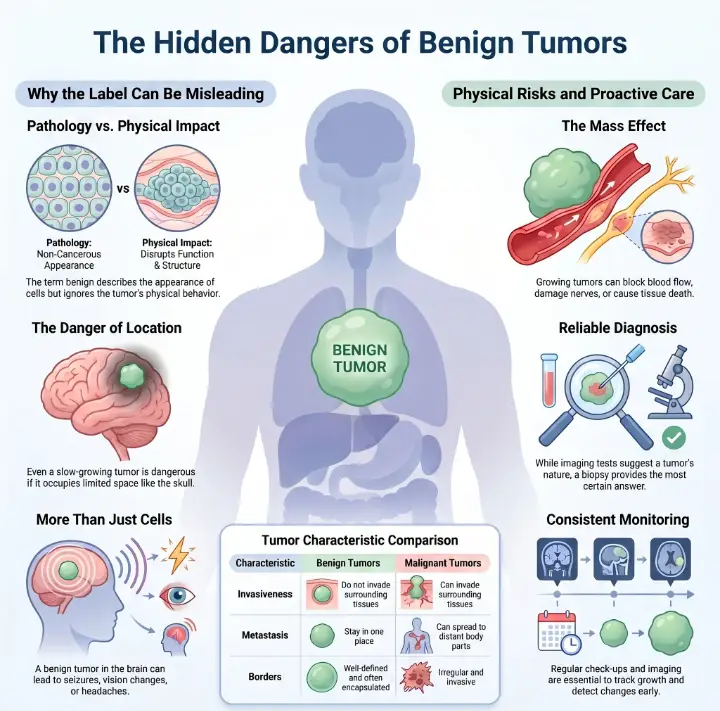
Many people think benign tumors mean no danger, but this is not always true. You might wonder, is “Benign” Always Safe? Understanding Tumor Labels helps you see that even non-cancerous growths can cause problems. Some benign tumors press on organs or nerves and create real health risks. When you learn about these dangers, you can make better choices. Regular check-ups and sometimes treatment protect your health.
Key Takeaways
Benign tumors can still pose serious health risks by pressing on vital organs or nerves.
Regular check-ups and imaging tests are essential to monitor benign tumors for any changes.
Symptoms like pain or changes in function may indicate a benign tumor is causing problems.
Not all benign tumors require treatment, but those that cause symptoms should be evaluated by a doctor.
Stay informed and proactive about your health by discussing any concerns with your healthcare provider.
Is “Benign” Always Safe? Understanding Tumor Labels
What Makes Tumors Benign
You may hear doctors use the word "benign" when talking about tumors. This means the tumor is not cancer. Benign tumors usually grow slowly. They do not spread to other parts of your body. Their borders are clear and easy to see. Malignant tumors, or cancers, act very differently. They can grow fast, invade nearby tissues, and even travel to other organs.
Here is a table to help you compare benign and malignant tumors:
Characteristic | Benign Tumors | Malignant Tumors |
|---|---|---|
Nature | Non-cancerous | Cancerous |
Invasiveness | Do not invade surrounding tissues | Can invade surrounding tissues |
Metastasis | Do not spread to distant parts of the body | Can metastasize to other body parts |
Growth Rate | Typically grow slowly | Often grow rapidly |
Border | Well-defined borders, often encapsulated | Irregular and invasive borders |
You can see that benign tumors do not spread or invade. They stay in one place and have clear edges. Malignant tumors do the opposite. They can move and cause more harm.
Doctors use the label "benign" to show that a tumor is not cancer. Still, you should ask yourself, Is “Benign” Always Safe? Understanding Tumor Labels helps you see that even non-cancerous tumors can cause trouble. You need to know the facts to protect your health.
Why Labels Can Be Misleading
You might think a benign tumor is always safe. This is not true. The word "benign" only describes what the cells look like under a microscope. It does not tell you how the tumor acts in your body. Sometimes, the location of a benign tumor can make it dangerous.
The term 'benign' describes pathology. It says nothing about the operation. And in neurosurgery, that distinction carries consequences the word itself conceals. Even when a brain tumor is classified as 'benign' by pathologists, its location can make surgery extremely risky.
Many people hear, "How lucky you must feel that it’s not cancer!" This can make you think there is nothing to worry about. You may not realize that benign tumors can still cause big problems. For example, a benign tumor in your brain can press on important nerves. This can lead to headaches, vision changes, or even seizures.
Symptoms alone cannot tell you if a tumor is benign or malignant. You may feel pain, notice a lump, or have other changes. These signs depend on where the tumor grows and how big it gets. Doctors use imaging tests like CT scans, MRIs, or ultrasounds to look at the tumor. Still, these tests cannot always give a clear answer. A biopsy, where a doctor takes a small piece of the tumor to look at under a microscope, is the best way to know for sure.
Symptoms depend on the tumor’s location, size, and pressure on nearby structures.
Imaging tests can suggest if a tumor is benign or malignant, but they are not always certain.
A biopsy gives the most reliable answer.
You should always ask, Is “Benign” Always Safe? Understanding Tumor Labels can help you see why you need more than just a label. You need the right tests and advice from your doctor. This helps you make smart choices for your health.
How Benign Tumors Cause Problems

Pressure on Organs
Benign tumors can press on nearby organs and tissues as they grow. Doctors call this a 'mass effect.' You may not realize how much trouble this can cause. When a tumor pushes against an organ, it can block blood flow, damage nerves, or even kill tissue. The risk depends on where the tumor sits in your body.
A benign meningioma in your brain can become life-threatening if it grows large enough to squeeze important brain areas.
Thyroid adenomas may change your hormone levels and cause health problems.
Chondromas or hamartomas in your airway may make breathing difficult.
Lipomas or fibromas pressing on your stomach can affect your appetite.
You may feel pain if a benign bone tumor presses on your bones. Sometimes, you lose weight or feel dizzy. The symptoms depend on which organ the tumor affects.
Brain and Nerve Effects
Benign tumors in your brain or nerves can cause serious symptoms. Your skull has limited space. Even a slow-growing tumor can become dangerous over time.
"Even a benign tumor that’s growing inside the head is potentially dangerous," says Robert Fenstermaker, MD, Chair of Neurosurgery at Roswell Park Comprehensive Cancer Center. "There’s only so much room inside the skull, and the brain occupies most of it. Even if a brain tumor is benign and growing slowly, eventually the brain won’t be able to tolerate that, and symptoms will develop, which can be life-threatening."
About 1 million Americans live with a primary brain tumor, and most of them are benign. Most primary brain tumors are benign, but they still cause problems. You may get headaches, dizziness, or seizures. Some tumors affect your vision or memory.
Common benign tumors that affect nerves or brain function include:
Chordomas: Slow-growing tumors at the base of your skull or spine.
Craniopharyngiomas: Tumors near your pituitary gland.
Gangliocytomas and gangliomas: Tumors forming in nerve cells.
Glomus jugulare: Tumors under the base of your skull.
Meningiomas: The most common primary brain tumors.
Pineocytomas: Tumors in your pineal gland.
Pituitary adenomas: Tumors in your pituitary gland.
Schwannomas: Tumors from Schwann cells in your nervous system.
These tumors can press on nerves, block hormone production, or cause pain. You may notice changes in how you move, feel, or think.
Growth and Complications
The size, location, and growth rate of a benign tumor matter a lot. A small tumor may not cause any symptoms. A large tumor can press on vital organs or nerves and lead to serious injury or even death.
This growth can block ducts, decrease blood flow, and cause tissue death.
Tumors may compress nerves, causing pain or weakness.
Some tumors block hormone production or interfere with breathing.
You may face complications if a tumor grows quickly or sits in a tight space. For example, tenosynovial giant cell tumors can come back after treatment and cause local problems. Benign bone tumors like enchondromas or osteochondromas may break bones and limit movement. Tumors larger than 5 centimeters or those in your fingers and toes are more likely to cause trouble.
Tumor Feature | Possible Complication |
|---|---|
Large size | Pressure on organs, pain, fractures |
Fast growth | Sudden symptoms, tissue damage |
Location | Nerve injury, hormone changes, breathing issues |
You need to pay attention to how a benign tumor grows and where it sits. Doctors may suggest treatment if the tumor causes symptoms or risks your health.
When Treatment Is Needed
You may wonder when a benign tumor needs treatment. Not all benign tumors require surgery or medicine. Doctors look at your symptoms, the tumor’s size, and how fast it grows. Some tumors stay small and quiet. Others cause pain or block important body parts. You and your doctor decide what is best for your health.
Here is a table that shows when doctors recommend different treatments:
Treatment Approach | Circumstances for Recommendation |
|---|---|
Watchful Waiting | Tumor is small, not causing symptoms, not growing, or surgery carries higher risk |
Surgical Removal | Tumor causes pain, interferes with organ function, is growing, diagnosis is uncertain, or is in a sensitive area |
Medication or Other Treatments | Hormonal therapy for fibroids, steroids for inflammation, radiation for some brain tumors, targeted therapy in select cases |
Monitoring and Imaging
You may not need treatment right away. Doctors often use regular check-ups and imaging tests to watch your tumor. This helps catch any changes early. Some tumors, like hemangiomas, need little follow-up unless problems appear. Others, such as hepatocellular adenomas, need close monitoring. Imaging tests like MRI or CT scans help doctors see if your tumor grows or changes.
Tumor Type | Monitoring Frequency | Imaging Techniques |
|---|---|---|
Hemangiomas | No follow-up unless complications | Imaging tests confirm benignity |
Hepatocellular adenomas | Close monitoring, especially in women | MRI with contrast |
Focal nodular hyperplasia (FNH) | Rarely needs treatment | Imaging tests |
Uncertain diagnosis | Regular imaging or biopsy | Follow-up imaging |
Doctors may suggest imaging every 6–12 months. You should also track your symptoms and keep follow-up appointments.
Surgery and Radiation Risks
Surgery and radiation can help, but they also have risks. Some people lose their sense of smell or taste after brain surgery. Others may have nerve damage or even paralysis. Radiation can cause fatigue, hair loss, or changes in thinking. You may need time to recover after treatment. Always talk with your doctor about the risks and benefits.
Tip: Ask your doctor about possible side effects before choosing surgery or radiation.
Recurrence and Change
Benign tumors can come back after treatment. For example, meningiomas return in about 7% to 20% of cases. Most benign tumors stay non-cancerous, but rare changes can happen. Regular check-ups help you catch problems early. If you notice new symptoms, tell your doctor right away.
You play a key role in your health. Stay alert, keep your appointments, and ask questions. This helps you stay safe and healthy.
Impact on Life and Health

Physical and Emotional Effects
Benign tumors can change your daily life in many ways. You may not notice symptoms at first, but the tumor can press on organs or nerves. This pressure can cause pain, headaches, or vision changes. Sometimes, the tumor blocks blood flow or affects hormone production. You may feel tired or weak.
Tumors can compress local tissues and organs.
You may experience nerve pain or damage.
Some tumors produce hormones that cause serious health issues.
Your emotions may also change. A benign brain tumor can affect mood and personality. You may feel anxious or depressed. Some people report brain fog, memory loss, or trouble concentrating. These changes can make daily tasks harder. You may need support from family or friends.
"The emotional journey continues even after physical healing," says Chaka, a patient who experienced trauma after surgery. You may feel survivor’s guilt or ongoing medical anxiety.
Social and Daily Challenges
Living with a benign tumor can affect your relationships. Friends and family may not understand how serious your condition is. You may feel frustrated or alone. Sometimes, your social circle shrinks because people feel unsure how to help.
Cognitive difficulties can make communication hard.
Ongoing fatigue may limit your participation in activities.
Mental health issues can affect your quality of life.
You may face challenges at work or school. You might need adjustments because of cognitive or emotional difficulties. Family members may feel distress as they support you. Support from health specialists can help you and your loved ones cope.
Importance of Follow-Up
Regular follow-up visits help you stay safe. Doctors use physical exams and imaging to check for tumor recurrence. These visits help manage long-term effects from the tumor or its treatment.
Protocol Type | Conditions for Use | Follow-Up Actions |
|---|---|---|
Watchful Waiting | Small, asymptomatic tumors not growing; surgery poses higher risks | Periodic imaging (every 6–12 months), follow-up appointments, symptom tracking |
Surgical Removal | Tumors causing pain, interfering with organs, growing, or uncertain diagnosis | Surgical intervention with risk assessment |
Medication or Other Treatments | Tumors responsive to hormonal therapy or steroids | Treatment based on tumor type and location |
You should keep all appointments and track any new symptoms. Ongoing follow-up ensures early detection and better health outcomes.
You now understand that benign tumors are not always harmless.
Benign tumors can compress vital organs and cause serious health complications.
They may lead to injury or even death by pressing on critical structures like the brain.
Their size and location can result in obstruction or dysfunction.
Dr. Alexandra Gangi recommends monitoring benign tumors and visiting your doctor if you notice pain or growth. Is “Benign” Always Safe? Understanding Tumor Labels helps you stay alert and make smart health choices. You protect yourself by staying informed and seeking medical advice for any concerns.
FAQ
What should you do if you find a lump or bump?
You should see your doctor. Not all lumps are dangerous, but only a doctor can tell if you need tests or treatment. Early checks help you stay safe.
Can a benign tumor turn into cancer?
Most benign tumors do not become cancer. Some rare types may change over time. Your doctor will watch for any signs of change during follow-up visits.
Do benign tumors always need surgery?
No, you may not need surgery. Doctors often watch small, harmless tumors. Surgery happens if the tumor causes pain, grows, or affects your health.
How often should you get check-ups for a benign tumor?
Your doctor will set a schedule based on your tumor type and location. Many people need check-ups every 6 to 12 months. Always keep your appointments.
This article is for educational purposes only and is not a substitute for professional medical advice. For more details, please see our Disclaimer. To understand how we create and review our content, please see our Editorial Policy.
See Also
Exploring Malignant Peripheral Nerve Sheath Tumors In Depth
Essential Information About Carcinoid Tumors You Need
Key Characteristics And Insights About Hemangioblastoma Tumors

© 2026 Banish Cancer. Banish Cancer is a registered non-profit organization providing evidence-based research, educational courses, and Fear Response AI support services. Reg. No: 305706884 | Address: Taikos pr. 43-603, Kaunas, Lithuania.