How nanotechnology is changing the fight against cancer

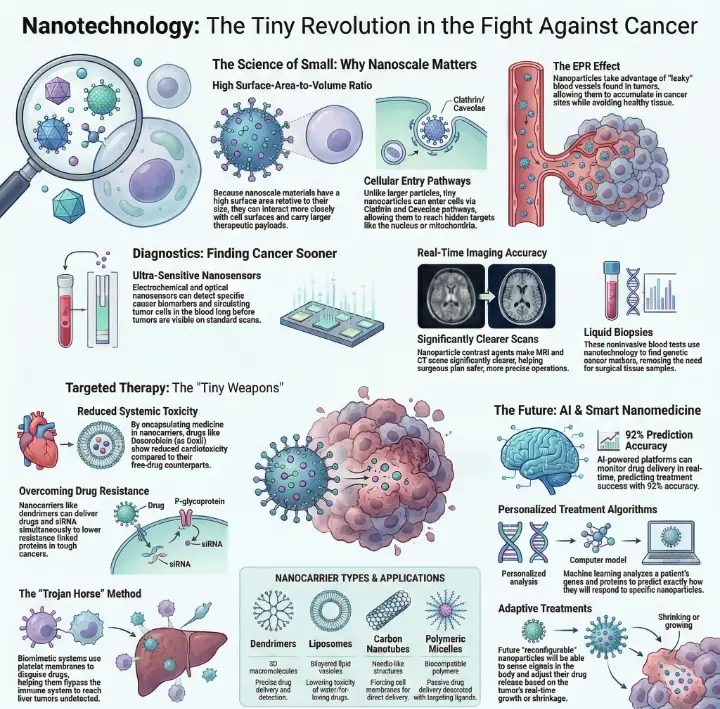
You see new hope in cancer care because of nanotechnology. This science uses particles much smaller than a human cell to help doctors find cancer earlier and treat it more precisely.
Quantum dots help doctors spot tiny tumors before they grow large enough to cause problems.
Nanoparticles give clearer images during MRI scans, which helps doctors plan safer surgeries.
Targeted drug delivery means fewer side effects and better results for patients.
Nanotechnology in Cancer Treatment: A Tiny Weapon for a Big Battle gives you tools to fight cancer with less harm and more accuracy.
Key Takeaways
Nanotechnology helps doctors detect cancer earlier with advanced tools like nanosensors, improving diagnostic accuracy.
Targeted drug delivery systems reduce side effects by sending medicine directly to cancer cells, leading to better treatment outcomes.
Nanoparticles enhance imaging techniques, allowing for clearer scans and more precise surgical planning.
AI is increasingly being integrated with nanotechnology in research to help personalize treatment plans, with the goal of better matching therapies to individual patient needs. Early studies are promising, but this is not yet routine in everyday cancer care.
Ongoing research in nanotechnology promises safer, smarter cancer treatments, offering hope for better patient care.
Nanotechnology in cancer treatment
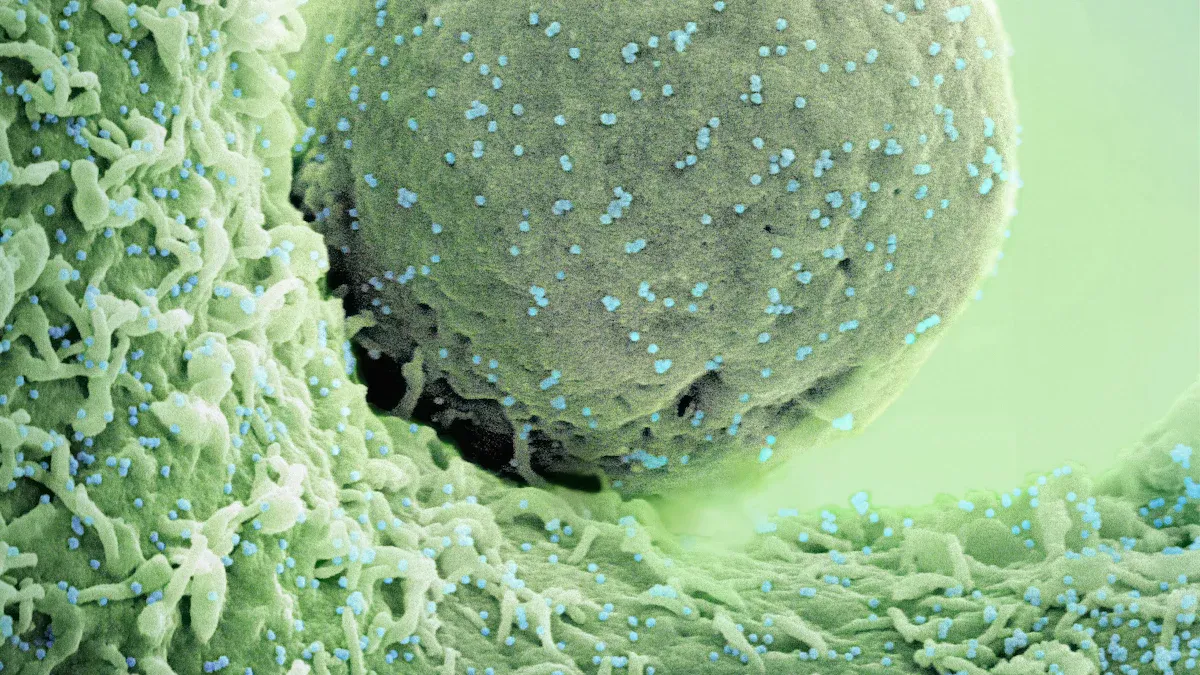
Why nanoscale matters
You see a big difference when doctors use materials at the nanoscale. These tiny particles work in ways that larger materials cannot. You notice that their small size lets them interact with cancer cells more closely.
Nanoscale materials have a high surface area compared to their volume. This means they touch more parts of a cell and can deliver medicine more effectively.
Some specially designed nanoparticles can reach structures inside cells, but most approved nanomedicines act in or around the cell rather than deep inside places like the nucleus or mitochondria. This still helps them get closer to cancer cells than many traditional drugs.
Cells take up nanoparticles in special ways. Larger particles use phagocytosis, while smaller ones use Clathrin and Caveolae pathways. This lets doctors target cancer cells with greater accuracy.
You benefit from these features because they allow for better imaging and treatment. Nanomedicine gives you tools for both diagnosis and therapy at the same time. You see doctors use nanoparticles to visualize tumors and monitor how well treatments work. Gold nanoparticles, for example, help doctors find and treat tumors like Gliosarcoma. Magnetic nanoparticles make MRI scans clearer and help heat tumors for targeted therapy. You get safer and more effective care because of these advances.
Key nanomaterials in use
You find several types of nanomaterials in cancer therapy. Each one has a special role in helping doctors fight cancer. The table below shows how these materials work and what they do for you:
Nanocarrier Type | Description | Applications in Cancer Therapy |
|---|---|---|
Dendrimers | Three-dimensional macromolecules with precise nanoscale sizes and structures | Used for both treatment and diagnosis. They help deliver drugs and detect cancer cells. |
Liposomes | Bilayered lipid vesicles for drug delivery | Carry both water-loving and fat-loving drugs. They lower toxicity and protect healthy cells. |
Carbon Nanotubes (CNTs) | Needle-like carriers for bioactives | Doctors make them soluble and safe. They pierce cell membranes and deliver medicine directly to cancer cells. |
Polymeric Micelles | Particulate systems made of biocompatible polymers | Carry drugs passively. You see them decorated with targeting molecules for better delivery to tumors. |
You see Nanotechnology in Cancer Treatment: A Tiny Weapon for a Big Battle in action when doctors use these nanomaterials. Dendrimers and liposomes help deliver medicine with fewer side effects. Carbon nanotubes and polymeric micelles target cancer cells and improve treatment results. You get more precise care and better outcomes because of these innovations.
You notice that scientists keep improving these materials. They design nanoparticles to release drugs only in the tumor area. This reduces harm to healthy tissues and makes treatment safer for you. Doctors also add special ligands to nanoparticles. These ligands help the particles stick to cancer cells and avoid healthy ones. You benefit from targeted therapies and less toxicity.
Nanotechnology in Cancer Treatment: A Tiny Weapon for a Big Battle gives you hope for the future. You see new materials and smarter designs every year. These advances promise even better ways to detect, diagnose, and treat cancer.
Early detection and advanced diagnostics
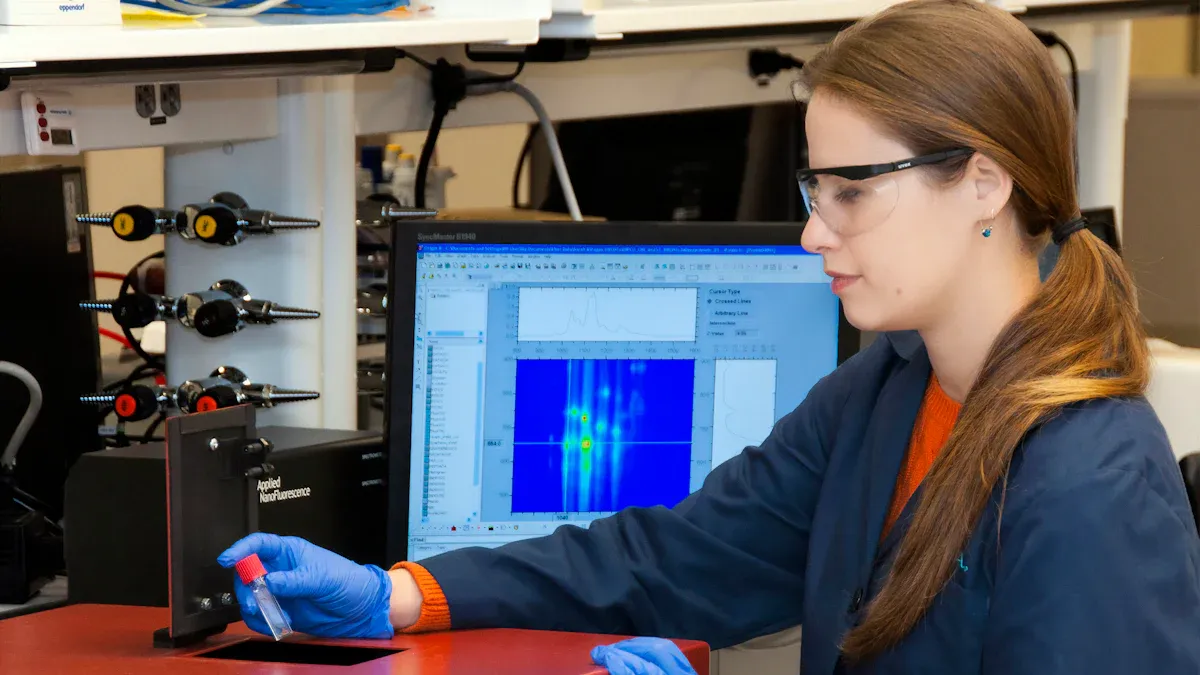
Nanosensors and imaging
You can now detect cancer earlier because of nanosensors and advanced imaging. These tiny tools use nanotechnology to find cancer markers that older tests might miss. Nanosensors work by picking up signals from cancer cells, making it easier for doctors to spot tumors when they are still small.
Nanosensors use advanced technology to detect specific cancer biomarkers, which improves diagnostic accuracy.
Electrochemical nanosensors give high sensitivity and specificity. They can monitor circulating tumor cells in your blood.
Optical nanosensors use light to create real-time images. Doctors can find small tumors and diagnose cancer sooner.
Nanoparticles take advantage of the leaky blood vessels in tumors. This helps imaging agents reach the tumor and not healthy tissue.
Nanoparticle contrast agents make CT, MRI, and PET scans clearer and more detailed.
Recent advances include ultra-sensitive biosensors that use single chips to quickly spot changes in your body. You see new point-of-care devices, like nano-sensing tools for exosomal micro-RNA, that work better than older methods. Wearable sensors, microfluidic chips, and color-changing tests like the i-Genbox help doctors find cancer faster and more accurately. These tools show how Nanotechnology in Cancer Treatment: A Tiny Weapon for a Big Battle is changing early detection.
Blood-based diagnostics
You benefit from blood-based diagnostics, also called liquid biopsies. These tests use nanotechnology to find cancer in your blood, so you do not need surgery to get a tissue sample.
Liquid biopsies improve sensitivity and specificity for cancer detection.
Doctors use them to find cancer early, track how well treatment works, and spot resistance to drugs.
These tests are noninvasive and safer than traditional biopsies.
Liquid biopsies can find genetic changes linked to cancer, but sometimes have trouble with very early-stage cancers.
Fatima Maher Al-Daffaie, a leading researcher, says, "By decoding exosomes, we can catch cancer earlier and treat it more intelligently. Our aim is to turn a simple blood test into a powerful diagnostic tool."
You see that Nanotechnology in Cancer Treatment: A Tiny Weapon for a Big Battle gives you more options for early diagnosis. Blood-based nanodiagnostics offer quick results and less discomfort. You get a better chance at early treatment and improved outcomes.
Targeted therapies and reduced toxicity
Drug delivery systems
You see new hope in cancer care because of advanced drug delivery systems. Nanotechnology helps doctors send medicine directly to cancer cells. This means you get better results with fewer side effects. Nanoparticles use the enhanced permeability and retention (EPR) effect. Tumor blood vessels are leaky, so nanoparticles can enter tumors more easily than healthy tissue.
Evidence Type | Description |
|---|---|
Enhanced Permeability and Retention (EPR) | Tumor blood vessels are more porous, allowing nanoparticles to accumulate in tumor sites. |
Targeting Mechanisms | Nanoparticles can incorporate targeting ligands that bind to cancer cell markers, ensuring drug delivery is focused on tumor cells. |
Pharmacokinetics | Nanoparticle-based systems improve drug stability and controlled release, leading to higher concentrations at tumor sites. |
Overcoming Resistance | These systems can encapsulate traditional chemotherapy agents and nucleic acids, aiding in both cytotoxic and gene therapy. |
Reduced Side Effects | For example, doxorubicin-loaded PEGylated liposomes show reduced cardiotoxicity compared to free doxorubicin. |
You benefit from several successful examples:
Gold nanorods combine with mild heat to target tumors, especially those with high MUC18 levels.
Polymer-based antibody-conjugated nanoparticles use the EPR effect to treat HER2-positive breast cancer with less toxicity.
Dendrimers deliver drugs and siRNA, helping overcome resistance by lowering P-glycoprotein.
Liposomes target resistant breast cancer cells, reverse drug resistance, and boost doxorubicin uptake while reducing side effects.
You see that Nanotechnology in Cancer Treatment: A Tiny Weapon for a Big Battle gives you safer and more effective therapies.
Tumor micro-environment targeting
You face many challenges when treating cancer. The tumor micro-environment (TME) can block medicine and help cancer cells survive. Nanomaterials help doctors change the TME to make treatment work better. These materials break down barriers, improve drug delivery, and boost your immune system.
Nanomaterials can change the TME and help drugs reach cancer cells.
They disrupt the extracellular matrix and tumor blood vessels, making it easier for medicine to enter tumors.
Nanoparticles can block immune pathways, making immunotherapy stronger.
These materials can change the activity of immune cells like dendritic cells, fibroblasts, and macrophages.
Nanoparticles show better anti-tumor effects and safety than older treatments.
You see new designs like biomimetic delivery systems. For example, scientists use platelet membranes to deliver drugs into liver tumors. This "Trojan Horse" method helps medicine reach tumors and avoid the immune system. Liposome nanoparticles can carry chemotherapy and other drugs, targeting bone marrow and blocking resistance in multiple myeloma.
Nanotechnology in Cancer Treatment: A Tiny Weapon for a Big Battle continues to improve how doctors treat cancer. You get more precise care and better outcomes because of these advances.
AI and personalized nanomedicine
Adaptive treatment strategies
You see artificial intelligence changing how doctors use nanotechnology to treat cancer. AI helps create treatment plans that fit your unique needs. Algorithms look at your genes, proteins, and medical history. They predict how you will respond to different therapies. You get medicine that matches your body and your cancer.
AI models simulate how nanoparticles move in your body. They help doctors choose the best biomarkers for your treatment.
Predictive tools show how drugs and nanocarriers interact. You get safer and more effective combinations.
AI speeds up drug discovery. It finds new ways to use nanoparticles with medicines.
AI-powered platforms combine diagnosis and therapy. You get real-time monitoring and targeted treatment.
You benefit from new clinical trials. For example, doctors use AI-driven nanomedicine for breast cancer. Early studies of ²²⁵Ac‑liposomes in metastatic triple‑negative breast cancer suggest that some patients can achieve disease stability with manageable side effects, but these results come from small, early‑phase trials and need confirmation in larger studies.
Evidence Type | Description |
|---|---|
Integration of Machine Learning and Nanotechnology | You get better cancer therapy because doctors can predict outcomes and optimize treatments. |
Targeted Drug Delivery | Nanoparticles deliver drugs directly to tumors, lowering side effects and improving results. |
Personalized Treatment Approaches | Machine learning helps tailor treatments for you, leading to better outcomes. |
Early Detection | Nanoscale imaging agents help doctors find cancer early, so you get treatment sooner. |
Monitoring and treatment progress
You see doctors using smart nanoparticles to track your cancer in real time. These particles respond to signals in your body. They adjust how they deliver medicine based on changes in your tumor. You get treatment that adapts as your cancer changes.
Smart nanoparticles distribute medicine by sensing your body’s signals.
Doctors can change your treatment plan quickly if your tumor grows or shrinks.
Machine learning predicts how well your medicine works. When doctors monitor drug delivery, they reach 92% accuracy in predicting success.
You get more control over your cancer care. Doctors use AI and nanotechnology to watch your progress and adjust your treatment. Nanotechnology in Cancer Treatment: A Tiny Weapon for a Big Battle gives you hope for better outcomes and safer therapies.
Nanotechnology in cancer treatment: a tiny weapon for a big battle
Real-world innovations
You see many new breakthroughs in cancer care because of nanotechnology. Scientists have created nanoparticles that attach only to cancer cells. This helps doctors deliver medicine right where it is needed. You get better results and fewer side effects. Nanoparticles protect chemotherapy drugs from breaking down, so the medicine stays strong longer. You also benefit from advanced imaging. Doctors use nanoparticles to find tumors early and plan treatment with more accuracy.
Nanoparticles target cancer cells directly, making treatments more effective.
Some nanoparticles release drugs only when they reach the tumor, giving you precise care.
Nanoscale drug delivery systems help medicine cross barriers in your body, so chemotherapy works better.
Nano vectors carry more than one medicine at a time, attacking cancer from different angles.
Nanosensors track tumors in real time, letting doctors watch how your cancer responds to treatment.
You see these innovations in hospitals and clinics. Doctors use them to improve drug delivery and early detection. Dozens of clinical trials are testing nanomaterials for cancer, and the number continues to grow as more nanomedicine approaches move from the lab into human studies. The first big success was Doxil, which helped patients live longer with fewer side effects.
Clinical Outcome | Description |
|---|---|
Nanotechnology sends medicine straight to tumors, lowering side effects. | |
Early Detection | Advanced devices and imaging find cancer sooner. |
Clinical Success | Doxil showed better results for patients. |
Ongoing Trials | More than 80 trials test new nanomaterials. |
Modest Survival Increase | Some treatments help patients live longer, but more progress is needed. |
Future possibilities
You will see even more changes in cancer care soon. Scientists now study how electric fields affect cancer cell growth. This could eventually contribute to new treatment strategies for tough cancers like pancreatic ductal adenocarcinoma, but these approaches are still in early experimental stages. Researchers work on nanoparticles that can track tumors and adjust medicine in real time. You may get treatments that change as your cancer changes.
Key Areas of Research | Anticipated Breakthroughs |
|---|---|
Targeted drug delivery systems | Better therapies for hard-to-treat cancers |
Multifunctional carriers | Platforms for tracking tumors as they grow |
Diagnostic and therapeutic integration | Early relapse detection and adaptive dosing |
You see hope for safer, smarter, and more personalized care. Nanotechnology in Cancer Treatment: A Tiny Weapon for a Big Battle continues to give you new tools and better outcomes.
You see nanotechnology changing how you detect, diagnose, and treat cancer.
Nanoparticles deliver chemotherapy closer to tumors and often lower side effects compared with some traditional formulations, although they can still cause toxicity and are carefully tested in animal and human studies.
New solutions overcome limits of older treatments and use green chemistry for safer care.
You benefit from better imaging, targeted therapies, and fewer harmful effects.
Future Research Direction | What It Means for You |
|---|---|
Reconfigurable nanoparticles | Smarter, more flexible treatments |
Multi-biomarker detection tools | Earlier and more accurate diagnosis |
Improved immunotherapy effectiveness | Stronger and safer immune-based treatments |
Stay curious about new advances. You will see even more progress in the fight against cancer.
FAQ
What is nanotechnology in cancer treatment?
You see nanotechnology as the use of tiny materials to find and treat cancer. These materials are much smaller than a cell. They help doctors target cancer cells and protect healthy ones.
Are nanotechnology-based treatments safe?
You get safer treatments because nanoparticles can deliver medicine directly to tumors. Most studies show fewer side effects. Doctors continue to test these treatments to make sure they are safe for you.
How does nanotechnology help with early cancer detection?
You benefit from nanosensors and advanced imaging. These tools find cancer markers in your blood or tissues. They help doctors spot cancer early, often before you feel sick.
Can nanotechnology cure cancer?
You see nanotechnology improve treatment and detection. It does not cure all cancers yet. Scientists work hard to make these tools better. You may see more cures in the future.
Will insurance cover nanotechnology treatments?
You should check with your insurance provider. Some nanotechnology treatments, like Doxil, have coverage. Newer treatments may not have coverage yet. You can ask your doctor or insurance company for details.
This article is for educational purposes only and is not a substitute for professional medical advice. For more details, please see our Disclaimer. To understand how we create and review our content, please see our Editorial Policy.
See Also
An In-Depth Overview of Various Cancer Types
Recognizing Symptoms and Treatments for Duodenal Cancer
Key Features and Insights on Cholangiocarcinoma

© 2026 Banish Cancer. Banish Cancer is a registered non-profit organization providing evidence-based research, educational courses, and Fear Response AI support services. Reg. No: 305706884 | Address: Taikos pr. 43-603, Kaunas, Lithuania.