Navigating Grief Coping with Cancer's Emotional Toll Made Simple

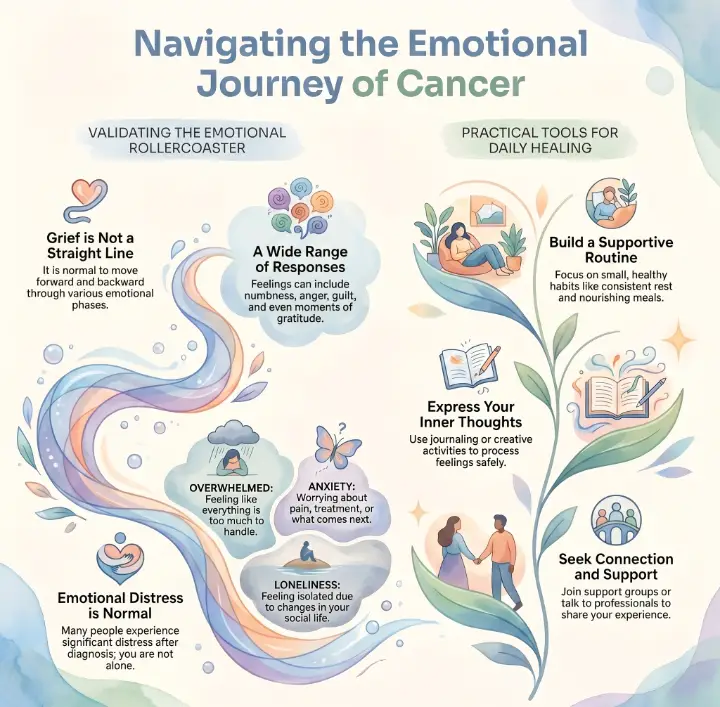
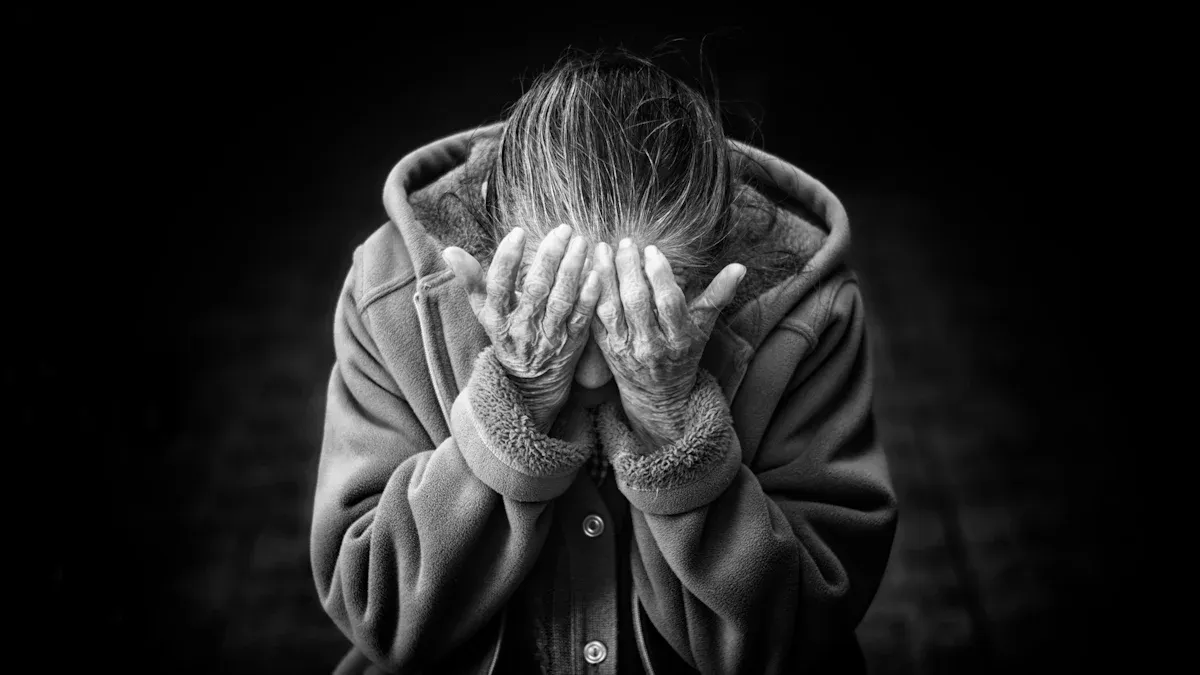
Hearing the words "you have cancer" can feel like the world stops spinning. You might feel sad, angry, or even numb. These feelings are normal, and you are not alone. In fact:
About 40% of people with cancer say they feel a lot of emotional distress after their diagnosis.
Some people want to talk, but less than half ever share their feelings with their doctors or nurses. Take a look:
Evidence | Description |
|---|---|
Emotional Support Seeking | Many patients experience significant emotional distress and are encouraged to seek support from various sources. |
Communication Gap | Less than half of cancer survivors discuss their emotional wellbeing with medical teams, indicating a gap in seeking support. |
"I think the most important thing in my message to anyone diagnosed with cancer,” Dr. Schapira imparts, “is that it’s important to feel connected; it’s important to actually be sincere enough and self-aware enough to know that it is a good time to get some help.”
Navigating Grief: Coping with Cancer's Emotional Toll looks different for everyone. You get to move at your own pace. Be gentle with yourself as you take each step.
Key Takeaways
Grief after a cancer diagnosis is normal. Allow yourself to feel a range of emotions, from sadness to anger.
Open communication with your healthcare team and loved ones is crucial. Sharing your feelings can help you feel less alone.
Establish a daily routine with small, healthy habits. Simple actions like eating well and getting enough rest can improve your mood.
Consider joining a support group. Connecting with others who understand your experience can provide comfort and strength.
Be patient with yourself. Healing takes time, and it's okay to have good days and tough days.
Recognize and Accept Grief

Emotional Rollercoaster
You might feel like your emotions are all over the place after a cancer diagnosis. One day you feel sad, the next day you feel angry, and sometimes you just feel numb. This is normal. Grief does not follow a straight path. You may notice that your feelings change from hour to hour or day to day. Take a look at some common emotional responses people report:
Emotional Response | Description |
|---|---|
Overwhelmed | You may feel like everything is too much to handle. |
Fear and Worry | You might worry about pain, treatment, or what comes next. |
Stress and Anxiety | Life changes and treatment plans can cause stress. |
Anger | You could feel angry at your situation or even at others. |
Sadness and Depression | Feeling sad about your health or lifestyle is common. |
Gratitude | Sometimes, you find new appreciation for life and relationships. |
Loneliness | Changes in your social life can make you feel isolated. |
Guilt | You may feel guilty, thinking you are a burden or blaming yourself. |
You do not have to rush through these feelings. Let yourself experience them. Grief is a natural response to loss, and it is okay to feel whatever comes up.
Validating Your Feelings
You might wonder if you are grieving "the right way." There is no single way to grieve. Some people cry, others stay quiet, and some get angry. You may even feel grateful or hopeful at times. All these feelings are valid.
Grief is not a linear process. You may move forward, then backward, and that is okay.
Society sometimes expects you to grieve in a certain way, but you get to decide what works for you.
Understanding that grief can come from many types of loss, not just death, helps you feel supported.
Allowing yourself to feel your emotions helps you heal and adapt to your diagnosis.
Different cultures and religions have their own ways of mourning. You may find comfort in your traditions or community. Some people feel better with support from religious groups, while others may feel more distress. Your experience is unique.
Tip: Open communication with your healthcare team and loved ones can help you build emotional resilience. You do not have to go through Navigating Grief: Coping with Cancer's Emotional Toll alone.
Coping Right Now
Simple Daily Practices
You can start feeling better by making small changes in your daily routine. These simple actions help you manage stress and support your emotional health. Try these ideas:
Set healthy boundaries to protect your energy. Say no when you need to.
Identify your support system. Reach out to friends, family, or trusted people.
Accept help from new sources. Let others support you.
Take care of your body. Eat nourishing meals, get enough rest, and move gently.
Embrace your faith or spirituality if it brings you comfort.
Create new traditions or rituals. Honor your journey and celebrate small wins.
Hold on to hope and gratitude. Notice moments that make you smile.
Seek meaning and purpose. Try new activities that interest you.
You might notice that keeping a routine gives you stability. Simple habits like waking up at the same time or eating regular meals can help you feel more in control.
Tip: Staying present and cherishing meaningful moments with loved ones can ease your grief. You do not have to rush the healing process.
Journaling and Expression
Writing down your thoughts can help you process emotions. Journaling lets you express feelings that you might not want to share out loud. You can write about your worries, hopes, or even things you are grateful for.
Maintain a journal to express emotions and process thoughts.
Use art, music, or creative activities to show how you feel.
Join a support group to share experiences with others.
Mindfulness and meditation also help reduce stress. Studies show that these practices improve mood and well-being for people facing cancer. Take a look:
Study Focus | Findings |
|---|---|
Lung Cancer Patients | |
Breast Cancer Patients | Less anxiety and depression, better sleep |
Cancer Survivors | Reduced anxiety and fatigue |
Pediatric Cancer Patients | Less acute pain through guided meditation |
Mindfulness-based stress reduction gives you tools to manage anxiety and emotional ups and downs. You can try breathing exercises or guided meditation for a few minutes each day. These practices support you as you move through Navigating Grief: Coping with Cancer's Emotional Toll.
Navigating Grief: Coping with Cancer's Emotional Toll
Reaching Out for Support
You do not have to face grief alone. When you open up to others, you give yourself a chance to heal. Talking with loved ones can help you feel less isolated. Sometimes, just sharing your thoughts with a friend or family member brings comfort. You might find that people want to help, but they do not always know how. Let them know what you need, even if it is just someone to listen.
Support groups can make a big difference. You meet people who understand what you are going through. They have felt the same pain, confusion, or anger. In these groups, you can share your story or just listen. You do not have to talk if you do not want to. Many people find hope and strength in these connections.
Here are some common ways people find support during Navigating Grief: Coping with Cancer's Emotional Toll:
Sarah joined a support group after losing her mother to breast cancer. She felt relief and guilt, but the group helped her process these feelings. She found healing by honoring her mother’s memory.
Michael created photo books after his partner died from lung cancer. He joined a group for LGBTQ+ individuals. The group gave him understanding and a sense of community.
Elena worked with a counselor after her father’s death from pancreatic cancer. She created a garden in his memory. This helped her find peace.
Support groups do more than just offer a place to talk. They help you feel less alone. You can share your emotions in a safe space. Many people form strong bonds and feel like they have a new family. These groups support you during hard days and celebrate with you during milestones.
Tip: You do not have to share everything at once. Take your time. Listen to others and speak when you feel ready.
Professional Help and Support Groups
Sometimes, grief feels too heavy to carry by yourself. You might notice that talking to friends or joining a group is not enough. This is when professional help can make a big difference. Counselors and therapists know how to guide you through Navigating Grief: Coping with Cancer's Emotional Toll. They listen without judgment and give you tools to manage your feelings.
Many people find that working with a professional helps them understand their emotions. You might learn new ways to cope with sadness, anger, or anxiety. Some people join therapeutic bereavement groups. These groups focus on specific types of loss and bring together people with similar experiences. When you share your story with others who understand, you often feel less alone.
Take a look at how professional support can help:
Type of Support | Description |
|---|---|
Counseling | Offers a non-judgmental space to express emotions and tools to navigate grief. |
Support Groups | Provide shared experiences and coping strategies among individuals with similar losses. |
Specialized Therapeutic Interventions | Target specific grief reactions and help in rebuilding a sense of purpose. |
Research shows that therapeutic groups for cancer-related grief work well. In one group, 27 people joined a cancer bereavement therapeutic group. They felt less grief, depression, and anxiety. These improvements lasted for at least three months.
You might wonder where to find help. Here are some trusted organizations:
American Cancer Society
National Hospice and Palliative Care Organization
Cancer Support Community
You can ask your doctor or nurse for recommendations. Many hospitals and cancer centers offer support groups or counseling services. You do not have to wait until you feel overwhelmed. Reaching out early can help you manage Navigating Grief: Coping with Cancer's Emotional Toll before it becomes too much.
Note: Healing takes time. You do not have to do it alone. Support is available, and it is okay to ask for help.
Long-Term Healing
Self-Compassion and Patience
Healing from the emotional toll of cancer does not happen overnight. You might feel pressure to "move on" or "get back to normal," but your journey is unique. Give yourself permission to heal at your own pace. Some days you may feel strong. Other days, you may feel sad or tired. Both are okay.
Try to treat yourself with the same kindness you would offer a friend. If you feel angry or frustrated, remind yourself that these feelings are part of the process. Let yourself rest when you need to. Celebrate small victories, like getting out of bed or talking to a friend. These moments matter.
Remember: You are doing your best. Healing is not a race.
Realistic Expectations for Recovery
Emotional recovery after a cancer diagnosis takes time. You may notice changes in how you feel for months or even years. Many people find that their feelings shift as they move from treatment to long-term survivorship. Some days, you may feel hopeful. Other days, you may struggle with worry or sadness.
Take a look at what research shows about emotional recovery:
Key Insights | Details |
|---|---|
The adjustment from posttreatment to long-term survivorship is gradual and can take years. | |
Positive Outcomes | Many people discover a greater appreciation for life and stronger beliefs after diagnosis. |
Emotional Processing | Allowing yourself to feel emotions can lead to psychological growth and adaptation. |
Factors for Struggle | Less support and more medical problems can make adjustment harder. |
You might notice that letting yourself feel emotions—like anger or uncertainty—can help you grow. Some people even find new meaning or purpose in life. If you feel stuck, reach out for support. You do not have to do this alone.
Tip: Set small, realistic goals for yourself. Healing is a journey, and every step forward counts.
Handling Setbacks
Overwhelming Grief Days
Some days, grief can feel like a heavy wave that knocks you down. You might wake up feeling numb or find yourself crying without warning. These tough days can happen for many reasons. You may feel anxious when you think about being apart from someone you love. Sometimes, anger or sadness shows up out of nowhere. You might even lose interest in things you once enjoyed. Lack of support can make these feelings stronger.
Here are some common triggers that can make grief feel worse:
Anxiety about separation from loved ones
Intense sadness or loss of interest in life
Anger that feels hard to control
Distress that leads to crying or even seeing things that are not there
Feeling alone or unsupported
You do not have to face these feelings by yourself. It is okay to have days when everything feels too much. You can take small steps to care for yourself.
Emergency Coping Tools
When grief feels overwhelming, you need tools that help right away. Try these simple ideas to get through the hardest moments:
Take care of your body. Eat a healthy snack, drink water, or rest for a while.
Move your body. Stretch, walk, or do gentle exercise to release tension.
Practice deep breathing. Sit quietly and focus on slow, steady breaths.
Write down your thoughts. Journaling can help you sort out your feelings.
Let yourself laugh or smile, even for a moment. Watch a funny video or remember a happy time.
Reach out to someone you trust. Call a friend, family member, or support group.
Set boundaries. Give yourself permission to say no to things that drain your energy.
Allow yourself to feel every emotion—sadness, anger, or even relief.
Tip: If you feel stuck or your grief feels too big to handle, it is okay to ask for professional help. You are not alone, and support is always available.
You can get through even the hardest days by using these tools. Each small step helps you move forward, one moment at a time.
Grief after cancer is a journey, not a race. You will have good days and tough days, and that is okay. Here are some things that can help you along the way:
Try mindfulness, journaling, or gentle movement to ease stress and boost your mood.
Reach out to friends, support groups, or professionals when you need to talk.
Remember, there is no right way to grieve. Your feelings matter.
Stay patient with yourself. Healing takes time, but hope and support can make you stronger.
You are not alone. Healing is possible, one step at a time.
FAQ
What if I feel stuck in my grief?
You might feel stuck sometimes. Try talking to someone you trust or writing in a journal. If you still feel overwhelmed, reach out to a counselor or support group. You do not have to handle this alone.
How can I support a loved one coping with cancer grief?
Listen without judgment. Offer help with daily tasks. Send a thoughtful message or invite them for a walk. Let them know you care. Sometimes, just being there makes a big difference.
Tip: Ask, "How can I support you today?" This shows you care and respect their needs.
Is it normal to feel angry or guilty after a cancer diagnosis?
Yes, you might feel angry or guilty. These emotions are common. You can talk about them with friends or write them down. Accepting your feelings helps you heal.
Emotion | Common Reaction |
|---|---|
Anger | Frustration |
Guilt | Self-blame |
Can grief return even after I feel better?
Grief can come back, especially on anniversaries or tough days. You might feel sad again. This is normal. Use your coping tools and reach out for support when you need it.
This article is for educational purposes only and is not a substitute for professional medical advice. For more details, please see our Disclaimer. To understand how we create and review our content, please see our Editorial Policy.
See Also
Recognizing Laryngeal Cancer: Symptoms And Underlying Causes
An In-Depth Overview Of Various Types Of Cancer
Exploring Duodenal Cancer: Symptoms And Available Treatments
Identifying Conjunctival Melanoma: Symptoms And Treatment Options

© 2026 Banish Cancer. Banish Cancer is a registered non-profit organization providing evidence-based research, educational courses, and Fear Response AI support services. Reg. No: 305706884 | Address: Taikos pr. 43-603, Kaunas, Lithuania.