How Patents Shape Innovation in Cancer Drug Development

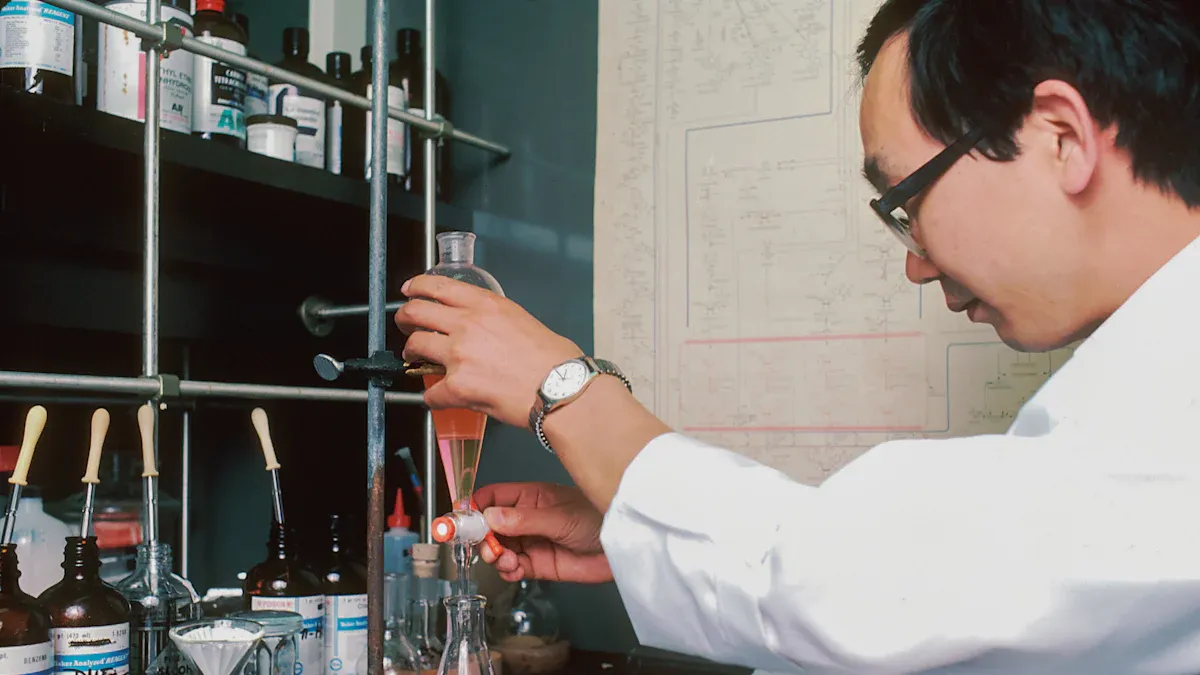
Patents give you a powerful tool when you want to create new cancer drugs. You gain exclusivity, which helps you stand out in the market. Investors see this protection and feel confident supporting your research. Collaboration between companies and researchers grows because patents make sharing ideas safer. You may wonder if patents limit access or raise prices. The balance between rewarding innovation and making treatments available remains important as you keep Navigating Patents and Innovation in Cancer Drug Development.
Key Takeaways
Patents provide exclusivity, allowing you to sell your cancer drug without competition for 7 to 15 years. This helps recover research costs and encourages investment in new treatments.
Investors are more likely to support your research if you have patent protection. This exclusivity gives you a chance to earn profits and secure funding for future projects.
Understanding the scope of your patent is crucial. A broad patent can block competitors, while a narrow one may limit your protection. Stay alert to opposition proceedings that could affect your patent.
Collaboration with other companies and academic institutions can enhance innovation. Licensing agreements allow for shared risks and faster development of new cancer therapies.
After a patent expires, generic drugs enter the market, leading to lower prices and better access for patients. Plan for this competition by developing improved versions of your drug.
Navigating Patents and Innovation in Cancer Drug Development
Patent Exclusivity and Market Advantage
You gain a strong advantage when you secure a patent for a cancer drug. Patents give you the right to sell your drug without competition for a set period. This exclusivity lets you recover your research costs and encourages you to invest in new treatments. You can see how this shapes the market for cancer drugs.
The effective market exclusivity period for cancer drugs usually ranges from 7 to 15 years.
Studies show an average period between approval and generic entry of 12 to 15 years.
The mean effective patent life for drugs approved in the 1990s and 2000s was about 11.5 years after approval.
For new molecular entities approved between 2015 and 2022, the median time from approval to first patent expiry typically provided between 10 and 13 years of post-approval exclusivity.
Tip: You can use this exclusivity to build a brand and establish trust with doctors and patients. It also gives you time to gather more data and improve your drug.
Investment Incentives and Research Funding
You attract investors when you show them the protection patents offer. Investors want to know their money will help create something valuable. Patent exclusivity gives you a window to earn profits, which makes research funding easier to secure. You can see how changes in patent law affect your investment strategy.
The Inflation Reduction Act (IRA) changed the rules for patent exclusivity. The IRA gives a shorter exclusivity period for small molecules compared to biologics. You may notice companies now focus more on biologics. This shift means fewer new cancer drugs based on small-molecule chemistry. Companies hesitate to invest in costly clinical trials for these drugs because they have less time to recoup their investments.
Drug Type | Typical Exclusivity Period | Investment Trend |
|---|---|---|
Small Molecule | Shorter | Declining |
Biologic | Longer | Increasing |
Note: You can use this information to plan your research. If you work with biologics, you may find more support and funding.
Patent Scope and Opposition Proceedings
You must understand the scope of your patent. Patent scope defines what your patent covers. A broad patent protects many aspects of your drug, while a narrow patent covers only specific features. You can use a broad patent to block competitors from making similar drugs. You must also watch for opposition proceedings. These are challenges from other companies or groups who want to limit your patent.
Opposition proceedings can change the direction of innovation. If your patent faces opposition, you may need to defend it or change your research focus. You can use these proceedings to learn about new trends and gaps in the market. Navigating Patents and Innovation in Cancer Drug Development means you must stay alert and adapt to changes.
Callout: You can use patent scope and opposition proceedings to guide your innovation. A strong patent helps you protect your ideas and shape the future of cancer drug development.
Navigating Patents and Innovation in Cancer Drug Development gives you tools to build new treatments, attract funding, and stay ahead in a competitive market. You must use these tools wisely to create lasting impact.
Patentable Elements in Cancer Drugs

Compounds and Formulations
You can patent new compounds and unique formulations in cancer drugs. If you create a molecule with anti-cancer properties, you protect its structure and use. You also patent new ways to deliver the drug, such as extended-release tablets or nanoparticle carriers. To patent a new formulation of an existing drug, you must show clear benefits for patients. These benefits include better compliance, fewer side effects, or improved effectiveness.
A new dosage strength or form not used for the original indication.
Clinical value that gives patients real advantages.
Evidence of a specific, substantial, and credible use.
Improved patient compliance or reduced side effects.
Distinct advantages, such as topical creams or nanoparticle carriers.
You can patent new applications of old drugs by focusing on how you use them for new treatments. If your invention does not offer real benefits, it may be seen as evergreening rather than true innovation.
Methods and Technologies
You patent many methods and technologies that help treat cancer. These include new ways to deliver drugs, target resistance, and diagnose patients. The table below shows what you can protect:
Description | |
|---|---|
Drug Compounds & Formulations | New molecules with anti-cancer properties and their uses. |
Drug Delivery Mechanisms | Innovative methods like nanoparticles that improve drug action. |
Methods of Treatment | Targeted therapies and combinations that fight resistance. |
Innovative Dosage Forms | New formulations that help the drug work better. |
Targeting Drug Resistance Mechanisms | Ways to overcome resistance in cancer cells. |
Synthetic Pathways & Manufacturing | New ways to make drugs more stable or efficient. |
Diagnostic & Predictive Biomarkers | Methods to use biomarkers for diagnosis or predicting response. |
Patents on diagnostic methods help you develop personalized cancer therapies. You gain exclusivity for companion diagnostics, combination therapies, and new formulations. You can extend the commercial life of your drug by patenting new ways to use biomarkers or create subcutaneous versions.
AI and Drug Resistance Innovation
You see rapid growth in patent filings for AI-driven cancer drug discovery. There are now thousands of AI‑related patents in drug discovery, and AI is increasingly used across modern cancer R&D.. Companies compete to use AI for finding new compounds, predicting resistance, and improving treatment. You use AI to analyze data and design drugs that target cancer cells more effectively.
Tip: You can use AI to speed up research and find new ways to overcome drug resistance. This helps you stay ahead in Navigating Patents and Innovation in Cancer Drug Development.
Collaboration, Alliances, and Funding

Licensing and Partnerships
You see licensing agreements play a big role in cancer drug development. Large pharmaceutical companies often transfer early-stage risks to smaller biotech firms. This lets big companies focus on late-stage trials and regulatory steps. You benefit from faster timelines for new cancer therapies. The 'Option-to-License' model gives companies a way to pay upfront for exclusive rights. They make decisions based on trial data, which speeds up drug development. This structure reduces financial risk and provides immediate funding to smaller firms. You notice that licensing deals help both sides move quickly and efficiently.
Primary Goal | Typical Structure | Patent Cliff Mitigation Use Case | |
|---|---|---|---|
Co-Development | Share R&D risk and cost | Joint steering committees | Replace lost blockbuster |
Co-Marketing/Promotion | Maximize commercial reach | Divide sales territories | Maximize revenue before patent expiry |
Joint Venture (JV) | Create shared capability | New legal entity | Build manufacturing for new modalities |
In-Licensing | Acquire external innovation | Upfront, milestone, royalty payments | Replenish pipeline before patent cliff |
R&D Collaboration | Access novel science | Research agreement with academics | Seed future innovation |
Authorized Generic (AG) | Control market erosion | Internal launch or licensing with generics | Manage revenue drop after patent expiry |
“Beyond the Pill” Digital | Create new value streams | Partner with tech/data companies | Slow biosimilar/generic uptake |
Academic-Industry Collaboration
You find academic-industry partnerships essential for turning discoveries into approved cancer drugs. A clear intellectual property model helps both sides. Industry keeps rights to the original compound. Universities own new patents created during the collaboration. This setup encourages universities to use industry resources for new inventions. Companies gain access to innovative, lower-risk opportunities. You see more patents filed when both sides work together.
The negotiation of patent ownership between universities and pharmaceutical companies faces several key challenges: the complexity of patent rights, the necessity for significant investment in early-stage technologies, and the contrasting priorities of public benefit versus profit maximization.
Academic deals usually have lower royalty rates.
Total deal sizes and precommercial payments are smaller.
Non-financial clauses often include requirements for diligent development and affordability.
Venture Capital and Strategic Alliances
You notice venture capitalists focus on startups with strong patent portfolios. Investors want to see clear commercialization strategies and protected intellectual property. Startups that show steady progress in clinical milestones attract more funding. You understand that patience is important because drug development takes time. Venture capital helps you build alliances and move your cancer drug forward.
Tip: You can strengthen your funding chances by protecting your inventions and showing a clear path to market.
Challenges, Ethics, and Access
Pricing Strategies and Market Dynamics
You see that patents play a big role in how much cancer drugs cost. When a drug is under patent, you often face high prices because only one company can sell it. After the patent ends, generic and biosimilar drugs enter the market. These new options lower prices and help more people afford treatment. The table below shows how prices drop after patents expire:
Time Period | Price Reduction (%) |
|---|---|
1 year | |
5 years | 66 |
You notice that the introduction of generics and biosimilars leads to big savings. In some countries, losing a patent can cut cancer drug spending by 20% over five years. These savings can help thousands of patients get new treatments.
Balancing Profit and Patient Access
You need to balance making a profit with helping patients. Patents give you time to earn back your investment, but they can also make drugs expensive. When patents end, prices fall and more people can get the medicine they need. You can use different pricing strategies to help patients in low-income areas. For example, you might set lower prices in these markets. This helps more people get treatment, but it also raises questions about fairness.
Tip: You can support access by working with governments and health groups to find fair prices for your drugs.
Policy and Global Disparities
You see that policies and laws shape who gets cancer drugs around the world. Some countries use special rules to make drugs more affordable. The TRIPS agreement lets countries issue licenses to produce generics even when patents are active. Compulsory licensing allows governments to make or import generics without the patent holder’s consent if it helps public health. The table below explains these tools:
Evidence Type | Description |
|---|---|
Patent Protection | High prices limit access to generics. |
TRIPS Agreement | Countries can license generics during patent life to improve access. |
Compulsory Licensing | Governments can allow generics for public interest, even with active patent. |
You also see that the Doha Declaration supports these actions for low- and middle-income countries. These policies help more people get life-saving cancer drugs, but they also create ethical debates about fairness and innovation.
Post-Patent Landscape and Ongoing Innovation
Generic Entry and Competition
You see big changes when a cancer drug patent expires. Generic drug makers can now enter the market. These companies create versions of the original drug. Prices drop because more companies compete. Patients benefit from lower costs and better access. Doctors have more choices for treatment. You notice that generic entry often leads to a sharp increase in the number of people who can afford cancer care. This competition also pushes you to keep improving your products.
Tip: You can prepare for generic competition by planning new research or developing improved versions of your drug.
Next-Generation Cancer Drugs
You can drive progress by focusing on next-generation cancer drugs. These drugs use new science to target cancer in better ways. You might work on drugs that use gene editing, immunotherapy, or personalized medicine. Each new drug builds on what you learned from earlier treatments. You see that next-generation drugs often get new patents. This cycle keeps innovation moving forward. You can use new technology, like artificial intelligence, to find better drug candidates and predict how patients will respond.
New drugs often target specific cancer mutations.
Some next-generation drugs use the body’s immune system to fight cancer.
Personalized treatments help you match the right drug to the right patient.
Patent Portfolio Management
You need a strong patent portfolio to keep your cancer drug pipeline healthy. Managing your patents well gives you many advantages:
You gain exclusive rights, which encourage you to invest in new research.
Detailed patent applications help you share knowledge and work with other researchers.
A strong patent record makes your company more attractive to investors and partners.
Patents help you form alliances with larger companies and secure licensing deals.
You can protect new ideas for personalized medicine and target specific patient groups.
Good patent management helps you follow rules and pass regulatory reviews.
You should work closely with legal, research, and business teams. Align your patent strategy with your business goals. Protect your best ideas early. This approach gives you a lasting edge in cancer drug development.
You see that patents drive progress in cancer drug development. Patents give you strong reasons to invest and create new therapies. You also face challenges, like high prices and access issues. You must find a balance between rewarding innovation and helping patients.
Remember: Patents shape the future of cancer care, but you play a key role in making sure new treatments reach those who need them most.
FAQ
What does a patent protect in cancer drug development?
A patent protects your invention. You can secure rights for new compounds, formulations, methods, or technologies. This stops others from making, using, or selling your drug without permission.
How long does patent exclusivity last for cancer drugs?
You usually get exclusivity for 10 to 15 years after approval. This gives you time to recover costs and invest in new research.
Tip: Plan your research timeline around patent expiry to stay competitive.
Can you patent a new use for an existing cancer drug?
Yes, you can patent a new use if you show clear benefits for patients. Improved effectiveness, fewer side effects, or better compliance help you qualify.
How do patents affect cancer drug prices?
Patents allow you to set higher prices while you have exclusivity. When patents expire, generic drugs enter the market and prices drop.
Stage | Price Trend |
|---|---|
Patent Active | Higher |
Patent Expired | Lower |
What happens when a cancer drug patent expires?
Generic companies can make and sell the drug. You see more competition, lower prices, and better access for patients.
This article is for educational purposes only and is not a substitute for professional medical advice. For more details, please see our Disclaimer. To understand how we create and review our content, please see our Editorial Policy.
See Also
An In-Depth Overview of Various Cancer Types
Understanding Carcinoid Tumors: Essential Information You Need
Exploring Cancer Types Associated With AIDS: Key Insights

© 2026 Banish Cancer. Banish Cancer is a registered non-profit organization providing evidence-based research, educational courses, and Fear Response AI support services. Reg. No: 305706884 | Address: Taikos pr. 43-603, Kaunas, Lithuania.