Turning the Tide with Patient Advocacy: Stories That Change Cancer Care

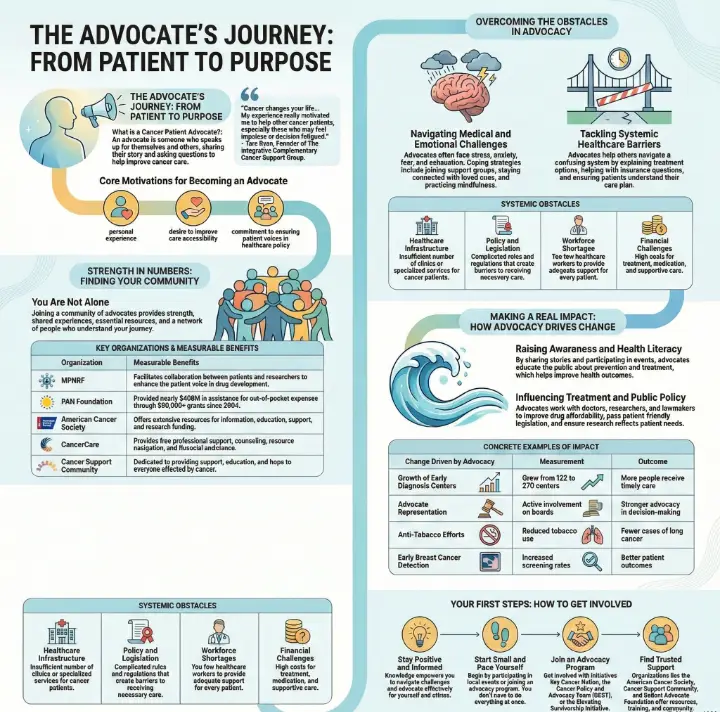
“You have more strength than you know,” a patient advocate once shared, “and your story can change lives.” You may feel alone, but your courage can inspire hope. When you step forward, you become part of Turning the Tide: How Patient Advocates are Changing Cancer Treatment. Your voice matters. Your journey can light the way for others.
Key Takeaways
Your story matters. Sharing your cancer journey can inspire hope and help others feel less alone.
Join a supportive community. Connecting with other advocates provides strength, resources, and shared experiences.
Stay informed and positive. Knowledge empowers you to navigate challenges and advocate effectively for yourself and others.
Take small steps in advocacy. Start by participating in local events or joining advocacy programs to make a difference.
Support patients and caregivers. Your voice can represent their needs and help improve cancer care for everyone.
Turning the Tide: How Patient Advocates are Changing Cancer Treatment

From Patient to Advocate
You may wonder what inspires someone to become a patient advocate. Many people start this journey after facing cancer themselves. Their experiences give them a new purpose. You can see this in the story of Tara Ryan. She once said:
"Cancer changes your life. It changes the way you see everything, the way you think, the way you feel, the things you choose to worry about. My experience really motivated me to help other cancer patients, especially those who may feel hopeless or decision fatigued. I founded The Integrative Complementary Cancer Support Group at the Reuner Oncology Center Support House in Kingston, NY, with this purpose in mind."
You might feel the same drive if you have faced cancer or watched a loved one struggle. Many advocates want to make sure no one feels alone. They want to help others find hope and strength. Some people speak up for those who cannot. As one advocate shared:
"I felt compelled to speak for those who couldn’t—either because they were too busy battling their disease or because they had already passed away."
Your story can become a powerful tool for change. When you share your journey, you help others feel seen and heard. You also help shape the future of cancer care.
Here are some common reasons people become advocates:
Motivation Type | Description |
|---|---|
Personal Experience | Many advocates are motivated by their own battles with cancer, which drives them to seek better care. |
Advocacy for Others | Advocates aim to improve accessibility and affordability of care for other patients. |
Ensuring Patient Voices | They strive to ensure that patients' experiences and concerns are represented in healthcare policies. |
You can see that each reason comes from a place of deep care and commitment. Mercurio, a dedicated advocate, once said, "I will remain an advocate for cancer patients for as long as it takes." This kind of dedication helps drive real change.
Building a Supportive Community
When you join a community of advocates, you find strength in numbers. You do not have to face cancer alone. Supportive groups help you share your story, learn from others, and find new hope. These communities also help you connect with people who understand your journey.
Many organizations offer support and resources. Here are some examples:
Organization | Measurable Benefits |
|---|---|
MPNRF | Facilitates collaboration among patients, researchers, and industry to enhance patient voice in research and drug development. |
PAN Foundation | Provides nearly $400 million in assistance for out-of-pocket expenses through over 200,000 patient grants since 2004. |
American Cancer Society | Offers extensive resources for information, education, support, and research funding. |
CancerCare | Provides free professional support services, resource navigation, counseling, and financial assistance. |
Cancer Support Community | Dedicated to providing support, education, and hope to those affected by cancer. |
You can see how these groups make a real difference. They help you find answers, get support, and even receive financial help. When you join these communities, you help others and yourself.
Patient advocacy has grown stronger over the past decade. You now have more ways to share your story and make an impact. Advocacy groups help you connect with researchers and healthcare professionals. You can help shape research and treatment by sharing your experiences. These groups also help link important information and resources, making it easier for everyone to get the help they need.
When you take part in Turning the Tide: How Patient Advocates are Changing Cancer Treatment, you help create a wave of positive change. Your voice can lead to better care, more support, and new hope for everyone facing cancer. You do not just change your own life—you help change the lives of many others.
Overcoming Barriers in Advocacy
Medical and Emotional Challenges
You may face many challenges as a patient advocate. Cancer treatment can make you feel tired and overwhelmed. You might notice changes in your body, like hair loss or fatigue. These changes can affect how you see yourself. You may feel sadness, hopelessness, or even anger. Sometimes, you might feel alone or numb. These feelings are common.
Here are some emotional challenges you might experience:
Fear and worry
Guilt or helplessness
Loneliness or isolation
Exhaustion
You can overcome these feelings by taking small steps. Try these strategies:
Acknowledge your feelings. Write them down or talk to someone you trust.
Stay connected with family and friends.
Join a support group to share your story.
Seek counseling or therapy if you need extra help.
Practice relaxation or mindfulness exercises.
Set small goals each day.
Focus on what you can control.
Remember, your resilience and courage inspire others. You help create hope for those who feel lost.
Navigating the Healthcare System
The healthcare system can feel confusing. You may face barriers like communication problems, financial issues, or trouble getting the care you need. Sometimes, there are not enough doctors or support services. Policies and insurance rules can make things harder.
Description | |
|---|---|
Healthcare Infrastructure | Not enough clinics or services for cancer patients. |
Policy and Legislation | Rules that make it hard to get the care you need. |
Workforce Shortages | Too few healthcare workers to help everyone. |
Financial Challenges | High costs for treatment and support. |
Need for Comprehensive Support | Not enough emotional or social support for patients and families. |
You can help others by:
Preparing them for appointments
Explaining treatment options
Making sure they understand their diagnosis and care plan
Helping with insurance and billing questions
Advocating for their rights
You play a key role in Turning the Tide: How Patient Advocates are Changing Cancer Treatment. You guide others through tough times and help them find their voice. Your actions make the system easier to navigate and bring hope to many.
Impact on Cancer Care and Education

Raising Awareness and Health Literacy
You have the power to change how people see cancer. When you share your story, you help others understand the importance of early detection, treatment, and support. Many advocates use their voices to teach others about cancer and health. You can join events, speak at schools, or use social media to spread hope and knowledge.
The National Coalition for Cancer Survivorship (NCCS) published a patient education guide titled 'Self-Advocacy: A Cancer Survivor’s Handbook', which aims to inform cancer survivors on how to advocate for their needs. This guide represents the collective wisdom of the NCCS and demonstrates how self-advocacy can enhance the quality of life for cancer survivors.
You can also help others learn about cancer by:
Educating the public about cancer prevention, screening, and treatment.
Hosting informational events and public speaking engagements.
Participating in fundraising activities and events like walks or runs.
Poor health literacy can lead to poor health outcomes. You can make a difference by using clear words and sharing information in simple ways. When you help others understand their health, you give them the tools to fight cancer with confidence.
The study examines strategies of a patient advocacy training model that aims to increase biomedical knowledge and address health literacy, ultimately empowering patients and lowering access barriers to facilitate participation in research.
Influencing Treatment and Policy
You can help shape the future of cancer care. Patient advocates work with doctors, researchers, and lawmakers to make sure your voice is heard. Your story can inspire new treatments and better care for everyone.
Method | Description |
|---|---|
Stakeholder Communication | Sharing clear messages with key people to spread information. |
Education and Information Spread | Using social media, public speaking, and events to teach others about cancer care. |
Public Policy Advocacy | Working for changes that improve cancer prevention, treatment, and care. |
Community Engagement | Involving people in fundraising and events to support cancer research. |
You can see real change happening. States are reforming PBMs to improve drug affordability for cancer patients. Legislation is being introduced to eliminate copay accumulators and maximizers, which hinder patient access to medications. Rebate pass-through policies are being implemented to ensure patients benefit from rebates at the point of sale.
Diane Heditsian, a breast cancer survivor, shows how your voice matters. She works with researchers to make sure patients’ needs are part of cancer research. Christina Curtis, a researcher at Stanford, says that patient advocates help improve patient outcomes by sharing their insights.
You are part of Turning the Tide: How Patient Advocates are Changing Cancer Treatment. Your actions can lead to new laws, better treatments, and more hope for everyone facing cancer.
Lessons and Advice for New Advocates
Steps to Advocacy
You can become a powerful advocate, even if you start small. Many experienced advocates say that your attitude and knowledge matter most. When you stay positive and informed, you feel more in control. Here are some key lessons to guide you:
Stay positive and informed. Knowledge gives you power.
Pace yourself. You cannot do everything at once. Prioritize what matters most.
Accept uncertainty. Take walks, meditate, or laugh with friends to ease anxiety.
You can take your first steps by joining programs and teams that support advocacy. Many people start by getting involved with Cancer Nation or joining the Cancer Policy and Advocacy Team (CPAT). You can also:
Participate in the Elevating Survivorship initiative.
Engage with the Survivorship Champions program.
Attend events, webinars, and campaigns.
Subscribe to updates and follow advocacy groups on social media.
“You have the power to make a difference, one step at a time.”
You will find many resources to help you on your journey. Here are some trusted organizations:
Cancer Type | Resource and Link to Info |
|---|---|
Any | |
Any | |
Any | |
Any |
You can also find free rides to treatment, free lodging, and a 24/7 cancer helpline.
Support for Patients and Caregivers
You play a vital role in supporting patients and caregivers. Advocates speak up for patients and families in research and care. You can help by joining committees, sharing concerns, and making sure every voice is heard.
Address medical, emotional, and financial concerns.
Connect with communities to represent their needs.
Help others join clinical trials and research.
Caregivers need support too. You can encourage them to:
Strategy | Description |
|---|---|
Self-Care | Take care of their own health and well-being. |
Ask for Help | Reach out to friends or family for support. |
Emotional Support | Talk about their feelings and experiences. |
Support Groups | Join groups for advice and community. |
You can inspire hope and strength in others. Every action you take helps turn the tide for cancer care.
You help shape cancer care when you share your story. Patient advocates like you have driven real change.
Change Description | Measurement | Outcome |
|---|---|---|
Early diagnosis centers grew | More people get care | |
Patient advocates joined boards | Active involvement | Stronger advocacy |
Anti-tobacco efforts | Less tobacco use | Fewer lung cancer cases |
Early breast cancer detection | Increased rates | Better outcomes |
Your voice can break stigma and build trust. Many people, like Kara Kenan, found hope and purpose by joining advocacy groups and events. You can join programs, develop self-advocacy skills, and connect with others. Every story matters. You can inspire change and bring hope to others.
Join advocacy programs such as Cancer Nation.
Take part in events and support groups.
Build skills in communication and problem-solving.
You have the power to turn the tide for cancer care—one voice at a time.
FAQ
What is patient advocacy in cancer care?
You speak up for yourself and others. You share your story, ask questions, and help improve care. Your voice can inspire change and bring hope to many people.
How can I start as a patient advocate?
You can join support groups, attend events, or share your experience online. Start small. Every action matters. Your journey can help others feel less alone.
Why do patient stories matter?
Your story gives hope. You help others understand cancer better. You show that no one fights alone. Stories can change minds and inspire new treatments.
Where can I find support as an advocate?
You can reach out to groups like the American Cancer Society or Cancer Support Community. Many organizations offer free resources, support, and training for new advocates.
Remember, you are never alone on this path. 🌟
#BanishCancer
See Also
Recognizing Duodenal Cancer: Key Symptoms And Treatment Options
Exploring Esophageal Cancer: Symptoms And Underlying Causes
Identifying Conjunctival Melanoma: Symptoms And Treatment Strategies
An In-Depth Overview Of Various Cancer Types Available
Exploring Cancer Types Associated With AIDS: A Detailed Overview

© 2026 Banish Cancer. Banish Cancer is a registered non-profit organization providing evidence-based research, educational courses, and Fear Response AI support services. Reg. No: 305706884 | Address: Taikos pr. 43-603, Kaunas, Lithuania.