Why Patient Privacy and Confidentiality Matter in Healthcare

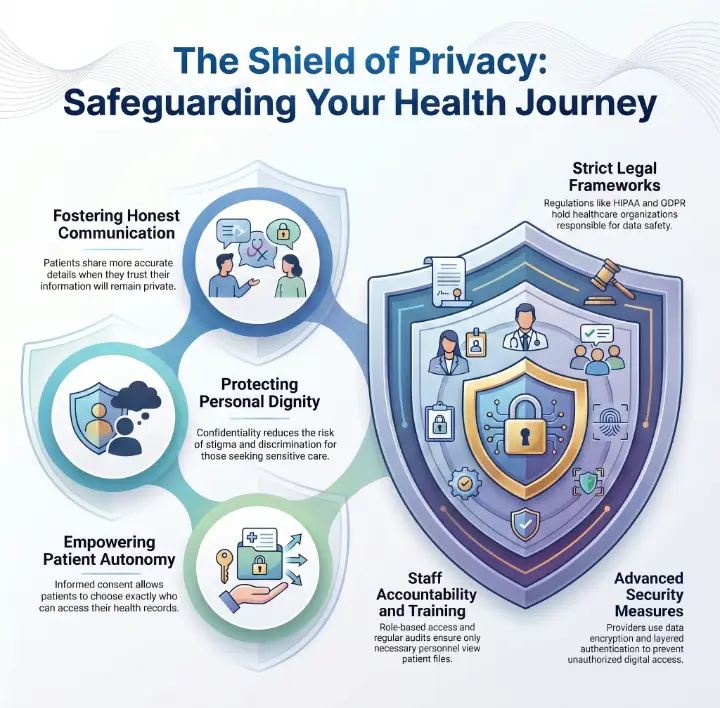
You trust your healthcare provider with sensitive details about your life. Privacy and Patient Data: Safeguarding Personal Information helps you feel safe when sharing this information. Protecting your privacy supports your dignity and helps reduce the risk of stigma or embarrassment.
Medical confidentiality promotes the individual’s medical autonomy, by sheltering those seeking morally controversial medical care from outside criticism and interference with decisions. Patients seeking cosmetic, abortion or fertility treatments might not wish others to know their plans. Individuals concerned about discrimination, shame or stigma have an interest in controlling the flow of information about their health, and arguably the moral right to do so.
Trust and informed consent guide every patient-provider conversation. Laws and ethical rules require healthcare professionals to keep your information safe.
Key Takeaways
Patient privacy builds trust between you and your healthcare provider, allowing for open and honest communication.
Confidentiality protects your dignity and reduces the risk of stigma, especially for sensitive health issues.
Healthcare providers use security measures like multi-factor authentication and data encryption to safeguard your information.
You have the right to control who sees your health data through informed consent, enhancing your sense of security.
Understanding privacy laws like HIPAA helps you know your rights and the responsibilities of healthcare providers.
Privacy and Patient Data: Safeguarding Personal Information
Preventing Unauthorized Access
You share your health information with your doctor because you trust that it will stay private. Privacy and Patient Data: Safeguarding Personal Information means keeping your records safe from people who should not see them. Today, most hospitals and clinics use electronic health records (EHRs) instead of paper files. This change helps doctors give you better care, but it also brings new risks. Hackers, lost devices, and even mistakes by staff can lead to data breaches.
Some of the most common ways patient data gets exposed include:
Hacking or IT incidents
Theft or loss of devices
Improper disposal of records
Phishing attacks, where someone tricks staff into giving away passwords, happen often in healthcare. These attacks can lead to big problems, like ransomware demands or the loss of important information. In fact, healthcare organizations face higher risks from phishing than many other industries.
To keep your information safe, healthcare providers use several security measures. One of the most effective is multi-factor authentication (MFA). MFA asks users to prove their identity in more than one way, making it much harder for someone to break in. Providers also use strong passwords, encrypt data, and train staff to spot threats. Regular security audits help find and fix weak spots before someone can take advantage of them.
Description | |
|---|---|
Role-Based Access | Limits access to data based on job responsibilities. |
Multi-Factor Authentication (MFA) | Adds layers of security for accessing EHR systems. |
Data Encryption | Protects stored data from unauthorized access and secures data while it is being transmitted. |
Regular Security Training | Educates staff on recognizing and preventing cyber threats. |
Regular Security Audits | Identifies potential security weaknesses through vulnerability scans and penetration testing. |
Use of Advanced Security Tools | Includes firewalls, anti-malware, and intrusion detection systems to prevent unauthorized access. |
Backup and Recovery Plans | Ensures data is backed up frequently and prepares for quick recovery in case of data loss. |
Secure Communication Channels | Uses encrypted messaging and VPNs for safe remote access to EHR systems. |
Despite these efforts, unauthorized access still happens. In recent years, the number of internal disclosure incidents has grown. Many healthcare organizations do not have strong policies to stop this. User account compromise is also a big problem, especially for systems that use cloud technology.
Tip: You can help protect your own information by asking your provider how they keep your data safe.
Protecting Patient Dignity and Reducing Stigma
Privacy and Patient Data: Safeguarding Personal Information does more than stop hackers. It also protects your dignity. When you know your health details are private, you feel safe talking about sensitive topics. This is important for everyone, but especially for people seeking care for mental health, reproductive health, or other personal issues.
If your private information gets out, you could face embarrassment or even discrimination. Employers or insurance companies might use your health data against you. Some people lose jobs or get denied insurance because of what others learn about their health. This risk is real, especially for those with conditions that society sometimes judges harshly.
Patients who worry about stigma want control over who knows about their health.
Medical confidentiality gives you the freedom to seek care without fear of judgment.
Discrimination can happen if sensitive information reaches employers or insurers.
People with mental health needs often face extra stigma when privacy is not respected.
Negative attitudes about certain health conditions can lead to unfair treatment. Sometimes, even healthcare workers treat patients differently because of these beliefs. Hospitals may separate patients with certain illnesses, which can make the stigma worse.
Medical confidentiality helps you make your own choices about your health. It lets you get the care you need without worrying about what others might think. Privacy and Patient Data: Safeguarding Personal Information supports your right to dignity and helps create a safer, more respectful healthcare environment for everyone.
Building Trust in Healthcare

Encouraging Honest Communication
You need to feel safe when you talk to your doctor. Confidentiality helps you trust your healthcare provider. When you know your information stays private, you can share sensitive details without fear. This trust lets you talk about things that may feel embarrassing or personal. Your doctor can give you better care when you share everything honestly.
Imagine if you shared some personal information with someone, and then that person went off and told someone else. You’d be angry, hurt, and confused. This is why patient confidentiality in healthcare is so important—it builds trust, helps you get the best care possible.
Philosophers and ethicists say that respecting confidentiality helps both your health and public health. You are more likely to seek medical attention and share your health concerns openly when you believe your information is safe. Privacy and Patient Data: Safeguarding Personal Information gives you confidence to speak up. If you worry about privacy, you might hold back important facts. This can lead to incomplete medical records and lower quality care.
Trust in confidentiality lowers the chance that you will hide information.
You worry less about who sees your health records when you trust your provider.
Trust in your doctor’s skills makes you more willing to share health details.
Studies show that trust in healthcare providers helps you follow treatment plans. When you trust your provider’s confidentiality and skills, you communicate better and have a more positive experience. This trust leads to better health outcomes.
The Role of Informed Consent
You have the right to know how your information is used. Informed consent means your provider asks before sharing your medical records. You decide who can see your health data. This process protects your privacy and helps you feel respected.
Patients with high trust in their providers see informed consent as essential for sharing records for research or education. If you have lower trust, you may want even more control over your information. Trust in your doctor also makes you feel better about electronic sharing of your health data.
Informed consent gives you control over your medical information.
You can ask questions about how your data is used.
You can say yes or no to sharing your records.
Privacy and Patient Data: Safeguarding Personal Information supports your right to make choices about your health. When you understand and agree to how your information is shared, you feel safer and more respected in your healthcare journey.
Legal and Ethical Responsibilities
HIPAA and Privacy Laws
You rely on healthcare providers to protect your personal information. Laws like HIPAA in the United States set clear rules for how your medical data must be handled. HIPAA ensures doctors, hospitals, and insurers keep your health records safe. The HIPAA Privacy Rule explains who can see your information, what details are protected, and when sharing is allowed. Other countries have their own laws. The European Union uses the General Data Protection Regulation (GDPR), which gives you more control over your data. Canada follows PIPEDA and the Privacy Act to protect your information in the private sector.
HIPAA covers health information privacy in the U.S.
GDPR sets strict standards for personal data in Europe.
PIPEDA and the Privacy Act regulate data in Canada.
HIPAA ensures healthcare providers and insurers protect your medical data.
GDPR gives you rights like access, erasure, and data portability.
You can see some differences between the U.S. and Europe in the table below:
Aspect | United States (HIPAA) | Europe (GDPR) |
|---|---|---|
Legal Framework | No explicit right to privacy; relies on statutes | Comprehensive standard for data privacy |
Patient Rights | Access to health information | Data portability, right to be forgotten |
Government Role | Patchwork of regulations | Strong government accountability |
Surveillance | Expanded powers post-9/11 | Judicial oversight and proportionality |
Healthcare professionals must follow these laws. They also have an ethical duty to protect your privacy. Keeping your information safe builds trust and helps prevent discrimination.
Consequences of Breaches
If a healthcare organization fails to protect your information, serious consequences follow. Financial penalties can reach up to $1.5 million per year. Organizations must notify you and the media if a breach affects more than 500 people within 60 days. Losing your trust can hurt a hospital’s reputation for years.
The average cost of a U.S. healthcare data breach is $10.22 million.
Breaches often take over 200 days to discover.
Law enforcement can help reduce costs during ransomware attacks.
Reputational damage makes it hard for organizations to regain trust.
Healthcare professionals must protect your information because it is both a legal requirement and an ethical responsibility. Confidentiality helps you feel safe and respected. It also ensures you get quality care without fear of discrimination.
Professional Reputation and Quality Care
Upholding Ethical Standards
You expect your healthcare provider to respect your privacy. Protecting your information is not just a rule—it is a core value in healthcare. When your doctor follows ethical standards, you feel safe and respected. These standards include protecting your physical privacy, your health information, and your right to make decisions about your care.
Healthcare professionals must follow important laws and guidelines. For example, HIPAA sets national rules for keeping your health information safe. The HITECH Act adds even stronger protections and penalties for those who break the rules. Some states have their own laws that give you even more rights. If you live in Europe or get care there, the GDPR gives you control over your data and requires informed consent.
When healthcare organizations use strong privacy tools, they show you that they care about your safety. These tools include encryption, secure messaging, access controls, and audit trails to track who looks at your records.
Method | Description |
|---|---|
Encryption | Changes your data into a code to keep it safe from outsiders. |
Secure Messaging Tools | Protect your information when doctors and nurses talk to each other. |
Access Control Systems | Only lets the right people see your health records. |
Audit Trails and Monitoring | Checks who looks at your records and helps stop problems before they grow. |
If a provider breaks your trust, you may feel angry or confused. You might switch doctors or avoid care. People often stop recommending providers who do not protect privacy. Once trust is lost, it is very hard to get back.
Breaches of confidentiality can lead to patients leaving their doctors.
Trust is essential; without it, you may avoid care or hide information.
Doctors with poor privacy practices lose positive reviews and recommendations.
Enhancing Patient Outcomes
You get better care when you trust your provider to keep your information private. Studies show that you are more likely to share important details when you feel safe. This helps your doctor make the right decisions for your health.
Patients who trust their provider’s confidentiality share more information.
Worry about privacy can make you hide symptoms or skip care.
Trust in your doctor leads to better communication and treatment.
A study found that strong privacy practices lead to higher patient satisfaction scores. You feel happier with your care when you know your information is safe. This trust also helps you follow treatment plans and get better results.
Medical confidentiality gives you the freedom to seek care for sensitive issues without fear of judgment or discrimination.
When you know your privacy is protected, you are more likely to get the help you need. This leads to healthier communities and better lives for everyone.
You play a key role in protecting your own health information. Privacy and confidentiality help you feel safe and respected. These practices prevent medical errors and support quality care.
Hospitals, doctors, and pharmacies treat your information as a top priority.
You trust your provider more when you know your records stay private.
You share important details when you feel secure.
Trust in your doctor helps you accept electronic sharing of your health data.
Keep asking questions about privacy. Your commitment helps build safer healthcare for everyone.
FAQ
What is the difference between privacy and confidentiality?
Privacy means you control who sees your health information. Confidentiality means your healthcare provider promises not to share your information without your permission.
Why do healthcare providers need my consent to share information?
You have the right to decide who can see your health records. Providers ask for your consent to respect your choices and follow the law.
What should I do if I think my privacy was violated?
You should talk to your healthcare provider first. If you still feel concerned, you can contact the hospital’s privacy officer or file a complaint with the government.
How can I help protect my own health information?
Tip: Always ask how your data is stored and shared. Use strong passwords for patient portals. Do not share your login details with others. 🛡️
This article is for educational purposes only and is not a substitute for professional medical advice. For more details, please see our Disclaimer. To understand how we create and review our content, please see our Editorial Policy.
See Also
Insulinoma Explained: Importance and Key Insights
Choroid Plexus Carcinoma: Symptoms and Treatment Options
Conjunctival Melanoma: Recognizing Symptoms and Available Treatments
Anal Cancer: Key Symptoms and Underlying Causes Explained
Malignant Peripheral Nerve Sheath Tumors: What You Should Know

© 2026 Banish Cancer. Banish Cancer is a registered non-profit organization providing evidence-based research, educational courses, and Fear Response AI support services. Reg. No: 305706884 | Address: Taikos pr. 43-603, Kaunas, Lithuania.