How to Practice Pursed-Lip Breathing for Stronger Lungs

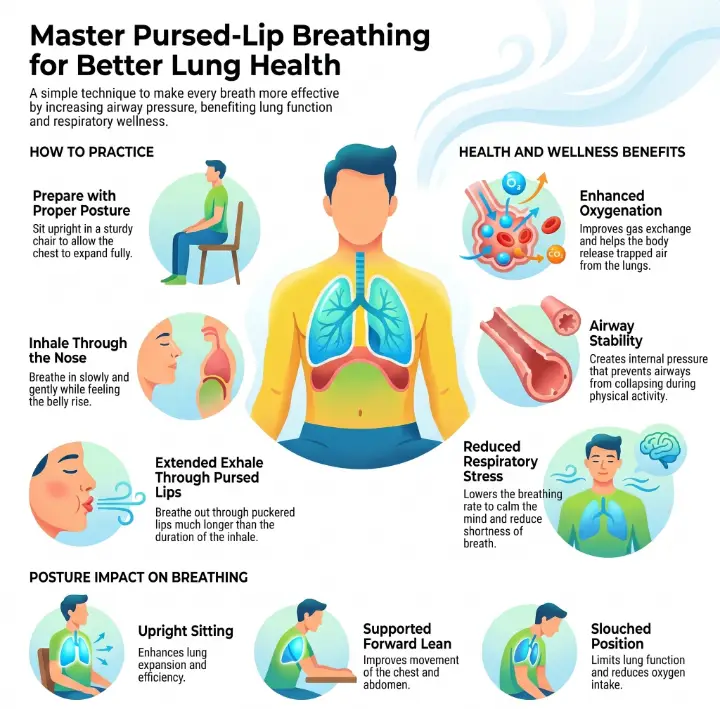
You can practice pursed-lip breathing for stronger lungs by trying it for 5 to 10 minutes, four to five times a day. Studies show this technique improves oxygen levels and helps people breathe easier. Many experts recommend Pursed-Lip Breathing: Support Lung Function & Wellness for better daily breathing.
Try 5 to 10 minutes, four to five times each day.
Research shows improved oxygenation and lung function.
Key Takeaways
Practice pursed-lip breathing for 5 to 10 minutes, several times a day to support your breathing and improve oxygen levels.
Maintain good posture while breathing. Sit upright to allow your lungs to expand fully and enhance oxygen intake.
Exhale slowly through pursed lips for four counts, making your exhale twice as long as your inhale to improve lung function and reduce shortness of breath.
How-To Steps

Get Comfortable
Start by finding a quiet place where you can sit and relax. Choose a sturdy chair and place your feet flat on the floor. Let your hands rest on your thighs. Relax your neck and shoulders. Good posture helps your lungs work better. When you sit upright, your chest can expand more easily. This position allows you to take deeper breaths and improves oxygen intake.
Tip: Leaning forward slightly with your arms supported can help your breathing muscles work more efficiently.
Here is a table showing how posture affects breathing:
Posture | Effect on Breathing |
|---|---|
Upright sitting | Enhances lung expansion and efficiency |
Forward trunk lean with support | Improves activity of breathing muscles and movement of chest and abdomen |
Slouched or poor posture | Limits lung function and reduces oxygen intake |
Inhale Through Nose (Count to Two)
Breathe in slowly through your nose. Count to two in your head as you inhale. Feel your belly expand as air fills your lungs. Taking your time helps your body absorb more oxygen. Try not to rush this step.
Inhale gently for two seconds.
Let your belly rise as you breathe in.
Purse Lips
After you inhale, purse your lips as if you are going to whistle or blow out a candle. This shape creates a small opening for air to leave your mouth. Pursing your lips helps control the flow of air and keeps your airways open longer.
Note: Do not tighten your lips too much. Keep them relaxed but closed enough to slow the air as you exhale.
Exhale Slowly (Count to Four)
Breathe out slowly through your pursed lips. Count to four as you exhale. Make your exhale last twice as long as your inhale. This slow release of air helps your lungs exchange oxygen and carbon dioxide more effectively. You should not force the air out. Let it flow naturally.
Exhale gently for four seconds.
Feel your belly fall as you breathe out.
Pursed-lip breathing allows your lungs to work better by increasing pressure in your airways. This process gives your lungs more time to exchange gases and can prevent air from getting trapped. Many people notice less shortness of breath and improved physical function after practicing this technique for several weeks.
Here is a table showing how pursed-lip breathing can reduce shortness of breath:
Group | Pretest Shortness of Breath | Posttest Shortness of Breath |
|---|---|---|
Control | 3.19 | 2.56 |
Pursed-Lip Breathing | 3.19 | 1.69 |
Repeat and Practice
Repeat these steps several times. Try to practice for at least five minutes each session. You can do this four to five times a day. Regular practice helps your body get used to the technique and makes breathing easier over time.
Most sessions last 5 to 10 minutes.
Some people practice for up to 20 minutes.
Tip: Use Pursed-Lip Breathing: Support Lung Function & Wellness when you feel short of breath or during daily activities like walking or climbing stairs.
Common Mistakes to Avoid
Exhaling too quickly. Always make your exhale twice as long as your inhale.
Not pursing your lips enough. Keep your lips gently puckered.
Holding your breath. Let your breathing flow smoothly.
Slouching or poor posture. Sit upright to help your lungs expand.
Pursed-Lip Breathing: Support Lung Function & Wellness works best when you stay relaxed and focused. With regular practice, you can strengthen your lungs and breathe with less effort.
Pursed-Lip Breathing: Support Lung Function & Wellness

How It Helps
You can use Pursed-Lip Breathing: Support Lung Function & Wellness to make each breath more effective. This technique slows your breathing and keeps your airways open longer. When you exhale through pursed lips, you create gentle pressure in your lungs. This pressure helps prevent your airways from collapsing and lets you release more trapped air. You also improve the exchange of oxygen and carbon dioxide. People with chronic lung conditions, such as COPD or asthma, often find it easier to breathe and feel less short of breath.
When you slow your breathing and extend your exhale, you help your lungs work better and feel calmer.
Benefits for Breathing
Pursed-Lip Breathing: Support Lung Function & Wellness offers many benefits for your lungs and overall wellness. You may notice:
Easier breathing during physical activity
Less shortness of breath
Better oxygen intake
Improved ventilation in your lungs
More control over your breathing
Relaxation and reduced anxiety
People with asthma or COPD often use this technique to release trapped air and keep their airways open. Older adults can also strengthen their lungs and breathing muscles by practicing regularly.
Benefit | How It Helps You |
|---|---|
Releases trapped air | Makes breathing easier |
Keeps airways open | |
Improves ventilation | Helps exchange old air for new air |
Slows breathing rate | Reduces effort and calms you |
Practice Tips
You can practice Pursed-Lip Breathing: Support Lung Function & Wellness several times a day. Try these steps:
Sit up straight and relax your shoulders.
Purse your lips as if blowing out a candle.
Repeat for five to ten minutes.
Use this technique when you feel short of breath or during activities like walking or climbing stairs. You can gradually increase the duration of your inhales and exhales as you get comfortable. Practicing regularly helps your lungs stay strong and healthy.
You gain stronger lungs and easier breathing when you practice pursed-lip breathing daily. This technique slows your breathing, increases oxygen, and improves your quality of life.
Benefit | Description |
|---|---|
Reduced Respiratory Rate | You control air intake better. |
Increased Tidal Volume | You exchange more air with each breath. |
Improved Alveolar Ventilation | You help your lungs work efficiently. |
You boost oxygen levels for better health. |
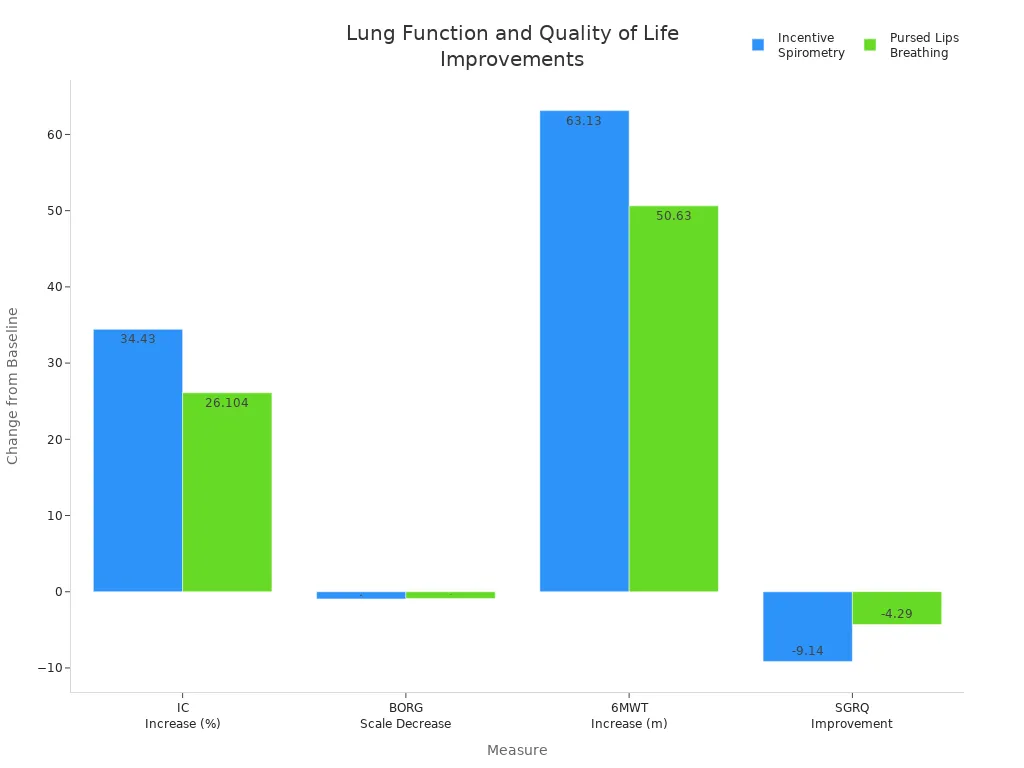
Stay consistent with your practice. You can feel more relaxed and confident with every breath.
FAQ
How often should you practice pursed-lip breathing?
You should practice pursed-lip breathing four to five times daily. Regular practice helps your lungs get stronger and makes breathing easier during daily activities.
Can pursed-lip breathing help with anxiety?
Yes! Pursed-lip breathing calms your body and mind.
You slow your breathing
You feel more relaxed
You gain better control over stress
Is pursed-lip breathing safe for everyone?
Is pursed‑lip breathing safe for everyone?
Most people: Safe to use
Lung disease: Safe, but check with your doctor if you have severe symptoms or recent changes
Children: Safe with adult guidance
Pursed‑lip breathing is generally safe. If you feel dizzy, short of breath, or unwell, stop and talk with a healthcare professional.
This article is for educational purposes only and is not a substitute for professional medical advice. For more details, please see our Disclaimer. To understand how we create and review our content, please see our Editorial Policy.
See Also
Discover Banish Cancer – A Place of Hope and Resilience
Liposarcoma Explained: Recognizing Its Symptoms and Signs
Laryngeal Cancer: Key Symptoms and Underlying Causes Explained
B-Cell Prolymphocytic Leukemia: A Simple Understanding Guide

© 2026 Banish Cancer. Banish Cancer is a registered non-profit organization providing evidence-based research, educational courses, and Fear Response AI support services. Reg. No: 305706884 | Address: Taikos pr. 43-603, Kaunas, Lithuania.