Emerging Trends in Telemedicine for Cancer Diagnosis and Care

You now see telemedicine continue to play a vital role in cancer care, even after the pandemic. The Growing Field of Telemedicine in Cancer Diagnosis brings new hope for patients in rural and underserved areas. Many people with higher incomes use telemedicine quickly after a diagnosis, while those with fewer resources face barriers like lack of devices or internet.
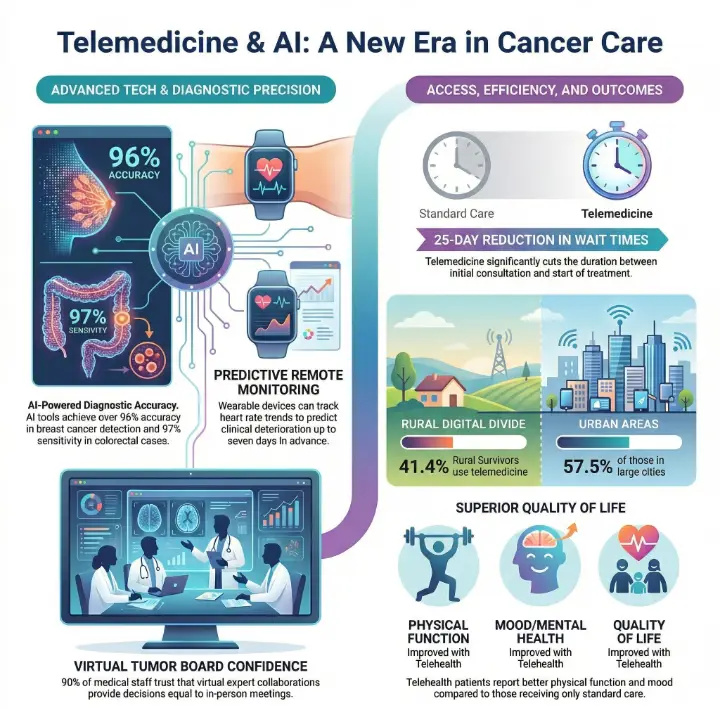
The integration of AI and wearable technology has significantly transformed cancer diagnosis and care by enhancing monitoring, treatment planning, and patient engagement. AI improves the precision of diagnostics and treatment strategies, while wearables facilitate continuous, noninvasive health monitoring, leading to better patient outcomes and personalized care.
Some challenges remain, including technology use, internet access, and digital skills. You see both new opportunities and hurdles as telemedicine evolves.
Key Takeaways
Telemedicine improves access to cancer care, especially for patients in rural areas. It connects you with specialists without long travel times.
AI tools enhance cancer diagnosis by providing faster and more accurate results. These tools help doctors detect cancer earlier, leading to better treatment outcomes.
Remote patient monitoring allows you to track your health at home. Wearable devices alert you and your doctor to any changes, enabling timely interventions.
Virtual consultations save time and reduce the need for travel. Many patients prefer this method for follow-ups, enjoying the convenience it offers.
Telemedicine fosters better patient engagement. You can manage your care more effectively, leading to improved satisfaction and health outcomes.
The Growing Field of Telemedicine in Cancer Diagnosis
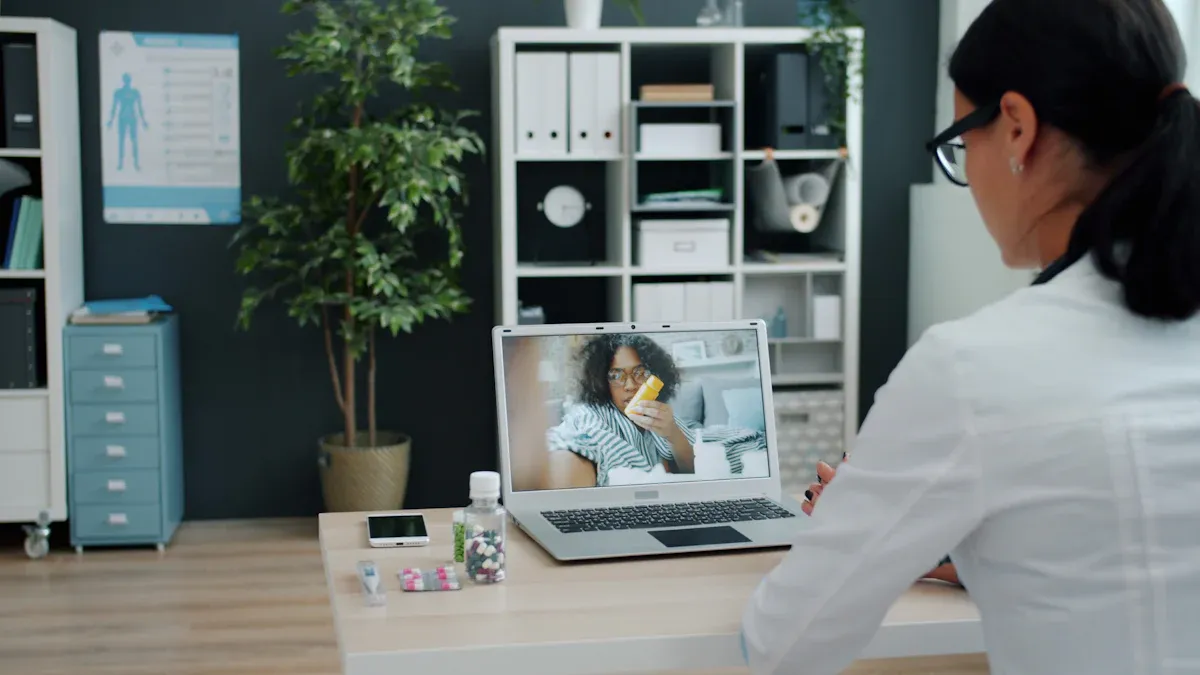
You have seen telemedicine change the way doctors diagnose cancer. The Growing Field of Telemedicine in Cancer Diagnosis became more important during the COVID-19 pandemic. Many patients started using video calls and secure messaging to talk with their doctors. You might have noticed that people liked the convenience of sending messages without making an appointment. Men often felt most comfortable using video conferencing, especially when they could stay at home for their visits.
AI-Powered Tools
You now see artificial intelligence (AI) tools helping doctors find cancer earlier and more accurately. These tools can look at medical images and spot signs of cancer that humans might miss. AI-powered diagnostic tools are becoming part of many telemedicine platforms. This helps you get faster and more accurate results, even if you live far from a hospital.
Here is a table showing how well some AI tools work for different types of cancer:
AI Tool | Cancer Type | Accuracy/Sensitivity | Source |
|---|---|---|---|
AI-based tools | Various | >96% accuracy (Breast), 87% sensitivity/specificity (Lung), 97% sensitivity, 95% specificity (Colorectal) | |
PathAI | Various | High sensitivity and specificity, sometimes better than human pathologists |
AI-assisted systems can help doctors find more polyps during colonoscopies. Some AI models use information from many sources to give a clearer picture of your health. Tools like PathAI can do routine lab work quickly, which helps doctors focus on your care.
Remote Imaging & Pathology
The Growing Field of Telemedicine in Cancer Diagnosis also uses remote imaging and digital pathology. You can now send scans and test results to specialists without leaving your home. AI systems can look at large numbers of images much faster than people. This means you get answers sooner.
AI-driven digital pathology makes labs more efficient and reduces the time you wait for results.
These systems can quickly find tumors in breast cancer and melanoma, so you can start treatment faster.
Doctors use AI tools to handle lots of data, which is important in busy clinics.
AI solutions help labs work better and speed up cancer diagnosis.
You benefit from these changes because you spend less time waiting and get the care you need more quickly.
Virtual Tumor Boards
You may hear your doctor talk about a tumor board. This is a group of experts who meet to discuss your case and decide on the best treatment. The Growing Field of Telemedicine in Cancer Diagnosis now includes virtual tumor boards. These meetings happen online, so more doctors can join, even if they work in different places.
Evidence | Description |
|---|---|
Digital Tool Efficiency | The navify Tumor Board brings together patient data to help teams make decisions faster. |
Improved Workflow | Teams spend less time preparing and more time focusing on your care. |
Support for Collaboration | Oncologists, pathologists, and radiologists work together to plan your treatment. |
Virtual tumor boards let doctors work together, even during times when meeting in person is hard. More people can join these meetings, which means you get advice from many experts. Most doctors and staff say these online meetings save time and are easy to attend. Almost 90% feel confident that decisions made online are just as good as those made in person. Community doctors also value these meetings, especially when they confirm the best plan for your care.
The Growing Field of Telemedicine in Cancer Diagnosis continues to grow. You now have access to better tools, faster results, and more expert opinions, no matter where you live.
Telemedicine in Cancer Care Management
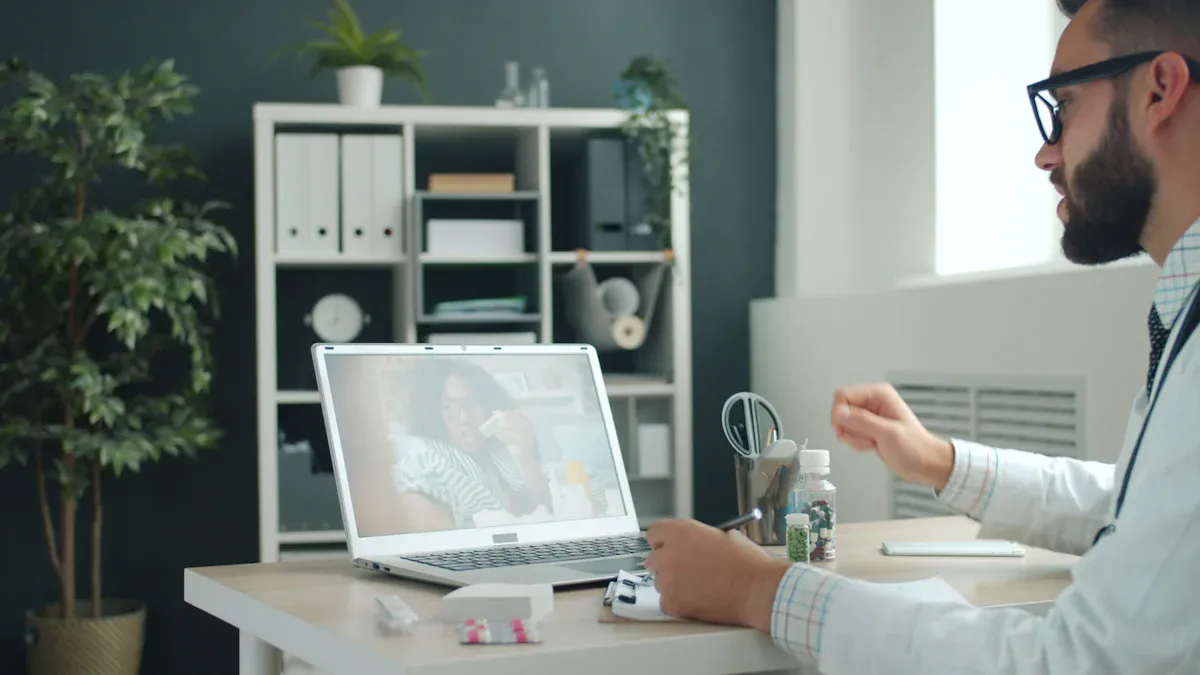
You now see a hybrid care model in cancer care. This model combines telemedicine with in-person visits. You can use digital tools and wearable devices to help manage your health. The Growing Field of Telemedicine in Cancer Diagnosis supports this change. You get more choices and better access to care.
Remote Patient Monitoring
You can use remote patient monitoring (RPM) to track your health at home. Wearable devices measure your heart rate, temperature, and other signs. RPM systems help you and your doctor spot problems early. You get alerts if your symptoms change. Doctors can act fast to prevent serious issues.
Here is a table showing how RPM helps manage cancer treatment side effects:
Study | Findings | Implications |
|---|---|---|
Arch et al. | Need for detailed guidance on managing side effects | Effectiveness of RPM depends on user understanding |
Liu et al. | Heart rate predicts 7-day mortality | RPM can predict clinical deterioration |
Jacobsen et al. | High sensitivity in detecting complications | RPM enables preemptive management |
RPM systems enhance symptom monitoring and help you get timely care.
You stay engaged in your treatment and improve your outcomes.
Early detection of complications can lower mortality rates.
Virtual Consultations & Follow-Ups
You can meet with your doctor online for consultations and follow-ups. You save time and avoid travel. Many patients prefer telemedicine for future appointments. You get the same quality of care as in-person visits.
Virtual consultations in genetic counseling work as well as traditional methods. You learn and feel satisfied.
The ENDCAT trial showed high patient satisfaction with virtual follow-ups for endometrial cancer.
During the pandemic, 80% of patients wanted telemedicine for future visits because it is convenient and reduces costs.
Digital Symptom Tracking
You can use apps to track your symptoms. Most apps let you rate how severe your symptoms are. You see graphs that show changes over time. You can share your data with your doctor before your visit.
Finding | Description |
|---|---|
App Features | 95% of apps let you rate symptom severity; 61% show graphs over time |
Data Sharing | 83% of apps export data for discussions with your doctor |
Integration Challenges | Apps are not official health records yet; need better integration |
The Growing Field of Telemedicine in Cancer Diagnosis helps you manage your care with digital tools. You get faster support and better communication with your care team.
Impact on Patient Outcomes & Access
Rural and Underserved Populations
You may notice that not everyone has the same chance to use telemedicine for cancer care. People living in rural areas often face more barriers than those in cities. Here are some key differences:
In 2021, only 41.4% of rural cancer survivors used telemedicine, while 57.5% of people in large cities did.
Rural cancer survivors had much lower odds of using telemedicine compared to those in big cities.
Rural patients are almost four times more likely to travel across state lines for chemotherapy.
Access to telehealth services depends on where you live and your background.
Telemedicine can help connect you to doctors and specialists, even if you live far from a hospital. This technology aims to close the gap between rural and urban cancer care.
Patient Engagement
You might find it easier to stay involved in your care when you use telemedicine. Many patients enjoy the comfort of joining appointments from home. This convenience helps you keep up with your treatment and ask questions when you need to.
Telemedicine lets you schedule visits more flexibly and reduces the chance of missing appointments.
You may find it easier to take your medicine on time and follow your care plan.
Studies show that patients feel more satisfied and engaged with their care when they use telemedicine.
Fewer emergency visits and better medication habits have been reported.
Telemedicine gives you more control over your health and helps you work closely with your care team.
Reducing Travel & Wait Times
You save time and energy when you use telemedicine. You do not need to travel long distances or wait weeks for an appointment.
Research shows that telemedicine can cut waiting times by an average of 25 days.
This benefit applies to many types of care and helps you get answers faster.
Less travel means you spend more time at home and less time on the road.
Telemedicine makes cancer care more efficient and accessible. You get the support you need without the extra stress of travel or long waits.
Challenges and Opportunities
Data Security & Privacy
You face important questions about privacy when you use telemedicine for cancer care. Many patients worry about sharing sensitive health information online. Some common concerns include:
Lack of private space at home for confidential conversations.
Data security risks, such as hacking or unauthorized access.
Limited access to reliable technology and internet.
The risk of data breaches, which can lead to legal problems and loss of trust.
Healthcare organizations work hard to protect your information. They train staff on privacy rules and update software to fix security gaps. Some hospitals use blockchain technology to keep your records safe and unchangeable. New guidelines help doctors manage your personal data and follow strict privacy laws like HIPAA.
Tip: Always ask your care team how they protect your information during telemedicine visits.
Integrating with Traditional Care
You may notice that combining telemedicine with in-person care brings both benefits and challenges. Some clinics do not have the right equipment or internet for virtual visits. Patients and doctors sometimes feel unsure about when to use telemedicine instead of face-to-face care. The table below shows common barriers:
Barrier Type | Description |
|---|---|
Infrastructure | Many clinics lack the tools for virtual care. |
Access Issues | Not everyone can use telemedicine equally. |
Communication | Some patients miss visual cues or feel uneasy online. |
Workflow | Virtual visits can disrupt normal routines. |
Emotional Connection | Online care may feel less personal. |
Despite these challenges, hybrid models—mixing telemedicine and in-person visits—help reduce travel, wait times, and improve satisfaction. You get flexible care that fits your needs.
"Telehealth can be integrated into oncology practices without evidence of duplicative care, indicating a flexible model for patient-centered cancer care."
Reimbursement & Regulation
You might wonder how payment and rules affect your telemedicine options. Changes in reimbursement policies now allow doctors to get paid for phone and video visits, just like in-person appointments. This makes it easier for you to access care from home. During the pandemic, new rules expanded who could provide telehealth and made it easier for hospitals to bill for remote services.
Many states now let doctors practice across state lines.
Medicaid and Medicare have increased coverage for telehealth.
New laws aim to remove barriers and make telemedicine more available.
As telemedicine grows, experts continue to study how to keep care flexible, fair, and focused on you.
You see telemedicine changing cancer care by blending online and in-person visits. This approach gives you better access and improved outcomes. Recent research shows that patients using telehealth report better physical function, mood, and quality of life compared to standard care.
Outcome | Telehealth Group | Standard Care Group |
|---|---|---|
Physical Function | Improved | Poorer |
Mood | Improved | Poorer |
Quality of Life | Improved | Poorer |
You can expect more changes soon:
AI will boost diagnostic accuracy and help create personalized treatment plans.
Real-time tracking will let your care team respond quickly to changes.
Policy updates may make it easier for you to use telemedicine across state lines.
Stay informed as telemedicine continues to shape the future of cancer care.
FAQ
What is telemedicine in cancer care?
Telemedicine lets you talk to your cancer care team using video calls, phone calls, or secure messages. You do not need to visit the clinic for every appointment.
How does AI help with cancer diagnosis?
AI tools look at your scans and test results. These tools help doctors find cancer earlier and more accurately. You get faster answers and better care.
Can you use telemedicine if you live in a rural area?
You can use telemedicine if you have internet and a device. Some rural areas have less access. Many programs now work to improve telemedicine for everyone.
Is telemedicine safe for sharing health information?
Doctors use secure systems to protect your data. You should ask your care team how they keep your information private.
What devices do you need for telemedicine visits?
You need a smartphone, tablet, or computer with internet. Some visits may use special apps. Your care team will tell you what you need.
This article is for educational purposes only and is not a substitute for professional medical advice. For more details, please see our Disclaimer. To understand how we create and review our content, please see our Editorial Policy.
See Also
Exploring Symptoms And Treatments For Duodenal Cancer
Insights Into Symptoms And Treatments Of Conjunctival Melanoma
An In-Depth Overview Of Various Cancer Types

© 2026 Banish Cancer. Banish Cancer is a registered non-profit organization providing evidence-based research, educational courses, and Fear Response AI support services. Reg. No: 305706884 | Address: Taikos pr. 43-603, Kaunas, Lithuania.