How vitamin B5 affects cancer growth and progression?

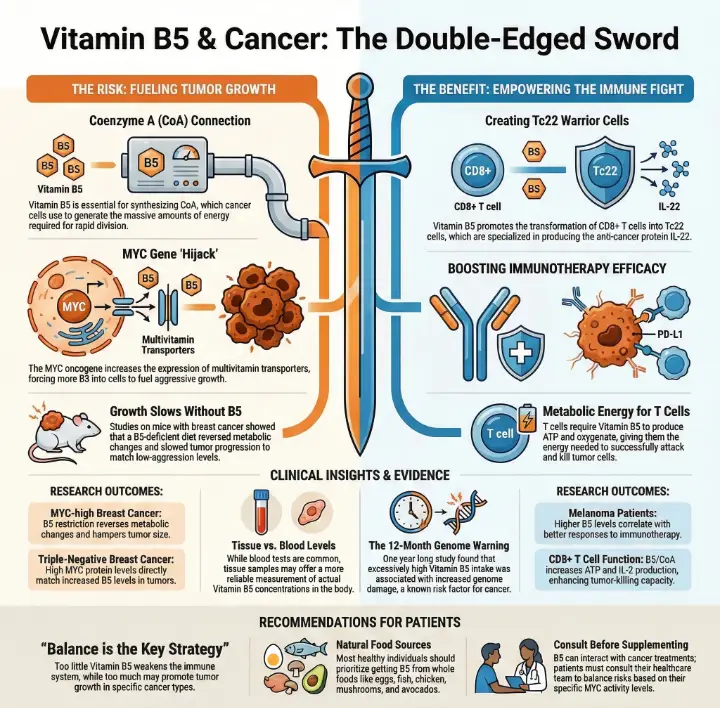
You might wonder if Vitamin B5 (pantothenic acid) and cancer have a connection. Studies show that vitamin B5 affects many parts of your body, including metabolism and inflammation. A 12-month study found that people with higher vitamin B5 intake showed more genome damage, which can increase cancer risk. The effects of vitamin B5 on cancer are complex. It can support cell growth, but it may also help your immune system fight cancer. You need to look at both sides to understand its real impact.
Key Takeaways
Vitamin B5 supports cancer cell growth by aiding their metabolism, making it crucial for energy production.
A diet low in vitamin B5 can slow tumor growth, especially in cancers with high MYC activity.
Vitamin B5 enhances the immune system by helping T cells become more effective in fighting cancer.
Consult your doctor before taking vitamin B5 supplements, as they can impact cancer treatment outcomes.
Balancing vitamin B5 intake is important; too little can weaken immunity, while too much may promote tumor growth.
Vitamin B5 (pantothenic acid) and cancer growth
Scientific consensus and direct effects
You may wonder how Vitamin B5 (pantothenic acid) and cancer interact at the cellular level. Scientists agree that vitamin B5 plays a key role in cell metabolism. Cancer cells need energy to grow and divide. Vitamin B5 helps them make energy by supporting important metabolic pathways. When you look at recent studies, you see that cancer cells often use more vitamin B5 than healthy cells. This extra use helps tumors grow faster.
Researchers have tested what happens when animals do not get enough vitamin B5. In these studies, mice with breast cancer received a diet low in vitamin B5. Their tumors grew much slower than those in mice with normal diets. The same effect appeared when human breast cancer tissue was transplanted into mice. This shows that vitamin B5 can directly affect how quickly cancer grows.
Here is a table that summarizes some key findings:
Study Focus | Findings |
|---|---|
MYC oncogene in breast cancer | Dietary restriction of vitamin B5 reverses MYC-driven metabolic changes and hampers tumor progression, indicating a direct impact on tumor size and cancer cell proliferation. |
Role in MYC-driven tumor progression
You may hear about the MYC gene when people talk about cancer. MYC is a gene that makes cells grow and divide quickly. Many aggressive cancers have high MYC activity. Scientists found that MYC increases the amount of vitamin B5 that enters cells. This helps cancer cells get more energy and grow faster.
Researchers studied breast cancer cells with high MYC levels. They discovered that these cells depend on vitamin B5 for survival. When mice ate less vitamin B5, tumors with high MYC grew much slower. The growth rate matched that of tumors with low MYC. This means vitamin B5 is very important for MYC-driven cancers.
You can see more details in the table below:
Evidence Description | Findings |
|---|---|
MYC increases multivitamin transporter expression | More vitamin B5 enters cells, crucial for energy production and metabolic pathways. |
Vitamin B5-deficient diet in mice | Tumors with Myc-high and Myc-low cells grew more slowly compared to those on a standard diet. |
Association of vitamin B5 with tumor growth | Observed in both mouse models and human breast cancer tissue, indicating its role in metabolism and energy production. |
Scientists used a mouse model of triple-negative breast cancer to study this effect. They activated MYC in these mice and watched how tumors responded to changes in vitamin B5 levels.
High MYC protein levels matched with increased vitamin B5 in the tumors.
The model helped researchers see how vitamin B5 supports MYC-driven tumor metabolism and progression.
Animal studies show that vitamin B5 deficiency slows tumor growth. Mice on a vitamin B5-deficient diet had slower tumor growth than those on a standard diet. This effect also appeared in human breast cancer tissue transplanted into mice.
Vitamin B5 (pantothenic acid) and cancer research continues to reveal new details. You can see that vitamin B5 supports cancer cell metabolism and helps MYC-driven tumors grow. At the same time, reducing vitamin B5 in the diet slows tumor growth in animal models. These findings help you understand why scientists pay close attention to vitamin B5 (pantothenic acid) and cancer.
Mechanisms of vitamin B5 in cancer
Cellular metabolism and proliferation
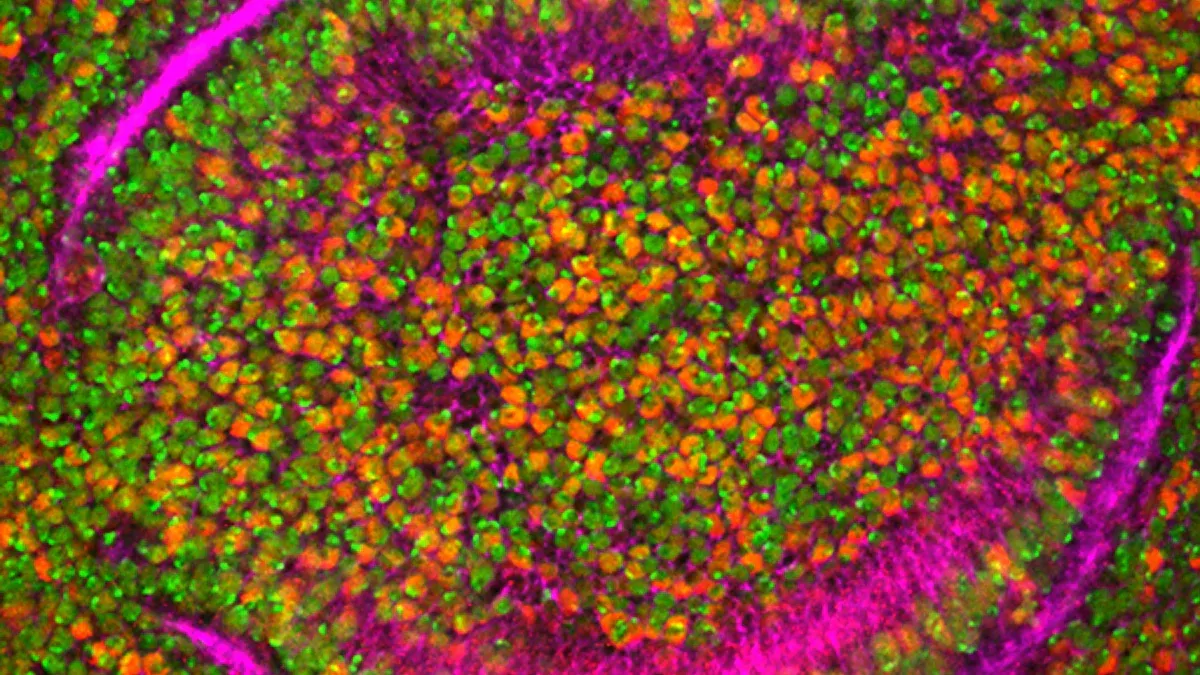
You may wonder how vitamin B5 helps cancer cells grow. Vitamin B5 is important for making Coenzyme A (CoA). CoA helps cells use energy and build new molecules. Cancer cells need lots of energy to grow and divide. When you have enough vitamin B5, your cells can make more CoA. This gives cancer cells the power to keep growing.
Vitamin B5 also affects a pathway called PI3K signaling. This pathway controls how cells use energy and how fast they grow. When PI3K signaling works well, cancer cells can make more CoA and use energy faster. You can see how vitamin B5 supports cancer cell metabolism in the table below:
Mechanism | Description |
|---|---|
Vitamin B5 is essential for Coenzyme A (CoA) synthesis, which is crucial for cellular metabolism in cancer cells. | |
PI3K Signaling | Vitamin B5 influences the PI3K signaling pathway, which is linked to the regulation of CoA synthesis and metabolic processes in tumors. |
Note: Cancer cells often use more vitamin B5 than healthy cells. This helps them grow and divide quickly.
Impact on immunosurveillance
You may not know that vitamin B5 also helps your immune system fight cancer. Your body uses special cells called T cells to find and attack cancer cells. Vitamin B5 helps these T cells change into a type called Tc22 cells. Tc22 cells make a protein called IL-22, which helps fight cancer.
When you have enough vitamin B5, your T cells work better. They use more energy and make more proteins that help kill cancer cells. Scientists found that giving extra CoA to T cells makes them stronger. These T cells can make more ATP, which is the energy they need to work. They also produce more IL-2 and IL-22, which help fight cancer.
You can see how vitamin B5 affects your immune system in the table below:
Mechanism | Description |
|---|---|
Vitamin B5 promotes the differentiation of CD8+ T cells into IL-22-producing Tc22 cells, enhancing immune response. | |
Enhanced Immunotherapy | Supplementation with vitamin B5 improves the efficacy of PD-L1-targeted cancer immunotherapy in mice. |
Evidence Description | Findings |
|---|---|
Vitamin B5 enhances the differentiation of CD8+ T cells into Tc22 cells, which produce IL-22 and have anticancer effects. | |
Metabolic changes linked to T cell function | The development of Tc22 cells requires metabolic remodeling towards oxidative phosphorylation and ATP synthesis. |
Impact of CoA on T cell activity | Exogenous CoA increases oxidative phosphorylation, ROS production, and ATP levels, enhancing IL-2 and IL-22 production. |
Tumor growth reduction | Tumor antigen-specific T lymphocytes showed improved tumor growth-reducing capacities when stimulated with CoA before injection into mice. |
Vitamin B5 (pantothenic acid) and cancer research shows that vitamin B5 has a dual role. It helps cancer cells grow by supporting their metabolism. It also helps your immune system fight cancer by making T cells stronger. You need to understand both sides to see how vitamin B5 affects cancer growth and progression.
Research evidence and studies

Animal model findings
You can learn a lot from animal studies about vitamin B5 and cancer. Scientists use mice to test how vitamin B5 affects tumor growth. When mice eat less vitamin B5, their tumors grow slower. Tumors with high MYC levels need more vitamin B5 to survive. This makes vitamin B5 a possible target for new cancer treatments. You can see some important findings in the table below:
Finding | Description |
|---|---|
Role of Vitamin B5 in Cancer | Vitamin B5 is essential for the growth and survival of breast cancer cells, especially those with high MYC expression. |
Impact of Reduced Intake | Lowering vitamin B5 intake in animal models slows tumor growth. |
Potential Therapeutic Target | Tumor cells depend on vitamin B5, which could help scientists develop new therapies. |
Immunostimulatory Effects | Vitamin B5 helps T cells become stronger fighters against cancer. |
Metabolic Reprogramming | Vitamin B5 changes how T cells use energy, making them better at attacking tumors. |
Correlation with Patient Outcomes | Higher vitamin B5 levels in melanoma patients link to better responses to immunotherapy. |
Laboratory and cellular research
You can see how vitamin B5 works in cells by looking at lab studies. Researchers compare vitamin B5 levels in cancer patients and healthy people. They find that breast cancer patients have higher vitamin B5 levels than healthy controls. Other B vitamins, like B1, also show higher levels in cancer patients. However, scientists do not see a strong link between vitamin B5 levels and breast cancer risk. Lab studies show that vitamin B5 helps T cells fight cancer by giving them more energy and helping them make important proteins.
Breast cancer patients have higher vitamin B5 levels than healthy controls.
The difference in vitamin B5 levels does not strongly link to breast cancer risk.
Other B vitamins, such as B1, are also higher in breast cancer patients.
Limitations and future research
You should know that scientists still have questions about vitamin B5 and cancer. Many studies measure vitamin levels at only one time point. This can make it hard to predict cancer risk or treatment outcomes. Blood tests may not show the full picture, since tissue levels might be more accurate. Researchers need to study what happens when people get too much vitamin B5, not just too little. More research will help doctors understand how vitamin B5 can be used safely in cancer care.
Limitation/Area of Investigation | Description |
|---|---|
Effectiveness as Biomarkers | Scientists need more data to see if vitamins can predict cancer risk. |
Single Time Point Measurement | Measuring vitamin levels once may not give enough information for diagnosis or prognosis. |
Tissue vs. Blood Concentrations | Tissue samples may show more reliable vitamin levels than blood tests. |
Understanding Overdose Effects | Researchers must learn more about what happens when people take too much vitamin B5. |
Tip: If you want to know more about vitamin B5 and cancer, ask your doctor or look for new studies. Science is always changing, and new discoveries can help you make better choices.
Implications for treatment and prevention
Risks and benefits for patients
You need to know both the risks and benefits of vitamin B5 when you have cancer. Vitamin B5 helps your body make energy and supports your immune system. It can help your T cells fight cancer and lower inflammation. Some studies show that vitamin B5 acts as an anticancer agent by improving immune response and reducing tumor necrosis factor-alpha (TNF-α) levels. It also boosts metabolic capacity and helps your body recover from cancer-related issues like pulmonary edema.
However, vitamin B5 can also help cancer cells grow. If you have a tumor with high MYC activity, vitamin B5 may speed up cancer growth. Doctors and nutritionists look at your medical history before recommending supplements. You should get most B vitamins from food, but some people need supplements after surgeries or if they have trouble absorbing nutrients.
The safety of vitamin B5 supplementation depends on your health and treatment plan.
Some B vitamins can interact with cancer treatments or medicines.
Always talk to your healthcare provider before starting any supplement.
Tip: Balancing vitamin B5 is important. Too little can weaken your immune system, but too much may help tumors grow.
Supplementation recommendations
You may wonder if you should take vitamin B5 supplements during cancer treatment. Health organizations do not give one-size-fits-all advice. Your needs depend on your treatment, diet, and overall health. Studies show that vitamin B5 levels often drop during cancer treatment, which can slow recovery and increase the risk of deficiency. Researchers found that restricting vitamin B5 may slow tumor growth, but it can also harm your immune system.
Here is what recent research says:
Study | Findings |
|---|---|
Paul et al., 2021 | Higher vitamin B5 levels link to better immune responses. |
Bourgin et al., 2022 | Vitamin B5 supplements improve the effect of PD-L1 immunotherapy in mice. |
Karapinar et al., 2017 | B5 derivatives lower inflammation and oxidative stress in patients. |
Effect | Description |
|---|---|
Anticancer agent | Vitamin B5 boosts immune response and lowers inflammation. |
Improves metabolic capacity | It helps cells make energy and fight disease. |
Enhances cytotoxic cell differentiation | It helps your body make cells that attack tumors. |
You should work with your doctor to decide if vitamin B5 supplements are right for you. Your doctor can help you balance the risks and benefits based on your treatment and health needs.
You have learned that vitamin B5 can help cancer cells grow, but it also supports your immune system. Recent studies show vitamin B5 may help treat breast cancer and improve immunotherapy. You should make choices based on scientific facts. Always talk with your doctor before changing your diet or taking supplements. Ongoing research will help you understand vitamin B5’s role in cancer.
Vitamin B5 may help treat breast cancer.
Vitamin B5 could offer benefits for immunotherapy.
Tip: Ask your healthcare team for advice before making changes.
FAQ
Can vitamin B5 supplements cause cancer to grow faster?
You may help cancer cells grow if you take extra vitamin B5, especially with high MYC activity. Always ask your doctor before using supplements.
Should you avoid vitamin B5 during cancer treatment?
You should not avoid vitamin B5 unless your doctor tells you. Your body needs it for energy and immune health. Low levels can weaken you.
Does vitamin B5 help your immune system fight cancer?
Yes, vitamin B5 helps T cells work better. These cells attack cancer. You may see stronger immune responses with enough vitamin B5.
What foods contain vitamin B5?
You find vitamin B5 in eggs, fish, chicken, mushrooms, and avocados. Try to eat a balanced diet to get enough vitamin B5.
Is vitamin B5 safe for everyone?
Most people can safely get vitamin B5 from food. Some people need supplements after surgery or illness. You should talk to your healthcare provider first.
This article is for educational purposes only and is not a substitute for professional medical advice. For more details, please see our Disclaimer. To understand how we create and review our content, please see our Editorial Policy.
See Also
An In-Depth Overview of Various Cancer Types
Simple Explanation of Extrahepatic Bile Duct Cancer
Recognizing Symptoms and Treatments for Duodenal Cancer

© 2026 Banish Cancer. Banish Cancer is a registered non-profit organization providing evidence-based research, educational courses, and Fear Response AI support services. Reg. No: 305706884 | Address: Taikos pr. 43-603, Kaunas, Lithuania.