What is the Link Between Copper and Cancer Development?

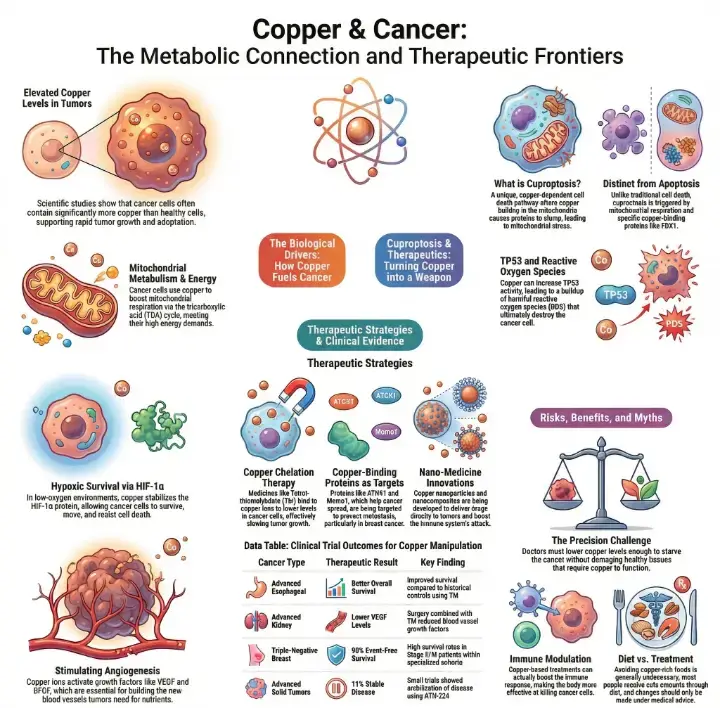
You may wonder if copper and cancer have a real connection. Recent scientific studies show that cancer cells often contain more copper than healthy cells. Researchers found that this increase in copper supports tumor growth, helps cancer cells adapt, and can even affect how tumors respond to treatment.
Scientists observe that copper dysregulation appears in cancer patients, linking it to cancer initiation and progression.
High copper levels are common in several types of cancer, such as cervical cancer, and these levels can drive cancer to grow and spread quickly.
Understanding this link matters for your health, as it shapes new ways to detect and treat cancer.
Key Takeaways
Copper levels are often higher in cancer cells than in healthy cells, supporting tumor growth and survival.
Targeting copper metabolism with therapies can slow down tumor growth and improve treatment outcomes.
Copper plays a dual role in cancer: it aids in tumor growth and can also trigger a unique type of cell death called cuproptosis.
Lowering copper levels in the body can help combat cancer, but it must be done carefully to avoid harming healthy cells.
Research continues to explore copper-targeted therapies, offering hope for new cancer treatments.
Copper and Cancer: Mechanisms
Copper in Tumor Growth
You might wonder how copper and cancer connect at the cellular level. Copper supports cancer cell metabolism in several ways. Tumor cells need more energy than normal cells. They use copper to help their mitochondria work harder. This process involves the tricarboxylic acid (TCA) cycle, which is a key part of how cells make energy. When copper levels rise in cancer cells, a unique cell death pathway called "copper death" can occur. This pathway depends on mitochondrial respiration and the TCA cycle. Because tumor cells have higher copper levels and different metabolic needs, targeting copper death could lead to new cancer treatments.
Copper also helps cancer cells adapt to low-oxygen environments, known as hypoxia. In these conditions, copper activates a protein called HIF-1α. This protein controls genes that help cancer cells survive, move, and grow new blood vessels. Copper increases the stability of HIF-1α, making it last longer in the cell. This change helps cancer cells resist certain types of cell death and continue to grow even when oxygen is low.
Copper is essential for tumor cell growth. Tumor tissues often have more copper than normal tissues.
Cancer cells need more copper for their active metabolism and energy production.
High copper levels link to tumor growth, new blood vessel formation, and the spread of cancer.
Lowering copper levels with special medicines can slow tumor growth in both animals and people.
High copper can sometimes damage cells, which may affect how tumors grow.
You can see that copper and cancer are closely linked through these metabolic changes.
Copper’s Role in Cell Death
Copper does more than help cancer cells grow. It also plays a part in how these cells die. Scientists have found that copper can trigger a special type of cell death called cuproptosis. This process happens when copper builds up in the mitochondria. The extra copper causes certain proteins to clump together, which damages the mitochondria and leads to cell death. This is different from other types of cell death, like apoptosis.
Molecular Pathway | Description |
|---|---|
Cuproptosis | Copper-dependent cell death that disrupts mitochondria, causing stress and cell death. |
PLK1–FOXO3a–β-catenin | Copper affects this pathway to control cell fate and the change of cells from one type to another. |
Copper can also increase the activity of a protein called TP53. This protein helps control cell death by turning on other proteins like BAX. When this happens, the mitochondria become more open, and harmful molecules called reactive oxygen species (ROS) build up. This leads to cell death. Copper can also change how certain enzymes work, which affects the cell’s energy cycle and can cause more cell death.
You should know that copper and cancer interact in many ways, not just in growth but also in how cancer cells die.
Copper and Angiogenesis
Copper plays a key role in helping tumors grow new blood vessels, a process called angiogenesis. Tumors need these new vessels to get nutrients and oxygen. Copper helps control the proteins that move copper in and out of cells. This balance is important for making sure tumors can build new blood vessels and spread.
Copper ions help blood vessel cells grow and move. They also turn on important proteins like vascular endothelial growth factor (VEGF) and basic fibroblast growth factor (bFGF). These proteins are needed for new blood vessels to form.
Lowering copper levels can stop new blood vessels from forming in cancer models.
Higher levels of a copper-carrying protein, ceruloplasmin, match up with how fast tumors grow or shrink.
Copper salts can make blood vessels grow and help blood vessel cells move.
In people with cancer, higher copper levels in the blood often mean the disease is more severe.
Copper boosts the activity of proteins like VEGF and FGF1, which are needed for new blood vessels.
When you look at copper and cancer, you see that copper is not just a helper for tumor growth. It also helps tumors survive by building new blood vessels. This makes copper a key player in cancer development and a possible target for future treatments.
Evidence: Copper and Cancer

Elevated Copper in Tumors
You may notice that scientists have found higher copper levels in many types of tumors. Studies show that both solid tumors and blood cancers often contain more copper than healthy tissues. This increase links directly to cancer progression. For example, research on stomach cancer found that copper levels in cancerous tissues were much higher than in non-cancerous samples. The difference was statistically significant, which means it was not due to chance. Some studies report no difference or even lower copper levels in certain cancers, but most agree that copper plays a role in tumor growth. A systematic review on colorectal cancer highlights that copper may help cancer cells survive and grow, though results can vary between studies.
Elevated copper levels may also connect to higher cancer grades and resistance to chemotherapy. Some large studies suggest that changes in copper and zinc ratios could help doctors predict how a cancer will behave.
Copper-Binding Proteins
Copper-binding proteins help cancer cells use copper for growth and spread. You can see how important these proteins are in the table below:
Copper-Binding Protein | Role in Cancer Progression |
|---|---|
ATOX1 | Promotes cyclin D1 expression and helps new blood vessels form. |
You should know that proteins like Memo1 and Atox1 are essential for cancer cell growth and movement. Memo1 helps cancer cells spread by blocking harmful reactions. If Memo1 stops working, breast cancer cells do not spread as much. Atox1 helps breast cancer cells move, showing that copper-binding proteins play a complex role in cancer progression.
Copper-binding proteins bind copper ions needed for cancer cell survival.
Cancer cells have more copper, which increases the activity of these proteins.
Memo1 and Atox1 help cancer cells grow and spread.
Research on Copper Chelation
Researchers have tested medicines called copper chelators to lower copper levels in cancer cells. These medicines aim to slow tumor growth or make cancer treatments work better. You can see some study results in the table below:
Type of Cancer | Study Findings | Reference |
|---|---|---|
Advanced esophageal cancer | Better overall survival with TM compared to historical controls in a small trial | Schneider BJ, Lee JS et al. Investigational New Drugs. 2013 |
Advanced kidney cancer | Lower VEGF levels after surgery with TM in a small study | Brewer GJ, Dick RD et al. Clinical Cancer Research. 2000 |
Advanced solid tumors | Stable disease in 11% of patients treated with ATN-224 in a small trial | Lowndes SA, Adams A et al. Clinical Cancer Research. 2008 |
Advanced cancer (general) | Improved stable disease in 3 out of 4 small studies with TM or ATN-224 | Gupte A, Mumper RJ. Cancer Treatment Reviews. 2009 |
You can see that copper chelators sometimes help slow cancer growth or improve survival. Other studies show that copper depletion can reduce tumor growth, block new blood vessel formation, and even restore the effectiveness of certain chemotherapy drugs. These findings show that the link between copper and cancer is important for future treatments.
Therapy Implications
Targeting Copper Metabolism
You may wonder how doctors can use the link between copper and cancer to help patients. Scientists have created several strategies to target copper metabolism in cancer therapy:
Copper chelation therapy uses agents like tetrathiomolybdate and trientine. These medicines bind to copper ions and lower copper levels in cancer cells. This can slow down tumor growth.
Some treatments focus on blocking cuproptosis-related genes, such as FDX1. By doing this, you can reduce harmful molecules called reactive oxygen species and prevent cancer cell death.
Combination therapies use copper chelators with other cancer drugs, like cisplatin or paclitaxel. This approach has shown better results in early studies.
Immune modulation combines cuproptosis inhibitors with immunotherapies. This can help your immune system fight cancer more effectively.
Researchers have also found that copper-based compounds can kill cancer cells and stop tumors from growing new blood vessels. Copper nanoparticles can target cancer cells, deliver drugs, and make treatments work better. Blocking copper-dependent proteins, such as LOX and MEMO1, can stop cancer cells from spreading.
Some patient groups, like those with triple-negative breast cancer, may benefit more from these therapies. For example:
Patient Population | Stage II/III (%) | Stage IV (%) | Event Free Survival (%) |
|---|---|---|---|
60 | 40 | 90 (Stage II/III), 50 (Stage IV) | |
Overall Cohort | 60 | 40 | 72 |
Risks and Benefits of Copper Manipulation
You should know that changing copper levels in your body can have both good and bad effects.
Doctors try to lower copper just enough so your normal cells still work, but cancer cells cannot grow as fast.
If a tumor depends on a lot of copper, lowering copper can trigger reactions that harm cancer cells.
However, copper is important for your body. Reducing copper too much can damage or even kill healthy cells.
Copper-targeted therapies can boost your immune response and help kill cancer cells. For example, a special copper-manganese nanocomposite can release copper in tumors and increase immune cell activity. This leads to stronger attacks on cancer cells. Still, long-term use of these therapies can cause side effects, such as toxicity in healthy tissues or resistance to treatment.
You should also know that scientists face challenges with these therapies. They need to make sure the drugs target only cancer cells and do not harm the rest of your body. More research is needed to make these treatments safer and more effective.
You have learned that copper supports tumor growth and spread. Scientists continue to study how copper affects different cancers, but many questions remain. You may see that researchers do not fully understand how copper triggers cell death or how much copper your body needs. Ongoing studies explore new drugs, copper chelators, and nanotechnology for cancer therapy.
Key Findings | Description |
|---|---|
Copper Depletion | May prevent cancer from spreading, especially in aggressive breast cancer. |
Therapeutic Potential | Copper-based treatments can slow tumor growth and metastasis. |
Always talk with your healthcare provider before making changes related to copper or cancer care.
FAQ
Is copper always bad for you if you have cancer?
No, your body needs copper for health. High copper levels can help cancer grow, but you should not remove copper without a doctor’s advice. You need the right balance for your body to work well.
Can you lower your cancer risk by avoiding copper-rich foods?
You do not need to avoid copper-rich foods. Most people get safe amounts from their diet. Cutting out these foods does not lower cancer risk. Always talk to your doctor before making big diet changes.
Are copper supplements safe if you have cancer?
You should not take copper supplements without medical advice. Too much copper can cause problems, especially if you have cancer. Your doctor can check your copper levels and guide you.
How do doctors measure copper in your body?
Doctors use blood tests to check copper levels. They may also measure ceruloplasmin, a protein that carries copper. These tests help your doctor decide if you need treatment.
This article is for educational purposes only and is not a substitute for professional medical advice. For more details, please see our Disclaimer. To understand how we create and review our content, please see our Editorial Policy.
See Also
Exploring Cancer Types Associated With HIV and AIDS
Recognizing Symptoms and Causes of Esophageal Cancer
Symptoms and Treatment Options for Duodenal Cancer

© 2026 Banish Cancer. Banish Cancer is a registered non-profit organization providing evidence-based research, educational courses, and Fear Response AI support services. Reg. No: 305706884 | Address: Taikos pr. 43-603, Kaunas, Lithuania.