Why Iron Is the Double-Edged Sword of Oncology


Iron keeps your body running. You need it for energy and healthy blood. However, iron can also cause harm. Many cancer patients struggle with iron problems. Nearly 65% of people with cancer face iron deficiency. This often leads to worse outcomes and higher risk of death. In the United States, almost 30% of adults have some type of iron deficiency.
Type of Iron Deficiency | Percentage of U.S. Adults |
|---|---|
Absolute Iron Deficiency | 14% |
Functional Iron Deficiency | 15% |
Total Affected (Absolute + Functional) | Nearly 30% |
You may wonder why iron helps and hurts at the same time. That is why iron is the "Double-Edged Sword" of Oncology.
Key Takeaways
Iron is essential for energy and healthy blood, but too much can harm your cells and promote cancer growth.
Nearly 65% of cancer patients face iron deficiency, which can lead to worse outcomes and higher mortality rates.
Cancer cells require more iron for rapid growth, making iron management crucial in cancer treatment.
Iron overload can cause serious health issues, including heart and liver problems; regular monitoring is essential.
Discuss iron management strategies with your doctor to balance benefits and risks during cancer treatment.
Why Iron Is the "Double-Edged Sword" of Oncology
Iron’s Role in Cell Growth and Metabolism
You depend on iron for many basic functions. Iron helps your cells make energy, grow, and stay healthy. Both normal and cancer cells need iron to survive. Iron supports cell division, oxygen transport, and DNA synthesis. Without iron, your body cannot produce enough red blood cells. These cells carry oxygen to your tissues.
Iron is crucial for cellular respiration and energy metabolism.
Iron helps your cells repair DNA and replicate.
Iron metabolism links to tumor development and progression.
Iron can create free radicals, which may damage cells and lead to cancer.
Iron acts as a cofactor for important enzymes. These enzymes help your cells convert nutrients into energy. Iron also plays a role in mitochondrial function. Mitochondria are the powerhouses of your cells. Iron helps them produce energy for growth and repair. When iron levels drop, your cells struggle to function.
Biological Process | Role of Iron |
|---|---|
Mitochondrial Function | Iron is crucial for energy production and metabolic processes in cancer cells. |
Apoptosis and Cell Death | Iron mediates ROS production, influencing cell death pathways. |
Iron Homeostasis | Disruption can lead to cell death and contribute to cancer progression. |
Iron metabolism works like a balancing act. Your body absorbs iron in the gut and transports it to cells. Iron can switch between two forms, Fe2+ and Fe3+. This ability helps your cells use iron for many tasks. However, too much iron can cause problems. Iron can promote the formation of reactive oxygen species. These molecules damage proteins, lipids, and DNA.
Iron’s Impact on Cancer Cell Proliferation
Cancer cells need more iron than healthy cells. They grow faster and divide more often. You may notice that cancer cells have higher levels of transferrin receptors. These receptors help them take in more iron from your blood. Iron supports DNA synthesis and cell division. Cancer cells use iron to fuel their rapid growth.
Aspect | Description |
|---|---|
Cell Division | Iron is a cofactor for ribonucleotide reductase, essential for converting ribonucleotides to deoxyribonucleotides, thus supporting DNA synthesis and cell proliferation. |
Oxygen Transport | Iron circulates in plasma bound to transferrin, and its uptake is mediated by transferrin receptors, which are more abundant in rapidly dividing cancer cells. |
DNA Synthesis | Increased expression of transferrin receptors in cancer cells correlates with higher iron demand for DNA synthesis, influencing tumor growth and metastasis. |
Iron Homeostasis | Cancer cells often exhibit higher levels of transferrin receptor expression compared to normal cells, indicating a greater need for iron to support their rapid proliferation. |
You see the paradox here. Iron helps your body stay healthy, but it also helps cancer cells grow. This is why iron is the "Double-Edged Sword" of Oncology. Cancer cells change their iron metabolism. They take in more iron and keep less iron inside. This change helps them survive and spread.
Aspect | Evidence |
|---|---|
Altered Iron Metabolism | Cancer cells exhibit deregulated iron homeostasis compared to normal cells, leading to increased proliferation rates. |
Iron Uptake | Higher levels of TfR1 in cancer cells correlate with advanced cancer stages and increased iron uptake. |
DNA Synthesis | The rate-limiting enzyme for DNA synthesis requires iron, which is up-regulated in cancer, enhancing proliferation. |
Iron Efflux | Decreased expression of Fpn1 in certain cancers correlates with poor prognosis and increased metastasis. |
Iron also affects the aggressiveness of cancer. Tumor cells need more iron for survival and growth. Imbalances in iron metabolism link to metastases. Iron influences the tumor microenvironment. It can help cancer cells invade new tissues and form blood vessels.
Mechanism | Description |
|---|---|
Role in Cell Proliferation | Cancer cells have higher iron requirements due to increased rates of proliferation and DNA synthesis. |
Modulation of Tumor Microenvironment | Iron influences metastasis formation and angiogenesis through iron metalloproteases. |
Redox Homeostasis | Iron's ability to alternate between oxidized and reduced forms contributes to free radical formation, which can accelerate tumor initiation. |
Ferroptosis | Iron can mediate cell death through ferroptosis, affecting the cell's antioxidant capacity and increasing intracellular iron levels. |
Epigenetic Regulation | Iron is involved in the regulation of the genome and epigenome, influencing gene expression and modifications at the histone level. |
You must remember that iron can help and harm at the same time. This is the heart of why iron is the "Double-Edged Sword" of Oncology. If you have too little iron, your cells cannot grow or repair. If you have too much iron, you risk cell damage and cancer progression.
Study Focus | Key Findings |
|---|---|
Iron Dysregulation | Both iron deficiency and iron overload are associated with increased cancer risk, but exact serum thresholds vary across studies. |
Gene Signatures | Reduced expression of Fe homeostasis genes in metastasis; specific gene signatures differentiate liver cancer from non-tumor tissues. |
Ferroptosis | Iron mediates cell death through ferroptosis, suggesting a potential tumor suppressor role. |
Tumor Proliferation | Cancer cells have higher iron requirements for proliferation and DNA synthesis, indicating iron's role in tumor growth. |
Epigenetic Modulation | Iron influences genome and epigenome regulation, affecting cancer progression through Fe-S clusters. |
You see that iron is essential for life, but it can also drive cancer. This paradox makes iron a key focus in cancer research and treatment. Why Iron is the "Double-Edged Sword" of Oncology remains a central question for doctors and scientists. You need to understand this balance to manage cancer and protect your health.
Iron-Induced Oxidative Stress and DNA Damage

The Fenton Reaction and Free Radical Formation
You may wonder how iron can damage your cells. When you have too much iron, your body creates harmful molecules called reactive oxygen species (ROS). This happens through a process known as the Fenton reaction. In this reaction, ferrous ions (Fe²⁺) react with hydrogen peroxide (H₂O₂) and produce hydroxyl radicals (·OH). These radicals are very reactive and can attack important parts of your cells.
The Fenton reaction uses Fe²⁺ and H₂O₂ to make hydroxyl radicals.
Hydroxyl radicals damage fatty acids, proteins, and DNA.
Cancer cells often use the Fenton reaction to create more ROS and harm healthy tissue.
If you have iron deficiency, your mitochondria cannot work well. This leads to more ROS and makes your cells weak. On the other hand, iron overload increases ROS through the Fenton reaction. Both situations cause oxidative stress and can hurt your tissues. Tumors often change their iron pathways and need more iron to grow. This change makes cancer cells produce more ROS than healthy cells.
Cancer cells need more iron, so they make more ROS.
Imbalanced iron homeostasis leads to cell damage or death.
ROS levels are much higher in cancer cells than in normal cells.
Too much iron can turn into a weapon inside your body. The Fenton reaction is one reason Why Iron is the "Double-Edged Sword" of Oncology.
Oxidative Stress, Mutations, and Carcinogenesis
Oxidative stress happens when your body cannot control ROS. These molecules attack proteins, lipids, and DNA. When DNA gets damaged, your cells can mutate. Mutations can lead to cancer. Iron-catalyzed oxidative stress causes double-strand breaks and DNA-protein crosslinks. These changes make your cells unstable and increase cancer risk.
Evidence Description | Mechanism | Link |
|---|---|---|
Iron-catalyzed oxidative stress leads to oxidative DNA damage, including double-strand breaks and DNA-protein crosslinks. | Oxidative DNA damage | |
BRCA1 deficiency increases vulnerability to iron‑driven oxidative DNA damage, contributing to carcinogenesis. | Carcinogenesis | |
BRCA2-deficiency leads to increased oxidative stress and ferroptosis-resistance. | Ferroptosis and oxidative stress |
You see that iron can help your cells grow, but it can also cause mutations. Some cancers, like SDHB-mutated pheochromocytoma, show high iron levels and more oxidative stress. These tumors up-regulate iron transport proteins, which makes the problem worse. When your cells cannot handle ROS, they become more likely to turn cancerous.
Oxidative stress from iron is a major reason why cancer cells mutate and grow out of control.
Iron-induced oxidative stress also affects ferroptosis, a special type of cell death. Cancer cells sometimes resist ferroptosis, which helps them survive. BRCA2-deficiency promotes lipid peroxidation and mitochondrial damage, leading to ferroptosis. Iron-catalyzed oxidative stress can change how cancer cells respond to ferroptosis.
Evidence Type | Findings | Implications |
|---|---|---|
Mitochondrial Damage | BRCA2-deficiency promotes lipid peroxidation leading to ferroptosis via mitochondrial damage. | Iron-induced oxidative stress can enhance ferroptosis resistance in cancer cells by affecting mitochondrial integrity. |
Lipid Peroxidation | Iron-catalyzed oxidative stress compromises cancer promotional effects associated with BRCA2 haploinsufficiency. | Oxidative stress modulates ferroptosis resistance in cancer cells. |
You need to understand that iron can be both a friend and an enemy. If you have too much iron, your cells face more oxidative stress. This stress can cause mutations, help cancer cells survive, and make treatment harder. Managing iron levels is important for your health and for fighting cancer.
Iron Regulation and Disruption in Cancer
Iron Homeostasis and Ferritinophagy
You rely on your body to keep iron levels balanced. Iron homeostasis means your cells control how much iron they take in, store, and release. This balance helps you stay healthy and protects your cells from damage. Your body uses several pathways to manage iron:
Transferrin receptor 1 (TFR1) helps your cells absorb iron, especially when they grow quickly.
Transferrin-bound iron enters your cells through endocytosis. Inside the endosome, iron changes to a form your cells can use.
Divalent metal transporter-1 (DMT1) moves iron into cells, playing a big role in colorectal cancer.
Ferritin stores iron safely. Its structure changes depending on your cell’s needs.
Ferroportin (FPN) exports iron from cells. Cancer often lowers FPN levels, trapping iron inside.
Hepcidin controls FPN stability. Tumors make more hepcidin, which keeps iron in cancer cells.
Iron-regulatory proteins (IRPs) sense iron levels and adjust how much iron your cells keep.
miRNAs silence certain RNAs, helping fine-tune iron metabolism.
Ferritinophagy is the process where your cells break down ferritin to release stored iron. This process supports protein synthesis and mitochondrial function. When cancer disrupts ferritinophagy, your cells may lose control over iron storage and release.
Iron Sharing and Tumor Microenvironment
Cancer changes how your cells share and use iron. Tumor cells often grab more iron and keep it inside, which helps them grow and survive. You see this disruption in many cancers:
Study/Observation | Findings | Impact on Tumor Growth |
|---|---|---|
Tumors lower FPN1, trapping iron | Promotes cancer cell growth and resistance | |
Hepcidin secretion by cancer cells | Tumors make more hepcidin, reducing FPN1 | Increases iron inside cells, boosting proliferation |
Overexpression of FPN1 | Raises p53 and autophagy | Reduces tumor growth and spread |
The tumor microenvironment also affects therapy outcomes. Cancer cells import more iron, which makes them harder to treat. Iron supports DNA synthesis and helps tumors spread. It also changes how cells respond to treatments like chemotherapy.
Description | Impact on Therapy Outcomes |
|---|---|
Promotes cancer cell growth and therapy resistance | |
Iron’s role in oxidative stress | Makes treatment less effective |
Ferroptosis pathway | Alters cancer cell survival and response |
Iron in metastasis and angiogenesis | Influences tumor progression and therapy results |
You need to understand how iron regulation changes in cancer. This knowledge helps you see why managing iron is so important for cancer treatment and recovery.
Clinical Implications for Oncology
Iron Supplementation Risks
You may think iron supplements always help, but in cancer care, they can bring serious risks. Research shows that too much iron links to a higher risk of solid tumors, such as colon, liver, stomach, kidney, and lung cancers. Cancer cells use iron as a growth factor. They often have more transferrin receptors, which help them take in extra iron and grow faster.
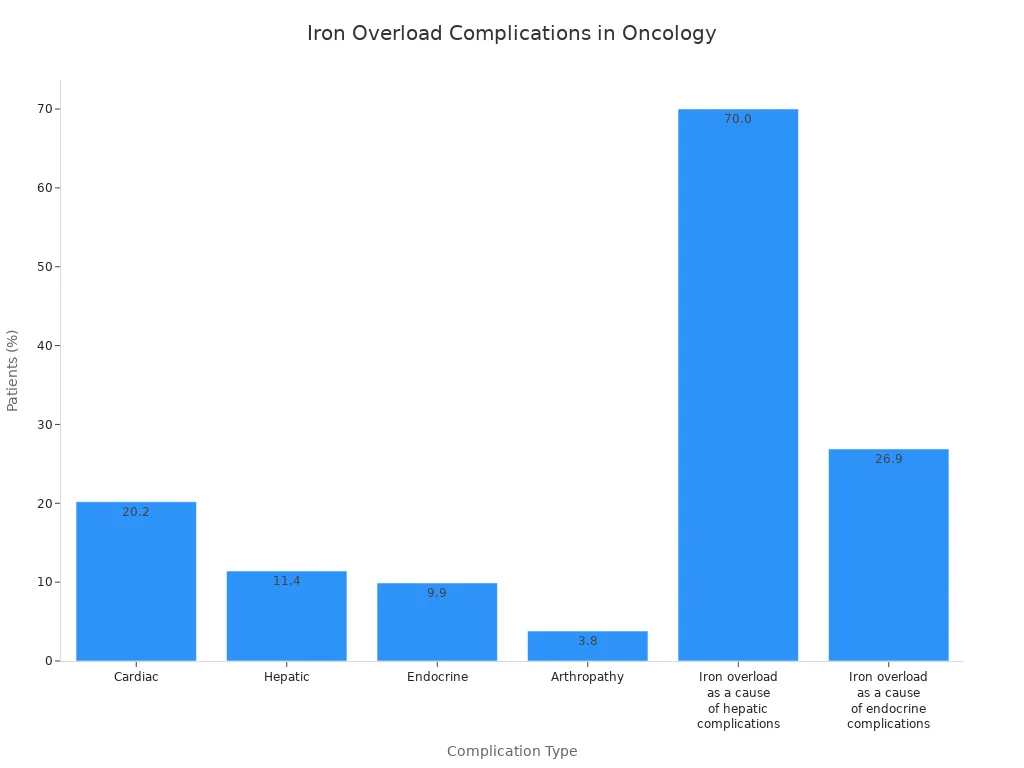
If you get too much iron, you can develop iron overload. This condition can harm your heart, liver, and hormones. The table below shows how often these problems happen in cancer patients:
Complication Type | Percentage of Patients (%) |
|---|---|
Cardiac | 20.2 |
Hepatic | 11.4 |
Endocrine | 9.9 |
Arthropathy | 3.8 |
Iron overload as a cause of hepatic complications | 70.0 |
Iron overload as a cause of endocrine complications | 26.9 |
Doctors often miss the signs of iron overload. Many do not check iron levels before or during treatment. You should know that regular monitoring and careful management are key. Guidelines suggest you get frequent iron checks, adjust your diet, and avoid vitamin C supplements if you are at risk.
Iron Chelation and Therapeutic Strategies
You have options if you need to lower iron in your body. Iron chelation therapy uses medicines to remove extra iron from your cells. These drugs, like DFO, DFP, and DFX, can slow tumor growth by starving cancer cells of iron. Studies show that iron chelators can reduce tumor size and improve outcomes in cancers such as breast cancer, neuroblastoma, and liver cancer.
Strategy | Description |
|---|---|
Iron Chelation | Removes iron from tumor cells; includes DFO, DFP, DFX. |
Ferroptosis | Targets cancer cells by increasing iron-induced cell death. |
Metal-containing Drugs | Uses molecules like ferrocene to stop cancer cell growth. |
Gallium-based Compounds | Mimics iron to block cancer cell metabolism. |
Emerging therapies now target iron metabolism in new ways. Some drugs block iron transport or mimic iron to disrupt cancer cell growth. Others use iron to trigger cell death in tumors. You may also hear about hepcidin or HIF inhibitors, which help control iron levels in your body.
If you have cancer, you should talk to your doctor about iron management. Careful monitoring and the right therapy can help you avoid complications and improve your treatment results.
You have seen that iron acts as both a helper and a threat in cancer. Careful management of iron can protect your health and improve cancer care. The table below highlights key findings from recent research:
Key Findings | Implications |
|---|---|
Iron-based therapies can shrink tumors and boost immune response. | Iron offers promise but also risks in cancer treatment. |
Maximizing ROS production may improve outcomes. | Targeted strategies are needed for safety and effectiveness. |
Looking ahead, you may benefit from new therapies and better education about iron. Researchers aim to develop safer iron treatments and find ways to target cancer cells without harming healthy ones. Monitoring your iron levels will remain important for your care.
FAQ
What happens if you have too little iron during cancer treatment?
You may feel tired, weak, or dizzy. Your body cannot make enough healthy blood cells. This can slow your recovery and make you feel worse during treatment.
Can taking iron supplements make cancer grow faster?
Iron supplements can help if you have low iron. Too much iron may help cancer cells grow. Always ask your doctor before taking any iron pills.
How do doctors check your iron levels?
Doctors use blood tests. They check your hemoglobin, ferritin, and transferrin saturation. These tests show if you have too much or too little iron.
Are there foods you should avoid if you have cancer and high iron?
You should limit red meat, liver, and iron-fortified cereals. These foods add extra iron to your body. Ask your doctor or dietitian for a safe eating plan.
This article is for educational purposes only and is not a substitute for professional medical advice. For more details, please see our Disclaimer. To understand how we create and review our content, please see our Editorial Policy.
See Also
Recognizing Duodenal Cancer Symptoms And Available Treatments
Key Features And Insights Into Cholangiocarcinoma Explained
A Simple Explanation Of Extrahepatic Bile Duct Cancer

© 2026 Banish Cancer. Banish Cancer is a registered non-profit organization providing evidence-based research, educational courses, and Fear Response AI support services. Reg. No: 305706884 | Address: Taikos pr. 43-603, Kaunas, Lithuania.