How to Build a New Normal After Cancer

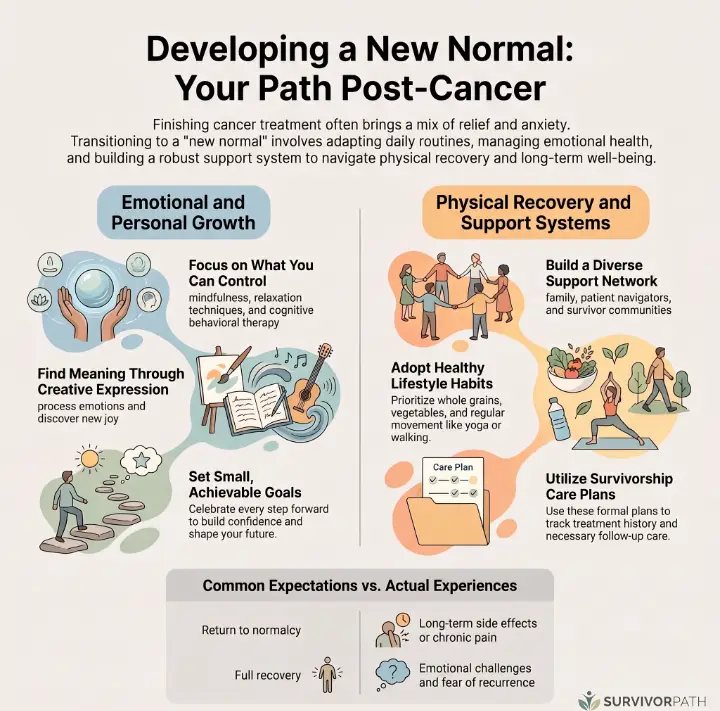
You might feel a mix of relief, anxiety, and sadness after finishing cancer treatment. Many people experience these emotions, and it’s normal to feel lost or unsure about what comes next. You may notice changes in your body, energy, and even your daily routine. It’s okay to take small steps as you start Developing a New 'Normal': Adapting Post-Cancer Lifestyle. Try focusing on self-care, be patient with yourself, and reach out for support. Simple things like mindful eating, gentle exercise, or talking with someone you trust can help you move forward.
Key Takeaways
Embrace change by reflecting on what brings you joy. Set small goals and celebrate each achievement.
Build a strong support system. Connect with family, friends, and survivor communities for comfort and understanding.
Manage anxiety and fear of recurrence through mindfulness, relaxation techniques, and focusing on what you can control.
Adopt healthy habits like a balanced diet and regular exercise to boost your recovery and overall well-being.
Explore spiritual support and meaningful activities to find purpose and connection after cancer.
Developing a New 'Normal': Adapting Post-Cancer Lifestyle
Embracing Change After Treatment
Life after cancer can feel different. You might notice that your priorities have shifted. Many survivors say they appreciate each day more and focus on what matters most. You may find yourself wanting to spend more time with loved ones or explore new interests. This is all part of developing a new normal: adapting post-cancer lifestyle.
Here are some ways you can embrace change:
Reflect on what brings you joy and meaning.
Set small, achievable goals. Celebrate each step forward.
Try activities you have always wanted to do.
Get enough sleep and practice ways to relax.
Keep in touch with friends and family.
You might also want to make changes that help you feel comfortable and confident. If you notice changes in your appearance, things like wigs or hats can help you feel more like yourself. Remember, it is okay to ask for help or talk about your feelings.
Cancer survivorship is a journey. Your daily routine may look different now. You might need to adjust how you manage your time, energy, and emotions. This process takes time, and it is normal to face ups and downs.
Setting Realistic Expectations
You may hope to return to life exactly as it was before cancer. Many people feel this way. However, the reality can be different. Some survivors deal with long-term side effects, chronic pain, or emotional struggles. You might feel sad or worried about the future. Sometimes, you may not feel happy because you fear something bad could happen again.
“You can’t get happy about anything because you’re frightened in case the worst is going to happen... It’s very emotional. You don’t want to build your hopes up too much.”
It helps to set realistic expectations for yourself. Take a look at this table to see how common hopes compare to what many survivors actually experience:
Common Expectations | Actual Experiences |
|---|---|
Return to normalcy | Long-term side effects, chronic pain |
Full recovery | Ongoing emotional challenges, fear of recurrence |
You can still have hope, even if things are not perfect. Learning about what to expect can help you set goals that fit your new situation. If you feel unsure, talk with your healthcare team. They can help you understand what is normal and what needs attention.
Building Support Systems
You do not have to go through this alone. Building a strong support system is a big part of developing a new normal: adapting post-cancer lifestyle. Family, friends, and survivor communities can give you comfort and understanding. You might find it helpful to join a support group or talk with others who have been through similar experiences.
Here are some types of support that can make a difference:
Support System Type | Description |
|---|---|
Resilience-Building Strategies | Learn skills like mindfulness and positive thinking to handle tough emotions. |
Coordinated Care | Patient navigators and care coordinators help you find resources and keep track of your care. |
Survivorship Care Plans (SCPs) | These plans explain your treatment and what follow-up care you need. |
Stepped-Care Model for Fear of Recurrence | Get basic information and, if needed, more help for strong fears or worries. |
Psychosocial Interventions | Activities like group therapy or stress management can help you feel better and less alone. |
When you join survivor communities, you get more than just advice. You find a safe place to share your story and listen to others. This can help you feel less alone and more hopeful. Support networks can lower anxiety and sadness, help you cope, and give you strength to keep moving forward.
Developing a new normal: adapting post-cancer lifestyle is not something you have to figure out by yourself. With the right support, you can find new ways to live, grow, and enjoy life.
Emotional Health and Well-Being
Cancer changes more than your body. It can affect your mind and emotions in ways you might not expect. You may feel happy to finish treatment, but you might also feel scared, sad, or even angry. These feelings are normal. Many survivors face emotional ups and downs while developing a new normal: adapting post-cancer lifestyle. You are not alone in this journey.
Here is a look at some of the most common emotional health challenges cancer survivors face:
Emotional Health Challenge | Prevalence (%) | Source Link |
|---|---|---|
Post-Traumatic Stress | >35% | |
Survivor's Guilt | >60% | |
Anxiety | >25% | |
Depression | up to 25% | |
Fear of Recurrence | Nearly 80% | |
Post-Traumatic Growth | >54% |
Managing Anxiety and Fear of Recurrence
You might worry about cancer coming back. This fear is very common. Almost 80% of survivors feel it at some point. Sometimes, anxiety can show up as trouble sleeping, feeling restless, or thinking about cancer all the time. You may even avoid making plans because you feel uncertain about the future.
Here are some ways to manage anxiety and fear of recurrence:
Try cognitive behavioral therapy (CBT). This type of talk therapy helps you change negative thoughts.
Practice relaxation and meditation. Deep breathing or mindfulness can calm your mind.
Focus on what you can control. Make healthy choices, like eating well and staying active.
Set aside a specific time each day to worry. This can help keep fears from taking over your whole day.
Spend time doing things you enjoy, like hobbies or being in nature.
Keep a gratitude journal. Write down things that make you feel thankful.
You can also use these strategies:
Strategy Type | Description |
|---|---|
Cognitive Behavioral Therapy | A structured therapy shown to help tackle fear of cancer recurrence (FCR). |
Mindfulness Practices | Adding mindfulness to your daily routine can lower anxiety and help you feel better. |
Lifestyle Modifications | Following your doctor’s advice and avoiding harmful habits can help you feel more in control. |
Tip: If you notice anxiety is getting in the way of your daily life, talk to your healthcare team. They can help you find the right support.
Coping with Depression and Mood Swings
Feeling sad, hopeless, or losing interest in things you once enjoyed can be signs of depression. Mood swings are also common. You might feel happy one moment and upset the next. These feelings can come and go, or they might last for a while.
Depression affects up to 25% of cancer survivors, but in some groups, like breast cancer patients, it can be much higher. Anxiety can also be very common. Many things can affect how you feel, including your culture, support system, and even how people around you talk about mental health.
Here are some proven ways to cope with depression and mood swings:
Intervention Type | Description | Outcome |
|---|---|---|
Practicing mindfulness can help you feel less depressed and more in control. | Lower depression, with effects lasting for months. | |
Physical Activity | Moving your body, even with gentle exercise, can lift your mood. | Improves mood and helps you feel better over time. |
Psychotherapy | Talking with a counselor or therapist can help you work through tough emotions. | Big improvements in mood and coping. |
Cognitive-Behavioral Therapy | Helps you change negative thoughts and reactions. | Better coping and a higher quality of life. |
Support Groups | Sharing your feelings with others who understand can make you feel less alone. | Better mood, stronger coping skills, and even improved immune health. |
Try to get outside for a walk or gentle exercise.
Practice mindfulness or meditation, even for a few minutes each day.
Reach out to a counselor or therapist if you feel stuck.
Join a support group to connect with others who understand what you are going through.
Note: If you ever feel hopeless or have thoughts of hurting yourself, tell someone you trust right away. You deserve help and support.
Accessing Counseling and Support Groups
You do not have to face emotional struggles alone. Counseling and support groups can make a big difference. They give you a safe place to talk about your feelings, learn new coping skills, and hear from others who have been through similar experiences.
Here are some benefits of joining a support group or seeing a counselor:
Benefit | Description |
|---|---|
Psychological Well-being | Group sessions can help you feel less anxious and less depressed. |
Coping Strategies | You can learn new ways to handle stress and side effects. |
Quality of Life | Many people feel happier and more hopeful after joining a group. |
Emotional Support | You get to share your story and listen to others, which can ease feelings of loneliness. |
Empowerment | Support groups help you feel stronger and more in control. |
Positive Effects on Survival | Some studies show that support groups might even help you live longer. |
About 22% of survivors who talk with their doctor about mental health use counseling or support groups. If you have not talked with your doctor yet, bring it up at your next visit.
Support groups can help you feel less alone, give you hope, and offer a place to talk about your worries.
Many survivors say that regular check-ins with a group help them feel connected and less isolated.
Tip: You can find support groups online or in your local community. Ask your healthcare team for recommendations.
Taking care of your emotional health is just as important as caring for your body. As you continue developing a new normal: adapting post-cancer lifestyle, remember that it is okay to ask for help. You are strong, and you deserve support on this journey.
Physical Recovery and Healthy Habits

Healthy Diet Changes
You might wonder what to eat after cancer treatment. Food can help you feel stronger and more energetic. Many survivors find that a healthy diet makes a big difference in recovery. Eating well can also lower your risk of cancer coming back.
Here’s a quick look at some diet changes and their benefits:
Dietary Change | Benefits |
|---|---|
Increased fruit and vegetable intake | Improved physical performance and perceived health |
Healthy diet with whole grains, fruits, and vegetables | |
Plant-based diets | Reduced mortality and improved cardiovascular health |
Avoidance of unhealthy foods | Reduced fatigue and improved quality of life |
You can try these simple steps:
Add more fruits and veggies to your meals.
Choose whole grains like brown rice or oats.
Pick plant-based meals a few times a week.
Cut back on red meat and ultra-processed foods.
A healthy diet is key for regaining strength and energy. It also helps you feel better during recovery.
Staying Active and Exercising
Moving your body helps you heal. Exercise can boost your mood, fight fatigue, and even lower the risk of cancer coming back. You don’t have to run a marathon. Start small and find what feels good.
Here are some types of exercise that work well for survivors:
Type of Exercise | Description |
|---|---|
Aerobic Activity | Walking at an average speed for 3 to 5 hours each week |
Resistance Training | Lifting weights or using resistance bands |
Yoga | Relieves symptoms and improves quality of life |
Qigong and Tai Chi | Helps with anxiety |
Brisk Walking | Lowers risk of recurrence |
Try to aim for 150 minutes of activity each week. Mix in some strength exercises and gentle stretching. Yoga and tai chi can help your mind and body.
Managing Lingering Side Effects
You may notice some side effects that stick around after treatment. These can include fatigue, pain, memory problems, or changes in your body. You are not alone—many survivors face these challenges.
Common lingering side effects:
Fatigue
Pain
Lymphedema
Learning and memory problems
Sexual dysfunction
You can manage these side effects with a few strategies. Exercise works well for fatigue and pain. Yoga and mindfulness can help with stress and mood. Personalized exercise programs give you the best results.
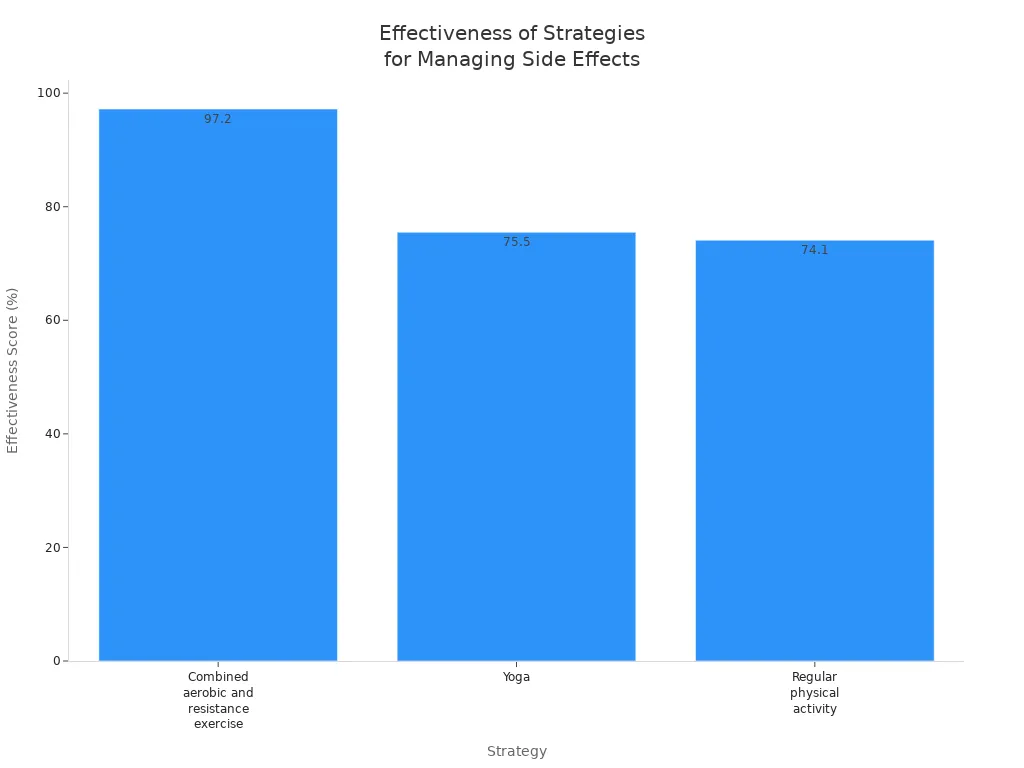
Tip: Talk with your healthcare team about any side effects. They can help you find the right plan.
Importance of Follow-Up Care
Follow-up care keeps you on track as you move forward. Regular visits help your doctor catch problems early and support your recovery. You may need checkups every few months at first, then less often over time.
Follow-Up Care Component | Description |
|---|---|
Frequency of Visits | Every 3 to 4 months for the first 2-3 years, then once or twice a year |
Medical History Review | Doctors review your medical history during visits |
Physical Exam | A physical examination at each visit |
Follow-Up Tests | Blood tests, MRI or CT scans, and endoscopy |
Additional Support | Home care, occupational therapy, pain management, and support groups |
Follow-up care helps you manage late effects and lowers your risk for other health problems. It’s a key part of Developing a New Normal: Adapting Post-Cancer Lifestyle.
Survivor’s Guilt and Finding Purpose
Understanding Survivor’s Guilt
You might wonder why you survived cancer when others did not. This feeling is called survivor’s guilt. It can show up as sadness, confusion, or even anger. You may ask yourself, “Why me?” or feel like you do not deserve to be happy. These thoughts are common for many survivors.
Studies show that almost 90% of people in traumatic stress clinics feel survivor’s guilt.
This feeling does not only affect cancer survivors. People who live through other hard experiences can feel it too.
You are not alone if you feel this way. Survivor’s guilt can make it hard to enjoy life after cancer. It helps to talk about these feelings with someone you trust.
Meaningful Activities and Giving Back
Finding purpose can help you heal. Many survivors say that doing meaningful things gives them hope and joy. You can try different activities to see what feels right for you.
Activity Type | Description |
|---|---|
Volunteering and Advocacy | Help others who face cancer by joining groups like Livestrong. |
Creative Expression | Write, paint, or play music to share your feelings. Art therapy can help you process emotions. |
Mentoring and Support Groups | Guide new patients or join survivor groups for support and friendship. |
Personal Growth and Learning | Explore your beliefs, take classes, or travel to learn new things. |
Reconnecting with Loved Ones | Spend time with family and friends. Make new memories together. |
You do not have to do everything at once. Pick one or two things that interest you. Small steps can lead to big changes.
Connecting with Other Survivors
You might feel stronger when you connect with others who understand your journey. Sharing your story can help you heal. You can join a support group or talk with another survivor.
Healing happens when you feel part of a community.
Friendships with other survivors can make you feel less alone.
You give and receive support, which helps you feel like you belong.
Talking with other survivors helps you feel understood.
You learn new ways to cope and grow.
You find hope and strength together.
Tip: You do not have to face survivor’s guilt alone. Reaching out can help you find purpose and peace.
Spiritual and Personal Growth
Exploring Spiritual Support
You might find yourself thinking more about life’s big questions after cancer. Many survivors turn to spiritual support for comfort and guidance. If faith or spirituality is already part of your life, you can reach out to a leader in your faith community or a trained pastoral counselor. They can help you explore your spiritual needs and offer support.
Here are some ways you can access spiritual support:
Contact a religious or spiritual leader in your community.
Connect with the chaplain at your hospital or treatment center.
Talk with your healthcare team or social worker about spiritual resources.
You don’t have to figure everything out alone. Spiritual support can help you feel more grounded and hopeful.
Practicing Mindfulness and Meditation
Mindfulness and meditation can help you feel calmer and more balanced. Many survivors say these practices lower stress and help them sleep better. You might notice less pain and more energy when you add mindfulness to your routine.
Some benefits of mindfulness and meditation include:
Improved mood and emotional balance
Better sleep quality
Less pain and discomfort
Reduced fear of cancer coming back
Research shows that mindfulness-based stress reduction (MBSR) helps many cancer survivors feel better emotionally and physically. You can try simple breathing exercises, guided meditations, or even gentle yoga.
Tip: Start with just a few minutes each day. Over time, you may notice big changes in how you feel.
Setting New Goals
After cancer, your goals might change. You may want to focus on what brings you joy and meaning. Many survivors reflect on their values and set new priorities.
Here are some common goals survivors set:
Reconnect with hobbies or try new activities
Volunteer or help others facing similar challenges
Express yourself through writing, art, or music
Spend more time with family and friends
Focus on personal growth, like learning something new or exploring spirituality
You don’t have to set big goals right away. Start small and celebrate each step. Sharing your goals with loved ones or a support group can help you stay motivated and feel supported.
You can build a new normal after cancer by leaning on your support system, just like Loretta did. Family, friends, and faith can help you find strength. Try breaking big changes into small steps. Here are some ways to start:
Strategy | How It Helps |
|---|---|
SMART Goals | Keeps you focused and motivated |
Micro-Achievements | Boosts your confidence with each small win |
Task Pacing | Helps you balance activity and rest |
Cognitive Reframing | Turns setbacks into learning moments |
You have the power to shape your future. Every step counts. You are not alone.
FAQ
How long does it take to feel “normal” after cancer treatment?
Everyone’s timeline looks different. You might notice changes for months or even years. Try to focus on small wins each day. Healing takes time. Be patient with yourself.
What if I still feel tired all the time?
Fatigue is common. You can try gentle exercise, eat healthy foods, and rest when needed. If tiredness does not improve, talk to your doctor. You deserve support.
Can I return to work or school after cancer?
Yes, many survivors go back to work or school. You might need to adjust your schedule or ask for help. Start slow. Let others know what you need.
How do I handle people who do not understand my experience?
You can share as much or as little as you want. Some people may not “get it.” That’s okay. Find support from those who listen and care. Your feelings matter.
This article is for educational purposes only and is not a substitute for professional medical advice. For more details, please see our Disclaimer. To understand how we create and review our content, please see our Editorial Policy.
See Also
Recognizing Symptoms And Treatment Options For Duodenal Cancer
Key Symptoms And Treatment Approaches For Conjunctival Melanoma
An In-Depth Overview Of Various Types Of Cancer
Essential Information Regarding Basaloid Squamous Cell Lung Cancer

© 2026 Banish Cancer. Banish Cancer is a registered non-profit organization providing evidence-based research, educational courses, and Fear Response AI support services. Reg. No: 305706884 | Address: Taikos pr. 43-603, Kaunas, Lithuania.