FDA Approves Palbociclib Maintenance for HR+/HER2+ Breast Cancer

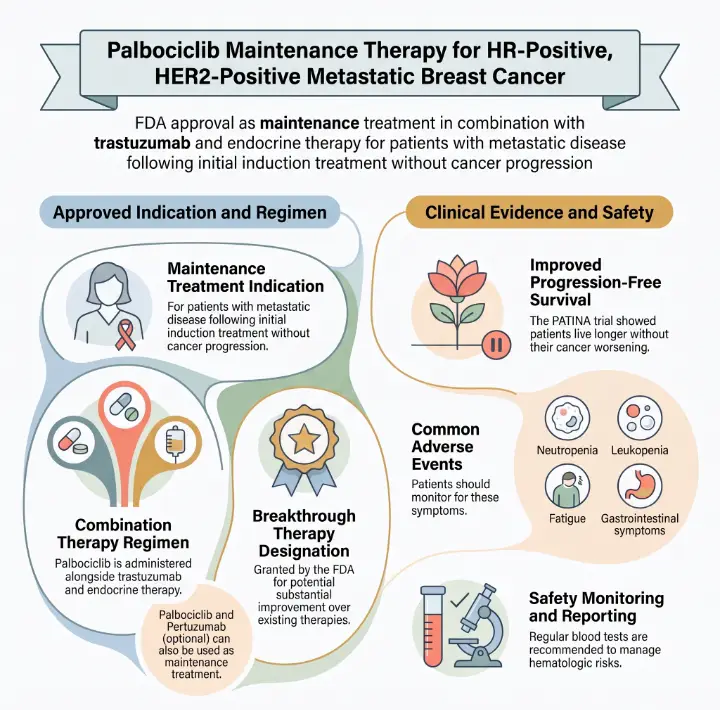
The FDA has granted palbociclib approval for HR-positive, HER2-positive metastatic breast cancer in combination with trastuzumab and endocrine therapy as a maintenance treatment. Recent data show a rising incidence of stage IV breast cancer in the United States:
The incidence of stage IV breast cancer, including HR-positive, HER2-positive cases, has increased since 2010.
The age-adjusted incidence rate rose from 9.5 cases per 100,000 females in 2010 to 11.2 cases in 2021.
The annual percentage change for HR-positive/HER2-positive disease reached 1.6%.
The PATINA trial demonstrated that adding palbociclib to trastuzumab and endocrine therapy improved progression-free survival compared to the standard regimen alone. This advancement offers new hope for patients and valuable options for clinicians.
Key Takeaways
The FDA approved palbociclib for HR-positive, HER2-positive metastatic breast cancer, offering new hope for patients.
This treatment combines palbociclib with trastuzumab and endocrine therapy to help maintain disease control after initial therapy.
The PATINA trial showed that adding palbociclib improved progression-free survival, meaning patients can live longer without their cancer worsening.
Patients should monitor for side effects like neutropenia and fatigue, and regular blood tests can help manage these risks.
Healthcare professionals and patients can report any side effects through the FDA MedWatch program to ensure safety.
Palbociclib Approval for HR-Positive Breast Cancer

Indication and Patient Eligibility
Palbociclib approval for HR-positive, HER2-positive metastatic breast cancer marks a significant advancement in treatment options. The FDA approved this therapy for patients who have completed initial induction treatment and have not experienced disease progression. The combination includes palbociclib, trastuzumab (with or without pertuzumab), and endocrine therapy. This regimen serves as a maintenance treatment, helping patients maintain disease control after initial therapy.
The following table summarizes the approved indication and combination therapy:
Drug | Combination Therapy | Indication |
|---|---|---|
Palbociclib | Trastuzumab, with or without Pertuzumab | Maintenance treatment of HR-positive, HER2-positive metastatic breast cancer following induction treatment. |
Clinicians can consider this option for individuals with locally advanced or metastatic disease who meet these criteria. The palbociclib approval for HR-positive breast cancer provides a new maintenance strategy that addresses an unmet need in this patient population.
Approval Date and Agency
The U.S. Food and Drug Administration (FDA) granted palbociclib approval for HR-positive, HER2-positive metastatic breast cancer on June 24, 2026. This decision followed a thorough review of clinical trial data and reflects the agency's commitment to advancing care for patients with advanced breast cancer.
Date | Event |
|---|---|
June 24, 2026 | FDA approved palbociclib in combination with trastuzumab and endocrine therapy for HR-positive, HER2-positive metastatic breast cancer. |
Agency | Approval Details | Significance |
|---|---|---|
FDA | Palbociclib with trastuzumab and endocrine therapy for HR-positive, HER2-positive metastatic breast cancer | New maintenance treatment option for patients without disease progression after initial therapy |
The FDA recognized the importance of this therapy by granting it breakthrough therapy designation. This status highlights the potential of palbociclib approval for HR-positive breast cancer to improve outcomes for patients facing a serious and life-threatening condition. The breakthrough therapy designation also enabled a faster review process, ensuring that patients could access this innovative treatment as soon as possible.
Note: The breakthrough therapy designation signals that the FDA sees substantial improvement over existing therapies for this patient group.
PATINA Trial Evidence
Study Design and Population
The PATINA trial played a central role in supporting palbociclib approval for HR-positive, HER2-positive metastatic breast cancer. Researchers designed this study as a randomized, open-label clinical trial. The main goal was to evaluate the effectiveness of palbociclib combined with anti-HER2 therapy and endocrine therapy. The trial enrolled 518 patients who met specific criteria. Each participant had hormone receptor-positive, HER2-positive metastatic breast cancer.
Aspect | Details |
|---|---|
Trial Type | Randomized, open-label clinical study |
Objective | Evaluate efficacy of palbociclib with anti-HER2 and endocrine therapy |
Patient Population | |
Inclusion Criteria | Hormone receptor-positive, HER2-positive metastatic breast cancer |
This design allowed investigators to compare the new combination therapy with standard treatment options. The inclusion criteria ensured that only patients with both hormone receptor-positive and HER2-positive disease participated.
Progression-Free Survival Results
Progression-free survival (PFS) served as the primary endpoint in the PATINA trial. Investigators measured how long patients lived without their cancer getting worse. The results showed that adding palbociclib to trastuzumab and endocrine therapy improved PFS compared to standard therapy alone. The hazard ratio for disease progression or death favored the palbociclib group, demonstrating a statistically significant benefit. These findings supported the palbociclib approval for HR-positive, HER2-positive metastatic breast cancer as a maintenance treatment.
Note: Improved progression-free survival means patients can live longer without their disease advancing, which is a key goal in metastatic cancer care.
Overall Survival Data
Researchers also tracked overall survival (OS) in the PATINA trial. At the time of data cutoff:
There were 123 deaths reported (60 in the palbociclib group and 63 in the standard-therapy group).
The hazard ratio for overall survival was 0.86 (95% CI, 0.61–1.23).
The final overall survival analysis will occur after 247 deaths.
The overall survival data were considered immature at the time of the analysis.
These early results suggest a positive trend, but more data will help clarify the long-term benefits of this treatment.
Safety and Dosage

Main Adverse Events
Patients who receive palbociclib with trastuzumab and endocrine therapy may experience several side effects. The most common adverse events include both blood-related and non-blood-related issues. The following table summarizes these events:
Adverse Event Type | Specific Events |
|---|---|
Hematologic Toxicities | Neutropenia, Leukopenia |
Non-Hematologic Events | Fatigue, Nausea, Diarrhea, Alopecia |
Neutropenia stands out as the most frequent grade 3 or higher adverse event, affecting about 66% of patients. Grade 3 and 4 adverse events occurred more than twice as often in the palbociclib group compared to the control group. Other significant side effects include leukopenia, fatigue, and gastrointestinal symptoms. Clinicians should also monitor for rare but serious risks such as interstitial lung disease and embryo-fetal toxicity.
Tip: Regular blood tests help detect neutropenia and leukopenia early, allowing for prompt management.
Recommended Dosing Schedule
Doctors should follow the recommended dosing schedule to ensure patient safety and maximize treatment benefits. The typical starting dose for palbociclib is 125 mg taken orally once daily for 21 days, followed by 7 days off, in a 28-day cycle. This regimen is given together with trastuzumab and an endocrine therapy agent, such as an aromatase inhibitor or fulvestrant. Trastuzumab and endocrine therapy should be administered according to their respective prescribing information.
Patients may need dose adjustments if they experience severe side effects. Healthcare providers should educate patients about possible symptoms and encourage them to report any new or worsening issues. The palbociclib approval for HR-positive breast cancer includes clear guidance on dosing and monitoring to help clinicians manage therapy safely.
Regulatory Details and Reporting
Expedited Review and Programs
The FDA used special review pathways to speed up the approval process for this new treatment. These programs help patients get access to important medicines faster. The agency granted both Priority Review and Breakthrough Therapy designations for this combination therapy.
Designation Type | Description |
|---|---|
Priority Review | Granted to medicines that may offer significant improvements in treatment, prevention, or diagnosis. |
Breakthrough Therapy | Designation for therapies that treat serious conditions and fill an unmet medical need. |
These designations show that the FDA recognized the urgent need for better treatments in HR-positive, HER2-positive metastatic breast cancer. The review process focused on safety, effectiveness, and the potential to improve patient outcomes.
Note: Expedited programs like these can shorten the time it takes for new therapies to reach patients.
Adverse Event Reporting
Healthcare professionals and patients play a key role in monitoring the safety of new treatments. The FDA encourages everyone to report any side effects or unexpected problems. Reports help experts track the safety of palbociclib, trastuzumab, and endocrine therapy in real-world use.
To report an adverse event, individuals can use the FDA MedWatch program:
Online: FDA MedWatch Reporting
Phone: 1-800-FDA-1088
Mail: Download forms from the FDA website and send them to the address listed.
Clinicians can also contact the drug manufacturers for support and guidance. Patients should talk to their healthcare team if they notice any new symptoms. Support groups and patient advocacy organizations can provide additional resources and information.
Tip: Early reporting of side effects helps protect patient safety and improves future care.
The palbociclib approval for HR-positive, HER2-positive metastatic breast cancer marks a major step forward in patient care. Patients receiving this combination therapy experienced longer progression-free survival and maintained quality of life.
Treatment Group | Median Progression-Free Survival (months) |
|---|---|
Palbociclib | |
Standard Care | 29.1 |
Most symptoms remained mild, with only hair loss increasing to moderate levels.
Ongoing research explores new uses and combinations for these therapies.
Patients should speak with their healthcare team and stay informed about future advances.
FAQ
What is the main benefit of palbociclib in this combination therapy?
Patients gain longer progression-free survival. The combination helps control disease after initial treatment. Clinicians see improved outcomes compared to standard care.
Who qualifies for palbociclib plus trastuzumab and endocrine therapy?
Eligible patients have HR-positive, HER2-positive metastatic breast cancer. They must complete induction therapy without disease progression. Doctors review medical history before starting treatment.
What are the most common side effects?
Neutropenia, fatigue, nausea, and hair loss occur most often.
Regular blood tests help monitor for serious adverse events.
How should adverse events be reported?
Individuals can use the FDA MedWatch program.
Online: FDA MedWatch Reporting
Phone: 1-800-FDA-1088
This article is for educational purposes only and is not a substitute for professional medical advice. For more details, please see our Disclaimer. To understand how we create and review our content, please see our Editorial Policy.
See Also
Exploring Rhabdoid Phenotype In Large Cell Lung Cancer
Choriocarcinoma: Definition, Symptoms, And Treatment Options
Recognizing Symptoms And Treatments For Duodenal Cancer
Anaplastic Large Cell Lymphoma: Overview And Treatment Methods

© 2026 Banish Cancer. Banish Cancer is a registered non-profit organization providing evidence-based research, educational courses, and Fear Response AI support services. Reg. No: 305706884 | Address: Taikos pr. 43-603, Kaunas, Lithuania.