What Does a Patient Advocate Do During Diagnosis?

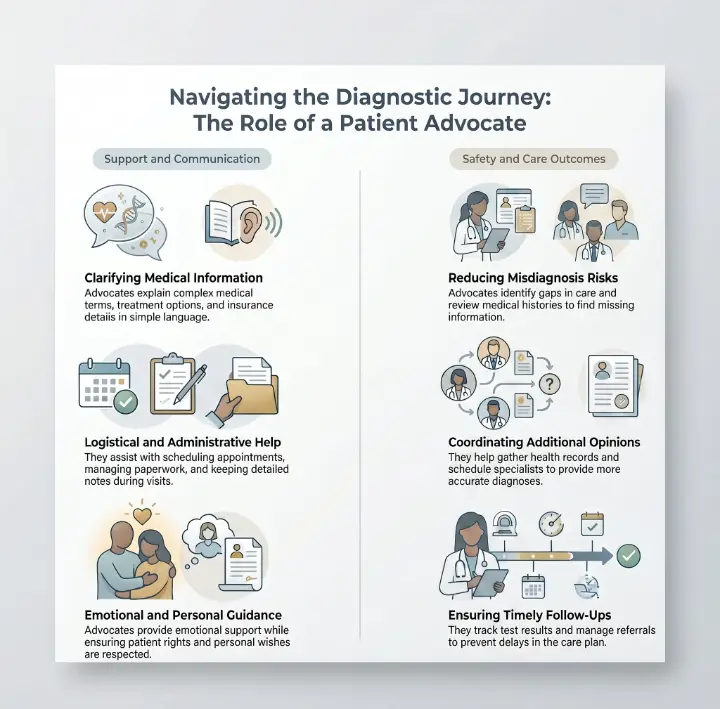
You may feel overwhelmed when facing a new or confusing health problem. A patient advocate steps in as your guide. You get help with understanding medical terms, asking questions, and making sure your voice matters. The Role of a Patient Advocate in the Diagnostic Process becomes even more important if your case is rare or complex. Medicine often involves subjective judgment, and busy healthcare settings can lead to missed or delayed diagnoses. In emergency rooms, doctors may misdiagnose conditions like heart attacks or strokes due to time limits. Patient advocates work to prevent these errors and support you and your family every step of the way.
Key Takeaways
A patient advocate helps you understand your medical journey. They explain complex terms and support your choices.
Advocates assist with scheduling appointments and managing paperwork. They ensure you stay organized and prepared for your visits.
Emotional support is crucial during diagnosis. Advocates listen to your concerns and help you cope with stress and confusion.
Patient advocates connect you with resources and support groups. They help you find financial aid and community services.
Having an advocate reduces the risk of misdiagnosis. They identify gaps in care and ensure timely follow-ups for better health outcomes.
The Role of a Patient Advocate in the Diagnostic Process
Advocate Definition and Purpose
You may wonder what a patient advocate does when you face a new diagnosis. A patient advocate is someone who stands by your side and helps you understand your medical journey. This person does not make decisions for you. Instead, you get support to make your own choices. The Role of a Patient Advocate in the Diagnostic Process includes many tasks that help you feel less alone and more confident.
Here are some of the main responsibilities of a patient advocate:
Setting up medical appointments and helping you find second opinions
Explaining medical bills, diagnoses, and treatment options in simple language
Communicating with doctors, nurses, and insurance providers for you
Helping you fill out forms and applications
Keeping notes during your medical visits
Supporting your rights and making sure your wishes are heard
Helping you find financial, legal, and social resources
Reviewing your medical bills to check for errors
Patient advocates often work with your whole healthcare team. They ask questions and gather information so you can understand your choices. They do not provide medical care, but they help you get the information you need.
Patient advocates help you, your family, and your caregivers become partners in your care. They make sure you get clear information about test results and treatment plans.
Many professional advocates have special training in health care coordination, community resources, and patient education. They learn how to solve problems and organize information so you get the best support.
When to Seek Advocacy
You might need a patient advocate if you feel confused or overwhelmed by your diagnosis. The Role of a Patient Advocate in the Diagnostic Process becomes very important in certain situations:
You are an older adult with complex health needs
You have a chronic condition that requires ongoing care
You feel stressed or lost after a new diagnosis
Some people think advocacy is only for the elderly or is too expensive. In reality, anyone can benefit from advocacy, and there are many affordable or free options. You do not need to face the healthcare system alone. A patient advocate can help you speak up, understand your options, and feel more in control.
Key Actions During Diagnosis

Scheduling and Paperwork Help
You may find it hard to keep track of appointments, forms, and follow-ups. A patient advocate can make this process much easier for you. They help you prepare for appointments by creating a symptom brief. This brief lists your symptoms with dates, so your doctor gets a clear picture of your health. Before your visit, your advocate can meet with you to discuss your concerns and goals. You can gather your medical records and test results together. This helps you feel ready and organized.
Patient advocates often join appointments by phone or video. They make sure you ask all your questions and share your concerns.
They help you schedule and confirm appointments, especially if you see many doctors.
Advocates manage follow-ups and referrals, so you do not miss important steps in your care.
During visits like the Medicare Annual Wellness Visit, your advocate prepares you for the questions you will answer. This helps you give honest and accurate information.
Tip: Let your healthcare provider know if you plan to bring an advocate. This way, everyone can work together for your best care.
Communication With Providers and Insurers
Many people feel nervous about talking to doctors or insurance companies. You might worry about asking the wrong question or not understanding medical words. A patient advocate helps you speak up and get the answers you need. They can explain medical terms in simple language. They also help you understand your rights as a patient.
Advocates prepare you for appointments, so you use your time well.
They help you organize your questions and make sure you get clear answers.
If you face language or cultural barriers, your advocate can arrange for a professional interpreter. They also respect your cultural needs and help you feel comfortable.
Advocates talk to your insurance company for you. They check your bills for errors, duplicate charges, or overcharges.
They help you request itemized bills and appeal denied claims.
You may feel overwhelmed by insurance forms and medical bills. Your advocate can review these documents line by line. They work with your healthcare team and insurance company to fix mistakes and explain costs. This support helps you avoid confusion and stress.
Note: Many patients feel emotional stress during diagnosis. Your advocate can help you stay calm and focused, making sure your voice is heard.
Explaining Diagnosis and Costs
Understanding a new diagnosis can be scary. Medical words and test results may seem confusing. A patient advocate explains your diagnosis and treatment plan in ways you can understand. They answer your questions and help you make sense of your options.
Advocates explain treatment plans and test results step by step.
They help you coordinate care with different doctors, so you get complete support.
Your advocate helps you understand insurance coverage and out-of-pocket costs.
They can connect you with financial support programs if you need help paying for care.
Independent patient advocates typically charge $100–$500 per hour, though some offer lower rates or sliding‑scale options. The price depends on the advocate’s experience and your needs. Many patients face financial stress during diagnosis, especially with serious illnesses like cancer. Advocates can help lower your costs by finding billing errors and connecting you with financial aid. Programs like the Cancer Financial Experience (CAFÉ) study test financial‑navigation approaches designed to reduce cancer‑related financial stress, though results vary.
The Role of a Patient Advocate in the Diagnostic Process includes making sure you understand both your health and your finances. This support helps you feel more confident and in control.
Emotional and Practical Support

Emotional Guidance for Patients and Families
You may feel scared or confused when you get a new diagnosis. Patient advocates help you and your family manage these feelings. They listen to your concerns with empathy and understanding. You get encouragement and coaching as you move through each step of care. Advocates celebrate your progress and help you process tough decisions.
Patient advocates show warmth and kindness.
They practice deep listening and offer social connection.
They help you share your story with your care team, making sure everyone understands your experience.
Many patients and families feel less stress when they have emotional support. Nurses, doctors, and advocates can help reduce shock and confusion during diagnosis.
Advocates also help your family. They keep everyone updated about your care plan and explain medical terms in simple words. You can ask questions and get honest answers.
Navigating Resources and Support Groups
You may need extra help beyond medical care. Patient advocates connect you with resources that fit your needs. These can include financial, legal, and social support. You can also find support groups where you meet others facing similar challenges.
Description | |
|---|---|
Disease-Specific Advocacy Organizations | Groups like the American Cancer Society offer help for certain conditions and guide you to services. |
Local and Regional Advocacy Resources | Community centers and faith-based groups help you access affordable care and support. |
Virtual and Digital Patient Advocacy Options | Online platforms and telehealth make it easy to get support from home. |
Advocates help you and your family find counseling, support groups, and local resources. They set realistic expectations and share first-hand experiences about treatments and procedures.
Advocating Patient Preferences
You have the right to make choices about your care. Patient advocates make sure your wishes and values guide every decision. They treat you with respect and protect your privacy. Advocates give you all the information you need to make informed choices.
They recognize your unique needs and adapt care to fit you.
Advocates work to ease your discomfort and explain each step clearly.
They make sure you get the same quality of care as everyone else.
The Role of a Patient Advocate in the Diagnostic Process includes supporting your preferences and making sure your voice matters. You can trust your advocate to help you feel safe, respected, and heard.
Preventing Misdiagnosis and Improving Outcomes
Identifying Gaps in Care
You can lower your risk of misdiagnosis with the help of a patient advocate. Advocates look for missing pieces in your care. They review your medical history and organize your records into a clear timeline. This helps your doctors see the full picture.
Advocates spot inconsistencies between test results and your current diagnosis.
They notice symptoms that doctors may not have addressed.
Advocates help you understand the difference between normal treatment changes and signs that need more attention.
They make sure your doctors share important information with each other.
Advocates explain medical terms in simple words so you know what is happening.
When you have someone checking for these gaps, you get better care. You feel more confident that nothing important will be missed.
Coordinating Second Opinions
You may want a second opinion if you feel unsure about your diagnosis. Patient advocates make this process easier for you. They schedule appointments with specialists and gather all your health records in one place. This gives your new doctor a complete view of your health.
Advocates find patterns in your medical history that one doctor might not see.
They help your doctors talk to each other and share information.
Advocates make sure you get to the right specialist quickly.
Getting a second opinion can lead to a more accurate diagnosis. You get peace of mind and avoid unnecessary treatments.
Ensuring Timely Follow-Up
You need to follow up on tests and referrals to stay on track with your care. Patient advocates help you keep up with these important steps.
Advocates update your medication list and add follow-up dates to your calendar.
They check for missing test results and call your doctor’s office if results are late.
Advocates help you with transportation, childcare, and paperwork so you do not miss appointments.
They talk to your care team and solve problems like cost or travel.
Research shows that patients with advocates have fewer errors and better health outcomes. You get the support you need to stay healthy and avoid delays in your diagnosis.
You gain confidence and control when you work with a patient advocate. Advocates help you understand your options, connect you with support groups, and encourage you to speak up about your needs.
You receive clear communication and emotional support.
You get access to resources like transportation and financial help.
Advocates defend your rights and help you make choices that match your values.
If you face a complex diagnosis, consider advocacy. You deserve respect, support, and a voice in your care. Patient advocates make your healthcare journey safer and more empowering.
FAQ
What is a patient advocate?
A patient advocate helps you understand your diagnosis and treatment. You get support with paperwork, communication, and finding resources. Advocates make sure your voice matters in your healthcare journey.
How do I find a patient advocate?
You can ask your doctor, hospital, or insurance company for recommendations. Many advocacy organizations and online platforms offer services. You may also find local advocates through community groups.
Can a patient advocate attend medical appointments with me?
Yes, your advocate can join you in person, by phone, or video. You get help asking questions and remembering important information. Your advocate makes sure your concerns are heard.
Do patient advocates cost money?
Some advocates charge fees, while others work for free or through nonprofit groups. You can ask about costs before you start. Many hospitals offer advocacy services at no extra charge.
What if I speak a different language?
Patient advocates can arrange for interpreters. You get help understanding medical terms and instructions. Advocates respect your language and culture, making your care easier.
This article is for educational purposes only and is not a substitute for professional medical advice. For more details, please see our Disclaimer. To understand how we create and review our content, please see our Editorial Policy.
See Also
Exploring Duodenal Cancer: Key Symptoms And Treatment Options
Choroid Plexus Carcinoma: Recognizing Symptoms And Available Treatments
Anal Cancer: Key Symptoms And Causes You Should Know
Endodermal Sinus Tumors: Symptoms To Recognize And Diagnose
Malignant Peripheral Nerve Sheath Tumors: Symptoms And Insights

© 2026 Banish Cancer. Banish Cancer is a registered non-profit organization providing evidence-based research, educational courses, and Fear Response AI support services. Reg. No: 305706884 | Address: Taikos pr. 43-603, Kaunas, Lithuania.