Tattoo Ink vs Cancer Recovery: The Hidden Battle Inside

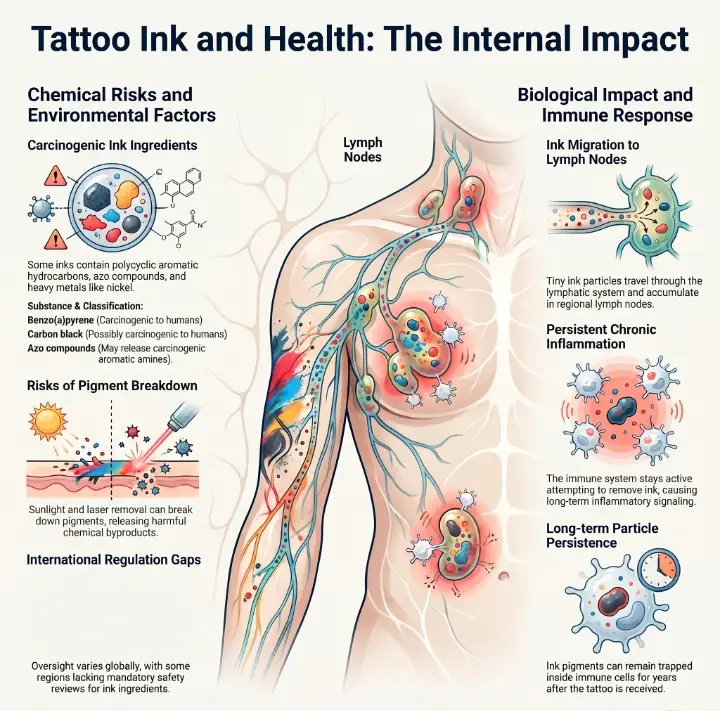
You may wonder if getting a tattoo could affect your cancer risk. Recent studies show that tattoo ink can travel from your skin to your lymph nodes. This movement may contribute to chronic inflammation, which is a known cancer risk factor, but a direct causal link between tattoos and cancer has not been proven. Some recent studies suggest a modest increase in lymphoma risk among tattooed individuals, while findings for skin cancer remain inconsistent and more research is needed.
You need to know what goes into tattoo ink and how it behaves in your body. Before you decide, weigh the facts and consider your health, especially when thinking about Tattoo Ink vs Cancer Recovery: The Hidden Battle Inside.
Key Takeaways
Tattoo ink can travel to your lymph nodes, causing chronic inflammation and potentially increasing cancer risks like skin cancer and lymphoma.
Some tattoo ink ingredients, such as polycyclic aromatic hydrocarbons and azo compounds, are linked to cancer and allergic reactions.
Tattoo ink particles may stay in your body for years, affecting your immune system and making recovery from cancer or infections harder.
Sunlight and laser tattoo removal can break down ink pigments, releasing harmful chemicals that may increase health risks.
Consult your doctor before getting a tattoo, especially after cancer treatment, and choose a studio that prioritizes safety and transparency.
Tattoo Ink Ingredients

Common Chemicals
When you get a tattoo, the ink does not just stay in your skin. It contains many chemicals that can move through your body. Most tattoo inks use a mix of pigments and additives. Here are some of the most common chemicals found in commercial tattoo inks:
Pigment Blue 15 (PB15) and Pigment Green 7 (PG7) appear in many tattoo inks. These pigments give blue and green colors.
PR254, PR170, PR210, PY74, and PY14 show up in at least 3% of tested ink samples. These pigments create red and yellow shades.
Titanium dioxide (TiO₂) and carbon black are used by almost every ink manufacturer. TiO₂ makes white ink, while carbon black creates deep black shades.
Polycyclic aromatic hydrocarbons (PAH) can contaminate carbon black. Some samples have PAH levels as high as 201 mg/kg.
Unlisted additives like PEG, propylene glycol, 2-phenoxyethanol, BHT, hexamethylenetetramine, and dodecane may also be present.
Note: Six pigments (PY74, PY14, PR112, PR210, PB15, PG7) are restricted in the European Union because of health risks. Some pigments, especially those with azo groups, can break down and release harmful chemicals.
Carcinogenic Substances
Some chemicals in tattoo ink have links to cancer. International health agencies have studied these substances and classified their risks. The table below shows some of the most concerning ingredients:
Substance | Classification |
|---|---|
Polycyclic Aromatic Hydrocarbons | Known carcinogens (found in 20% of samples) |
Benzo(a)pyrene | Carcinogenic to humans (IARC classification) |
Carbon black | Possibly carcinogenic to humans (IARC classification) |
Azo compounds | May release carcinogenic aromatic amines |
ortho-toluidine | Carcinogenic to humans (IARC classification) |
3,3'-dichlorobenzidine | Carcinogenic to humans (IARC classification) |
You should know that PAHs, including benzo(a)pyrene, often appear in black inks. Carbon black is also a concern because it may cause cancer. Azo compounds can break down and release dangerous chemicals, especially when exposed to sunlight or during laser tattoo removal.
🛑 Always ask about the ingredients in tattoo ink before getting a tattoo. Knowing what goes into your skin helps you make safer choices.
Ink Migration and Inflammation
Lymph Node Accumulation
When you get a tattoo, the ink does not stay only in your skin. Tiny particles from the ink can travel through your body. Your lymphatic system acts like a highway for these particles. Scientists have found that tattoo pigments move from the skin to your lymph nodes. These pigments can include metals like nickel and chromium, which are known to cause allergies and may even lead to cancer.
Here is what researchers have discovered about tattoo ink migration:
Evidence Type | Description |
|---|---|
Accumulation in Lymph Nodes | Tattoo ink particles build up in regional lymph nodes. |
Systemic Transport | Ink can move through the bloodstream to other organs. |
Element Detection | Nickel, chromium, and carbon found in lymph nodes. |
Migration of Ink | A portion of tattoo pigment migrates to lymph nodes, but the exact percentage is unknown. |
Translocation Speed | Ink can move to lymph nodes within weeks after tattooing, but the exact proportion is uncertain. |
Long-term Persistence | Ink can stay in lymph nodes for months or years. |
Misdiagnosis Risk | Pigment in lymph nodes can look like cancer during medical exams. |
Tissue Changes | Tissue near tattoo particles may change structure. |
You might not notice these changes, but they can affect your health. The ink particles often get trapped inside immune cells called macrophages. These cells try to protect your body, but the ink can stay inside them for a long time.
Chronic Inflammation
Your immune system works hard to remove foreign substances. When tattoo ink builds up in your lymph nodes, your body reacts. This reaction can cause ongoing inflammation. Scientists have seen that the immune system stays active for months after tattooing. In mouse studies, tattoo ink in lymph nodes led to higher levels of inflammatory signals like TNF-α, IL-1α, and IL-1β. These signals show that your body is fighting something it cannot remove.
Chronic inflammation can weaken your lymph nodes. This makes it harder for your body to fight infections and other diseases. Tattoo ink may contribute to chronic inflammation, which is a known cancer risk factor, but a direct causal link has not been established. You should know that even if you feel healthy, your immune system may be working overtime because of tattoo ink.
🩺 Tip: If you have a history of cancer or immune problems, talk to your doctor before getting a tattoo. Your health should always come first.
Cancer Risk Evidence
Skin Cancer and Lymphoma
You may think tattoos are just art on your skin, but scientists have found links between tattoo ink and certain cancers. When you get a tattoo, ink particles can move from your skin to your lymph nodes. This movement can trigger chronic inflammation, which may lead to abnormal cell growth.
Researchers have studied the connection between tattoos and cancer. Some studies report an increased risk for certain skin cancers (excluding basal cell carcinoma) and for lymphoma, while other research finds no clear association for squamous cell carcinoma. Look at the table below to see what scientists have discovered:
Study | Findings |
|---|---|
Danish Twin Study | Reported an increased risk of skin cancer and lymphoma among tattooed individuals, but the authors emphasized that more research is needed to confirm these findings. |
Lund University / eClinicalMedicine (2024) | Reported about a 21% higher risk of lymphoma among tattooed individuals. |
BMC Public Health Study | Indicated that tattoo ink particles can lead to chronic inflammation, potentially resulting in abnormal cell growth and increased cancer risk. |
2020 New Hampshire study | Odds ratio of 1.8 hinting toward an association with basal cell carcinoma. |
Swedish case-control study (2024) | Borderline significant increased risk of lymphoma among tattooed individuals. |
You should know that black ink, which is popular for tattoos, contains carbon black and polycyclic aromatic hydrocarbons (PAHs). The International Agency for Research on Cancer (IARC) classifies some of these substances as possibly carcinogenic. Experts say tattoo ink particles can build up in your lymph nodes, causing chronic inflammation and raising your cancer risk.
Scientists believe chronic inflammation from tattoo ink can last longer than expected. Your immune system stays active, trying to remove ink particles. This ongoing immune activity may contribute to inflammation and oxidative stress, but current evidence does not prove that tattoo ink directly causes cancer.
Note: Not all studies agree on the risks. Some research found no consistent link between tattoos and skin cancer. However, many experts see signals for blood cancers like lymphoma and call for more studies.
Photodegradation Risks
Tattoo ink does not stay the same once it enters your skin. Sunlight and laser removal can break down tattoo pigments. This process is called photodegradation. When tattoo ink breaks down, it can create new chemicals that may harm your body.
Here are some facts about photodegradation and tattoo ink:
Photodegradation happens when tattoo pigments meet light, especially sunlight.
This process can form carcinogenic byproducts like arylamines.
Red tattoo inks often cause allergic reactions because of photodegradation, as seen in skin biopsies.
The Engel study showed that tattoo pigments fade under simulated sunlight, which changes their chemical structure.
Azo dyes in tattoo ink can break down into aromatic amines when exposed to sunlight or during laser removal. These substances are linked to cancer and genetic damage in lab studies.
Tattoo inks can degrade over time from UV exposure, leading to toxic and potentially carcinogenic byproducts.
Many tattoo pigments were made for industrial use. They can contain harmful organic compounds. When sunlight or lasers break down these pigments, your body may absorb dangerous chemicals.
🛑 If you spend time in the sun or plan to remove a tattoo, you should know that ink breakdown can release toxic compounds. Always ask about the safety of tattoo pigments before getting a tattoo.
You need to understand that tattoo ink can change inside your body. Chronic inflammation and ink migration may increase your cancer risk. Photodegradation can create new dangers. Stay informed and protect your health.
Tattoo Ink vs Cancer Recovery
Immune System Impact
Your immune system works as your body’s defense team. When you get a tattoo, ink particles enter your skin and travel to your lymph nodes. These particles do not just sit quietly. Your immune cells, called phagocytes, try to remove the ink. Sometimes, the ink stays inside these cells for a long time. When the cells die, they release signals that keep your immune system active. This can lead to inflammation that lasts for months.
In a study published in PNAS, scientists gave mice tattoos and watched how the ink moved through their bodies. They found that tattoo ink stayed in immune cells inside lymph nodes. When these cells died, the ink triggered long-term inflammation. This process caused three problems: the immune system stayed active, the body had more oxidative stress, and white blood cells called lymphocytes grew in abnormal ways. All three problems are known risk factors for cancer.
Some experimental studies suggest that tattoo pigments can influence immune activity, but their impact on vaccine effectiveness in humans is not clearly established. If you are recovering from cancer, your immune system may already be weak. Tattoo ink can make it harder for your body to heal and fight off infections. This is why Tattoo Ink vs Cancer Recovery: The Hidden Battle Inside is so important for you to understand.
A recent study found that tattoo ink is taken up by immune cells in the skin. When these cells die, they send signals that keep the immune system turned on. This leads to inflammation in nearby lymph nodes for up to two months.
Risks for Cancer Patients
If you have had cancer or are in recovery, you face special risks when getting a tattoo. Your body may not fight infections as well as before. Chemotherapy and radiation can weaken your immune system. This means you could get infections more easily from tattoo needles. You also have a higher chance of allergic reactions and scarring, especially if the tattoo artist does not follow safety rules.
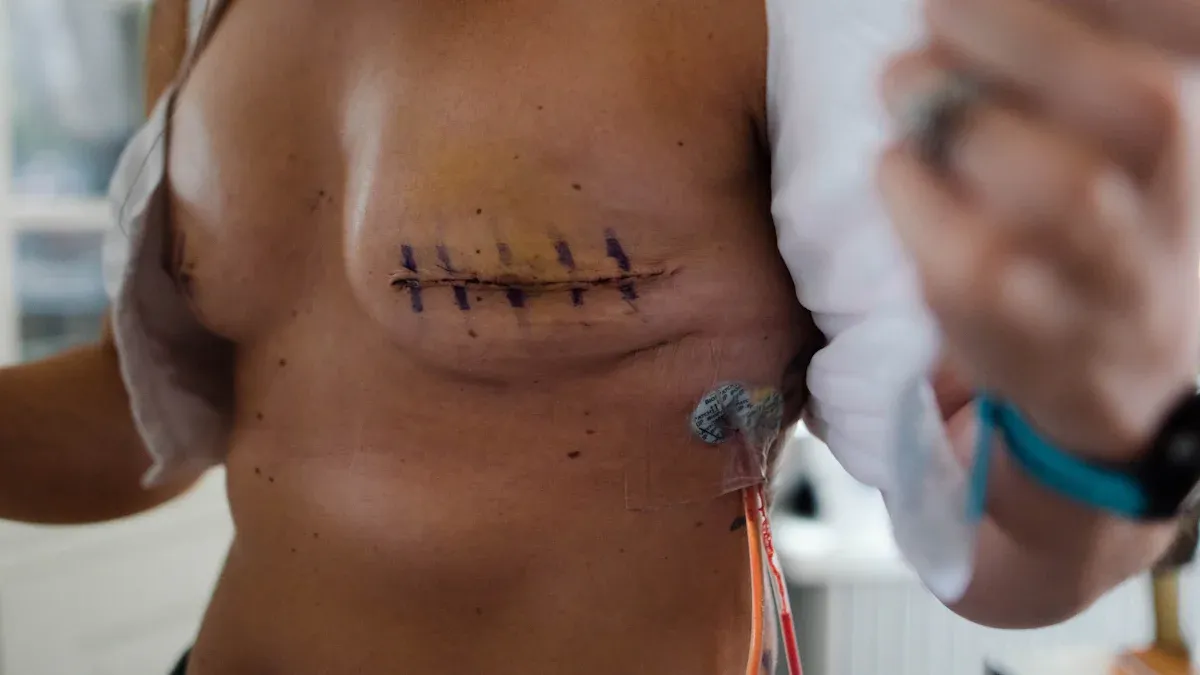
Tattooing can be risky for breast cancer patients and survivors. The skin may be fragile after surgery or radiation. Getting a tattoo too soon can lead to infections or slow healing. Many clinicians recommend waiting several months to a year after cancer treatment before getting a tattoo, depending on immune recovery and how well the skin has healed. You should always talk to your doctor first to make sure your body has healed enough.
If you had chemotherapy, your immune system might still be weak even months after treatment. One study showed that many breast cancer patients had low levels of immune cells nine months after chemotherapy. This means your body might not fight off infections from tattooing as well as before. Tattoo Ink vs Cancer Recovery: The Hidden Battle Inside is a real concern for anyone who has gone through cancer treatment.
You should also know that tattoo ink can build up in your lymph nodes, but there is no evidence that tattoos cause cancer to return. People with weakened immune systems should still take extra precautions. Always choose a clean, professional tattoo studio. Make sure the artist uses new needles and follows all safety rules.
🩺 Tip: If you are thinking about getting a tattoo after cancer, talk to your doctor. Ask if your immune system is strong enough. Wait until your body has healed from surgery or treatment.
Here are some practical steps you can take if you are a cancer survivor considering a tattoo:
Medical tattooing can help improve how scars look, especially after breast cancer surgery.
Talk with your healthcare provider about how you feel about your body after treatment.
Ask your doctor to recommend a tattoo artist who knows how to work with cancer survivors.
Look for organizations that offer medical tattooing for people who have had cancer.
Ask about financial help if you need support to pay for medical tattooing.
Tattoo Ink vs Cancer Recovery: The Hidden Battle Inside is not just about art. It is about your health and your future. You should always put your safety first. Learn about the risks, talk to your doctor, and make the choice that is right for you.
Regulation and Safety
Oversight Gaps
You might think tattoo inks are strictly regulated, but the rules differ widely across countries. In the United States, the FDA treats tattoo inks as cosmetics. The agency does not approve pigments for injection into the skin. Oversight often happens only after problems arise. This means you may not know exactly what goes into your tattoo.
In the European Union, regulations are much stricter. The EU has banned over 4,000 substances in tattoo inks because of concerns about heavy metals and toxicity. Recent checks found that 37% of tattoo inks contained banned materials, and 53% had high nitrosamine content or undeclared ingredients. Studies in Europe also found that many inks exceeded safe limits for toxic metals like chromium and nickel. Some inks contained high levels of copper and lead.
The U.S. uses a reactionary approach, stepping in after issues appear. The EU uses a precautionary approach, banning risky substances before they cause harm.
Public health agencies have pointed out several gaps:
No mandatory regulations for tattoo inks in the U.S.
The FDA does not review tattoo inks before they reach the market.
There is no strong system for reporting bad reactions.
Some inks contain carcinogenic compounds like benzo(a)pyrene.
Long-term health risks remain unclear.
Safer Alternatives
You can lower your risk by choosing safer tattoo inks. Some manufacturers market alternative pigments such as carbon, logwood, turmeric, monoazo, or dioxazine, but none of these ingredients have proven long‑term safety for injection into the skin.
Brands like StarBrite Colors use clean production methods. They sterilize inks with gamma radiation, avoid banned pigments, and track every batch for safety.
The terms "vegan," "organic," and "natural" do not guarantee safety. These words are not regulated for tattoo inks.
You should know that even plant-based or organic inks have unknown long-term effects. Scientists still study how all tattoo inks behave in your body. Always ask your artist about the ink’s ingredients and choose studios that value transparency and safety.
You have learned that tattoo ink can migrate to your lymph nodes and may cause chronic inflammation. Some studies suggest a possible link between tattoo ink and lymphoma, while findings for different types of skin cancer remain inconsistent. The table below highlights key scientific findings:
Key Finding | Description |
|---|---|
Tattoo ink exposure and cancer risk | Studies suggest a potential link to lymphoma and skin cancers. |
Chronic inflammation | Tattoo ink may contribute to persistent inflammation, which is a general risk factor for abnormal cell growth. |
Carcinogenic properties | Some ink components could raise cancer risk over time. |
If you are considering a tattoo, especially after cancer treatment, follow these steps:
Consult your doctor before getting a tattoo.
Choose a reputable studio with strict hygiene.
Protect tattooed skin from sun exposure.
Schedule regular skin checks.
Tattoo Ink vs Cancer Recovery: The Hidden Battle Inside reminds you to research ink safety and make informed choices. Your health should always come first.
FAQ
Can tattoo ink cause cancer?
You may face a higher risk for skin cancer or lymphoma if you have tattoos. Some studies show a link, but not all experts agree. Tattoo ink can contain chemicals that may harm your body over time.
Should you get a tattoo after cancer treatment?
You should wait until your body heals. Ask your doctor first. Your immune system may still be weak. Tattooing too soon can lead to infections or slow healing.
What ingredients in tattoo ink are most dangerous?
Some inks contain polycyclic aromatic hydrocarbons, azo compounds, or heavy metals like nickel and chromium. These can cause allergic reactions or may increase cancer risk. Always ask about ink ingredients before getting a tattoo.
How can you lower tattoo-related health risks?
Choose a licensed studio. Make sure the artist uses new needles and safe inks. Protect your tattoo from sunlight. Schedule regular skin checks with your doctor.
This article is for educational purposes only and is not a substitute for professional medical advice. For more details, please see our Disclaimer. To understand how we create and review our content, please see our Editorial Policy.
See Also
Recognizing Symptoms and Treatments of Conjunctival Melanoma
Key Symptoms and Treatment Options for Duodenal Cancer
Identifying Inflammatory Breast Cancer: Symptoms You Should Know
Essential Information About Carcinoid Tumors You Need
Cholangiocarcinoma: Key Features and Understanding Its Impact

© 2026 Banish Cancer. Banish Cancer is a registered non-profit organization providing evidence-based research, educational courses, and Fear Response AI support services. Reg. No: 305706884 | Address: Taikos pr. 43-603, Kaunas, Lithuania.