Understanding Value-Based Care and Its Role in Cancer Treatment

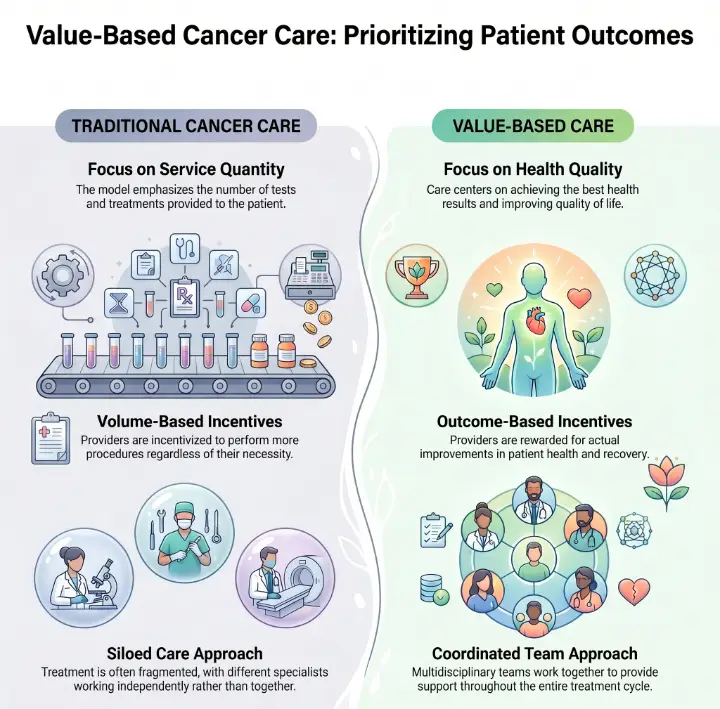
You may hear about value-based care when you talk with your doctor or visit a hospital. Value-based care means doctors and hospitals focus on giving you the best results for your health, not just doing more tests or treatments. In cancer treatment, this approach helps you get care that matches your needs and goals. Unlike the old fee-for-service model, value-based care rewards better outcomes and teamwork. The costs of cancer care in the United States could reach $246 billion by 2030, so finding new ways to improve care and control spending matters. Many hospitals now use value-based care. Over 90% of healthcare leaders see it as the future, and hospitals using this model save $145 per patient each year.
Statistic | Value |
|---|---|
Adoption of Value-Based Care Models | Over 90% of healthcare executives view value-based care as the future of healthcare delivery. |
Transition from Fee-for-Service | By 2021, around 38% of Medicare payments were tied to alternative payment models. |
Cost Reduction | Hospitals participating in value-based care arrangements experienced an annual savings increase of $145 per patient. |
You want your treatment to work well and to have a say in your care. Value-Based Care: Aligning Cost with Cancer Treatment Outcomes puts you at the center, helping you get the right care at the right time.
Key Takeaways
Value-based care focuses on improving your health outcomes, not just performing more tests or treatments.
You play an active role in your cancer treatment by sharing your preferences and participating in decision-making.
Bundled payments help manage costs by covering all services under one payment, reducing surprise bills.
Multidisciplinary care teams work together to provide coordinated support, improving your overall treatment experience.
Value-based care aims to enhance your quality of life by addressing both physical and emotional needs during treatment.
What Is Value-Based Care?

Core Principles
You may wonder what makes value-based care different from other healthcare models. In cancer treatment, value-based care means you receive care that balances health outcomes with costs. This approach looks at both direct costs, like hospital bills, and indirect costs, such as side effects and the impact on your family. The American Society of Clinical Oncology created a scoring system called net health benefit. This system helps doctors measure cancer treatments by looking at clinical benefits, side effects, quality of life, and costs.
Here are the main principles that guide value-based care in cancer treatment:
Focus on patient outcomes, not just lowering costs.
Drive competition based on results that show better care value.
Work to reduce the costs of high-quality care.
Expand competition from local areas to regional and national levels.
Make results clear and easy for you to access.
Support new ideas that improve care value.
Note: Value-based care puts your needs and results first. You get care that aims to improve your health and well-being.
Traditional vs. Value-Based Models
You may have heard about the fee-for-service model, where doctors and hospitals get paid for each test or treatment. This model often rewards quantity over quality. Value-based care changes this by rewarding better health outcomes and teamwork.
Here is a table that shows the main differences:
Traditional Cancer Care Models | Value-Based Care Models |
|---|---|
Focus on quantity of services provided | Emphasis on quality and patient outcomes |
Providers incentivized to perform more procedures | Providers incentivized based on improvements in patient health |
Reimbursement based on the number of treatments, regardless of necessity | Reimbursement based on optimal patient health outcomes |
Siloed care approach | Coordinated, team-based care approach |
When you choose Value-Based Care: Aligning Cost with Cancer Treatment Outcomes, you become the center of your care team. You benefit from a system that rewards better results, not just more treatments.
Value-Based Care in Cancer Treatment

Patient-Centered Approach
You play a key role in your cancer care. Value-Based Care: Aligning Cost with Cancer Treatment Outcomes puts your needs and preferences first. Doctors listen to your concerns and help you make choices about your treatment. You get information about your options, and you can ask questions about what matters most to you.
Your perspective shapes how doctors measure quality and cost in cancer care.
You take part in shared decision-making, which helps you feel confident about your treatment plan.
You see more transparency in how care works, so you trust your doctor and feel comfortable with new treatments.
Tip: Ask your care team about how Value-Based Care: Aligning Cost with Cancer Treatment Outcomes supports your goals and helps you access affordable, innovative treatments.
Evidence-Based Practices
You benefit from treatments that research shows are safe and effective. Doctors use guidelines based on the latest studies to choose therapies that work best for your cancer type. You receive care that matches your diagnosis and stage, so you avoid unnecessary tests or treatments.
Doctors review new evidence often. They adjust your care plan if better options become available. You see a focus on treatments that improve your quality of life and help you recover faster. You get support to manage side effects and stay healthy during and after treatment.
Care Coordination
You receive care from a team that works together. Nurses, doctors, and specialists share information and plan your treatment as a group. You do not have to repeat your story or worry about missing important steps. Your care team tracks your progress and helps you schedule appointments.
Cancer care teams use data to measure how well treatments work. They collect information about your health and your experience. This helps them improve care for you and other patients. Multidisciplinary units provide the full cycle of care, from diagnosis to follow-up. Teams use patient-reported outcome measures to see how you feel and what you need. Value-Based Care: Aligning Cost with Cancer Treatment Outcomes encourages teams to focus on results, not just costs. You see better outcomes because your care team works together and uses the best information.
Note: Care coordination helps you feel supported and ensures you get the right care at the right time.
Value-Based Care: Aligning Cost with Cancer Treatment Outcomes
Bundled Payments and Cost Efficiency
You may wonder how hospitals and clinics manage costs while giving you the best care. Bundled payments help your care team focus on the whole treatment process, not just single visits or tests. With bundled payments, your doctor, nurse, and other specialists work together to plan your care from start to finish. This approach means you get all the services you need for your cancer treatment under one payment. You do not have to worry about surprise bills for each step.
Bundled payments encourage your care team to use resources wisely. They look for ways to avoid unnecessary tests and treatments. You benefit because your team works to keep costs down while making sure you get high-quality care. Hospitals that use value-based care models often see cost savings. For example, some hospitals save $145 per patient each year by focusing on efficient care.
Your care team also uses cost metrics to track spending and find ways to improve. These metrics help them see where they can save money without lowering the quality of your care.
Outcome Measure Type | Description |
|---|---|
Patient-Reported Outcomes (PROs) | Metrics that capture patients' perspectives on their health status and quality of life. |
Clinical Outcome Measures | Traditional metrics used to assess the effectiveness of treatments and interventions. |
Cost Metrics | Financial measures that evaluate the economic impact on patients and the healthcare system. |
Tip: Ask your doctor how bundled payments and team-based care can help you get the right treatment at a fair cost.
Improving Patient Outcomes
You want your cancer treatment to work well and help you feel better. Value-Based Care: Aligning Cost with Cancer Treatment Outcomes puts your health and well-being first. Your care team uses the latest research to choose treatments that improve survival rates and quality of life. They check your progress often and adjust your care plan if needed.
Multidisciplinary supportive care helps you get better results. When doctors, nurses, and counselors work together, you see improvements in both survival and quality of life. Your team looks at your physical, emotional, and social needs. They use tools like the EORTC QLQ-C30 to measure how you feel during treatment. Regular check-ins help your team manage symptoms quickly and support your comfort.
You may notice that your care team asks about your feelings and daily life. They use patient-reported outcomes to understand what matters most to you. This helps them make changes that fit your needs. You get care that supports your body and mind.
Multidisciplinary teams improve survival rates and quality of life.
Integrated care addresses both physical and emotional needs.
Regular quality of life checks help your team tailor your treatment.
Timely symptom management keeps you comfortable and active.
Note: Your voice matters. Sharing how you feel helps your care team give you the best support.
Patient Perspectives
You play a key role in your cancer journey. Value-Based Care: Aligning Cost with Cancer Treatment Outcomes values your opinions and experiences. Your care team listens to your concerns and includes you in decisions about your treatment. Personalized care helps you feel more in control and improves your quality of life.
Patients who receive personalized care often report better experiences. For example, breast cancer patients in a personalized care program felt more in control and had fewer negative experiences. They also showed better coping skills and felt more supported by their care team. You may notice that your doctors encourage you to share your goals and preferences. This helps them create a plan that fits your life.
Personalized care increases your sense of control.
You experience less stress and worry during treatment.
Your care team supports you emotionally and medically.
You take part in planning your care, which builds trust and satisfaction.
Many patients say that value-based care models improve their satisfaction. You get whole-person care that looks at your needs, not just your disease. This approach helps you stay engaged and confident throughout your treatment.
Callout: Understanding patient perspectives is crucial for shared accountability in cancer care. Your values and priorities shape the care you receive.
Challenges and Limitations
Implementation Barriers
You may notice that switching to value-based care in cancer treatment is not easy. Many hospitals and clinics face big challenges. They need more money, time, and staff to make this change. Some community cancer centers have closed because they could not keep up with the costs. Large hospitals and companies have bought smaller clinics, which can limit your choices.
Here is a table that shows common barriers:
Barrier Type | Description |
|---|---|
Patient Choice | You may not get to choose if your doctor faces penalties for giving you needed treatments. |
Funding Inadequacies for Higher-Need Patients | Patients with complex needs may not get enough support, which can lead to worse outcomes. |
Reduced Access to Prevention and Treatment | Insurance companies may delay or deny care, especially for preventive services. |
You may see that value-based care is not a one-size-fits-all solution. Cancer care must fit each person, which makes standard plans hard to use everywhere.
Data and Measurement Issues
You need good data to know if your care works well. Many hospitals struggle to collect and use this data. Electronic health records (EHRs) help, but they do not always share information easily. Doctors need to collect data on how you feel, how well treatments work, and how much care costs.
Hospitals need standardized datasets.
Teams must use EHRs that can share and export data.
Doctors should ask you about your health and quality of life.
If your care team cannot measure results, they cannot improve your treatment. Limited data makes it hard for doctors to see what works best.
Equity and Access
You deserve fair and equal care. Some groups face more barriers than others. For example, older Black and Hispanic patients with advanced cancer are less likely to get pain medicine at the end of life compared to White patients. Health insurance can also affect who gets the best care.
Black and Hispanic households face higher rates of food insecurity than White households.
Insurance coverage can change your access to cancer treatment.
Dr. Amol Navathe says, “To truly make gains on equity, it cannot be an afterthought in policy design.” You need care that considers your background and needs from the start.
You may see that value-based care helps some people see their doctor more often and stay out of the hospital. Still, everyone must work to make sure all patients get the same chance for good care.
You see many benefits with value-based care in cancer treatment. This model helps you manage symptoms early, avoid unnecessary hospital visits, and focus on what matters most—your quality of life. You also help lower costs by choosing care that matches your goals. Challenges remain, such as complex treatments and data issues. Experts believe the future of oncology will reward value, not volume. Stay informed and share your needs with your care team. Your voice shapes better cancer care for everyone.
FAQ
What is value-based care in cancer treatment?
Value-based care means your doctors focus on results that matter to you. They choose treatments that improve your health and quality of life. You get care that matches your needs, not just more tests or procedures.
How does value-based care affect your costs?
You may pay less because your care team avoids unnecessary treatments. Hospitals use bundled payments to cover all your services. This helps you avoid surprise bills and keeps costs fair.
Will you still have choices about your treatment?
Yes. You help make decisions with your care team. They listen to your goals and explain your options. You stay involved in every step of your cancer care.
Does value-based care improve your quality of life?
Many patients say they feel better supported. You get care that looks at your physical, emotional, and social needs. Your team checks on your well-being often.
This article is for educational purposes only and is not a substitute for professional medical advice. For more details, please see our Disclaimer. To understand how we create and review our content, please see our Editorial Policy.
See Also
Recognizing Duodenal Cancer: Symptoms And Available Treatments
Cholangiocarcinoma Explained: Key Features And Insights
Conjunctival Melanoma: Symptoms To Watch And Treatment Options

© 2026 Banish Cancer. Banish Cancer is a registered non-profit organization providing evidence-based research, educational courses, and Fear Response AI support services. Reg. No: 305706884 | Address: Taikos pr. 43-603, Kaunas, Lithuania.